Railroaders
Jack Delano’s Homefront Photography
A landmark exhibition with the Chicago History Museum about the lives of railroad workers featuring World War II photography by Jack Delano, original research by the Center for Railroad Photography & Art, and recent photography by Pablo Delano (Jack’s son).
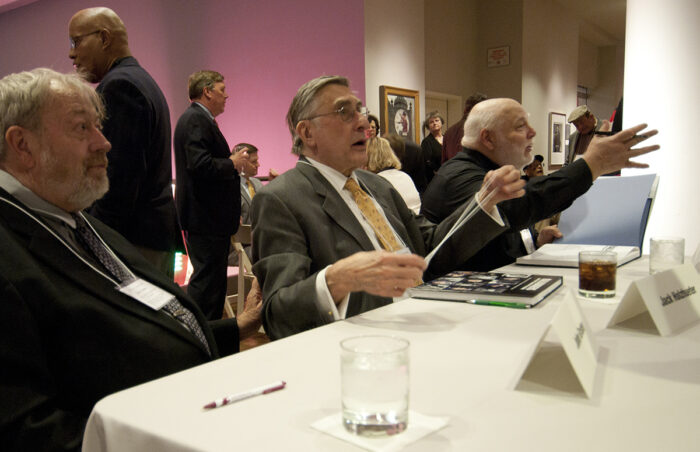
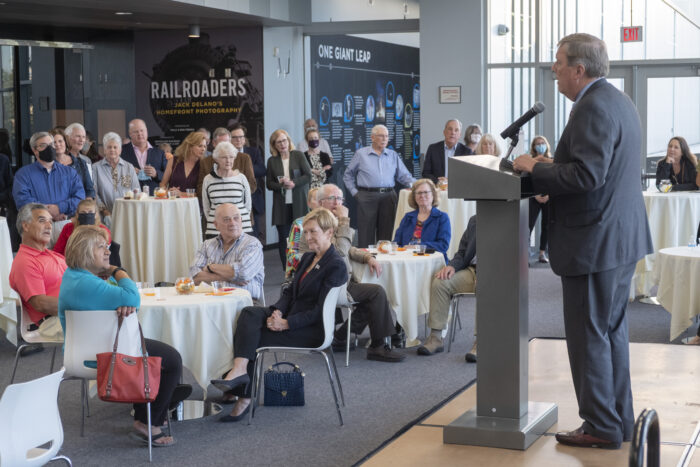
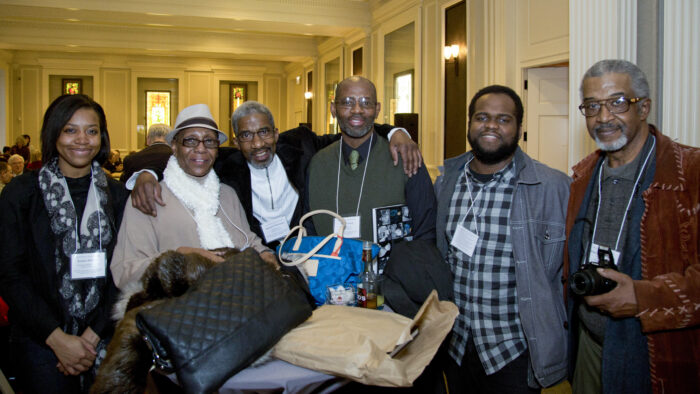
On April 4, 2014, nearly 400 people gathered at the Chicago History Museum (CHM) for the opening of a new exhibition, Railroaders: Jack Delano’s Homefront Photography. While guests included railroad executives and the head of the federal railroad administration, most were there for a deeply personal reason: they were related to one of the people pictured in the exhibition.
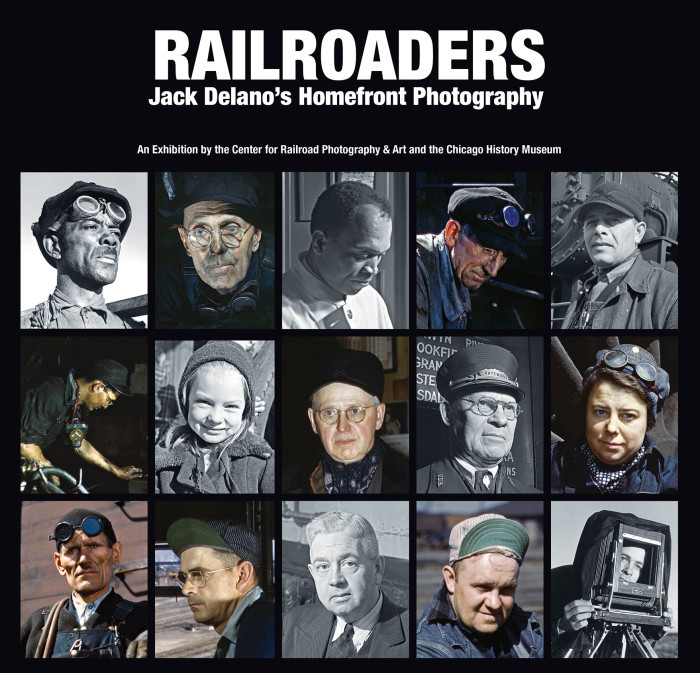
Railroaders tells the story of Chicago’s—and the nation’s—community of railroad workers during World War II. The exhibition features more than sixty of the remarkable images created by Jack Delano (1914–1997) as part of his assignment to document the nation’s railroads in 1942–1943 for the Farm Security Administration-Office of War Information (FSA-OWI).
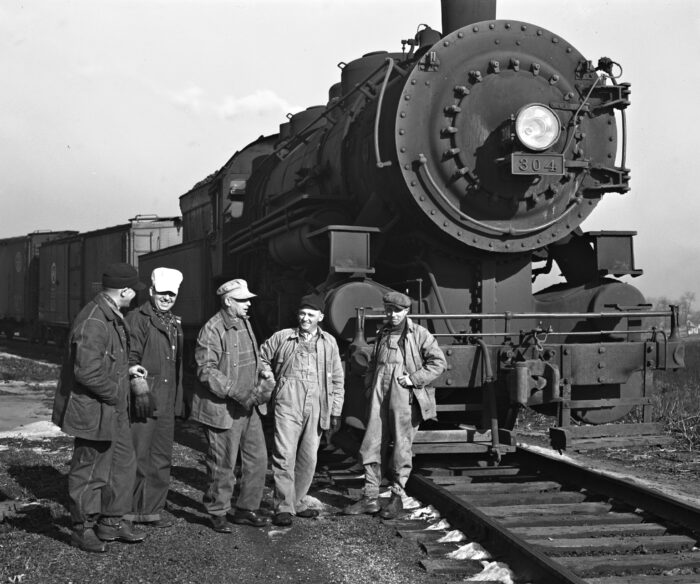
While Delano photographed infrastructure and rolling stock, he concentrated on the people who did the work of railroading. Roy Stryker, head of the photographic surveys for both FSA and its successor OWI, instructed Delano to document in pictures the importance of the railroad industry during wartime and the contributions made by railroaders and their families on the home front. Delano complied. His images feature such scenes as children collecting salvaged metal for recycling into war materiel, posters in public and private places promoting the sale of war bonds, and the ubiquitous flags that honored service men and women.
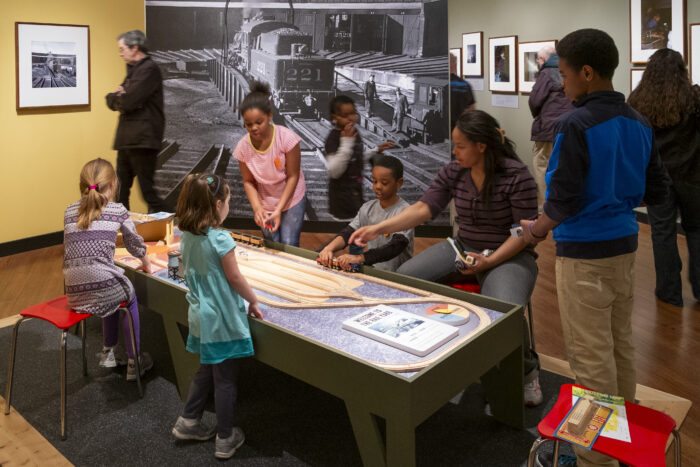
The exhibition also includes artifacts belonging to the portrait subjects, modern photographs of their descendants by Pablo Delano (Jack’s son), videos, and interactive environments. Because Delano captured workers of many ethnic groups and races, Railroaders meshes with CHM’s exhibition series that features the city’s rainbow of communities. The Museum embraced the Center’s exhibition proposal wholeheartedly, and the two institutions worked together closely to bring the project to life.
In addition to the collaborative exhibition with the CHM, the Center published a heavily illustrated catalog (200 pages, hardcover) about the photographs and the people in them. Its text goes into greater detail about the railroaders Delano photographed, presenting their stories and legacies as compiled by authors John Gruber, Jack Holzhueter, and Scott Lothes. The trio spent five years tracking down and interviewing descendants and other families of Delano’s portrait subjects—a time-consuming and rewarding undertaking. Essays by history professor Jeremi Suri and Pablo Delano add context.
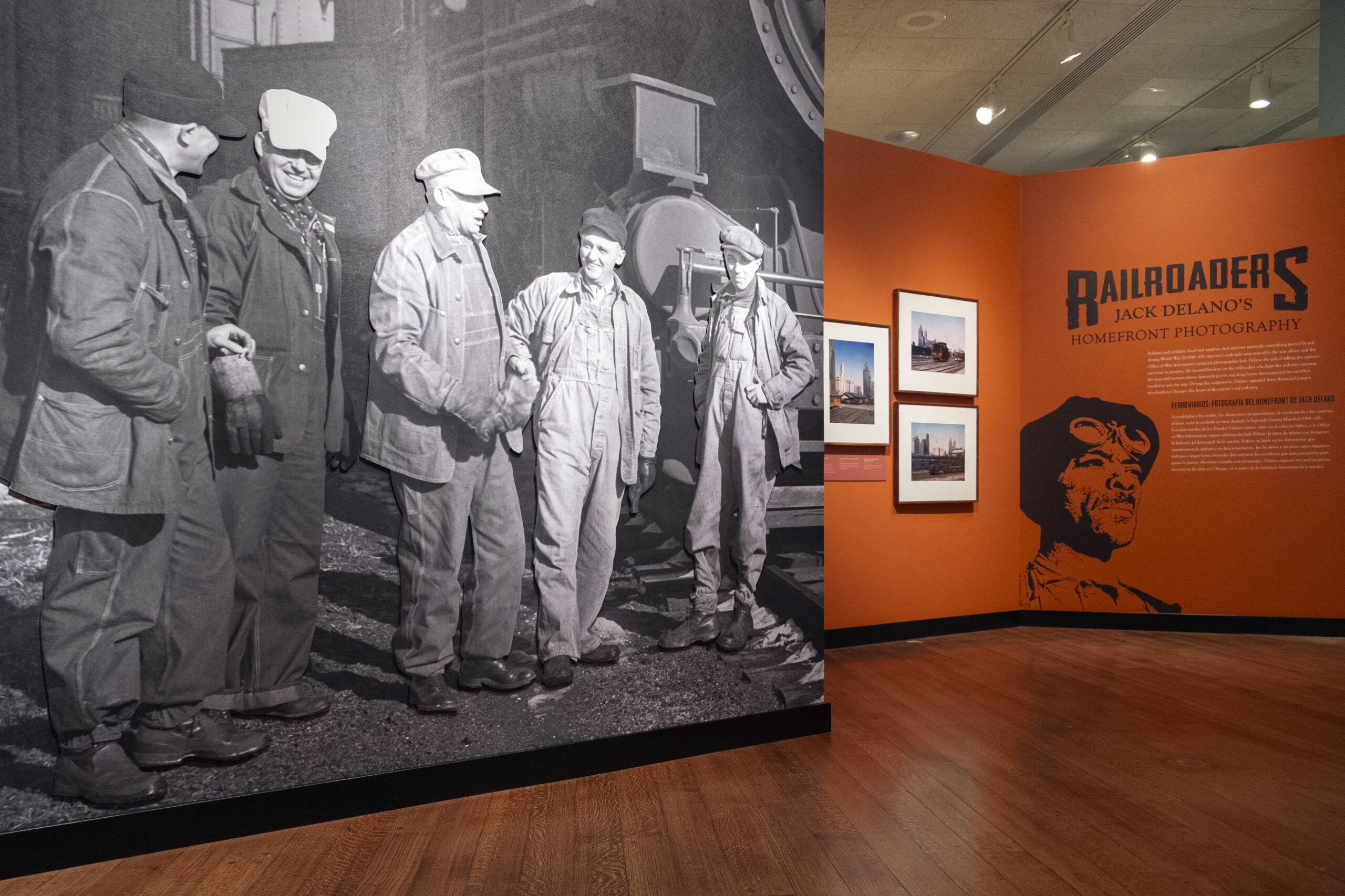
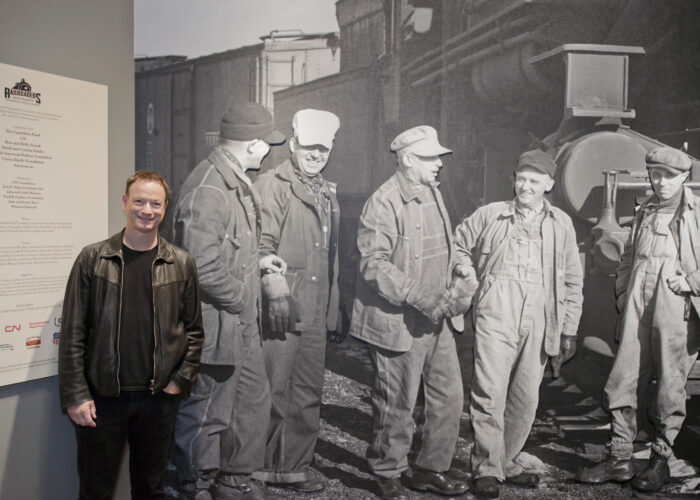
Delano had a gift for selecting portrait subjects who reflect America’s and Chicago’s variety of ethnic groups and social classes. He recorded their names as well as their faces, making it possible to locate the workers’ surviving families and to use their portraits as a gateway for telling the families’ highly varied histories—and, by extension, the social history of America in general—for the era of the early 1940s to the present. One of his subjects was an African American who organized a tenant farmer’s group in Arkansas. A grandson of another, Italian-American conductor Daniel Sinise, is a television celebrity who keeps his grandfather’s railroad watch under a glass dome on his mantel. In only six months, Delano created perhaps the best overall portrait of railroading and its people and culture of any photographer in the United States.
Railroaders: Jack Delano’s Homefront Photography, demonstrates that the railroad industry—like ethnic, religious, and neighborhood enclaves—fostered its own communities and networks that cut across ethnic and religious lines. Through the stories of the lives of the men and women of railroading, the exhibition and accompanying programs and publications demonstrate how the people of one industrial community represent, in microcosm, the vastness of Chicago society and, by extension, American society as a whole.
The Center’s collaborative exhibition with the Chicago History Museum opened on April 5, 2014, and closed on January 3, 2016—after the Museum twice extended its run due to its great popularity.
About the exhibition
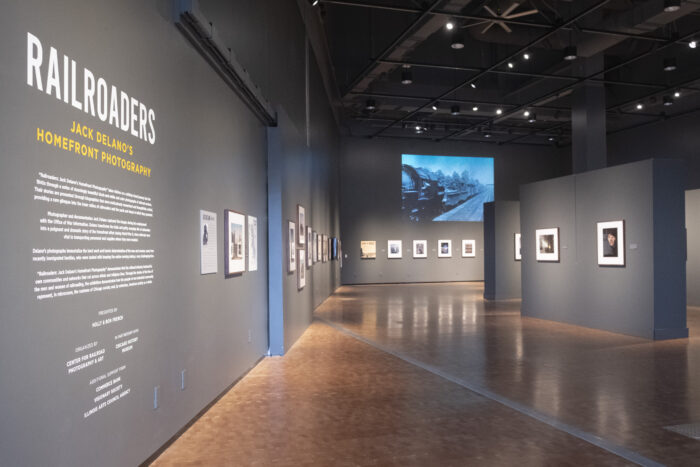
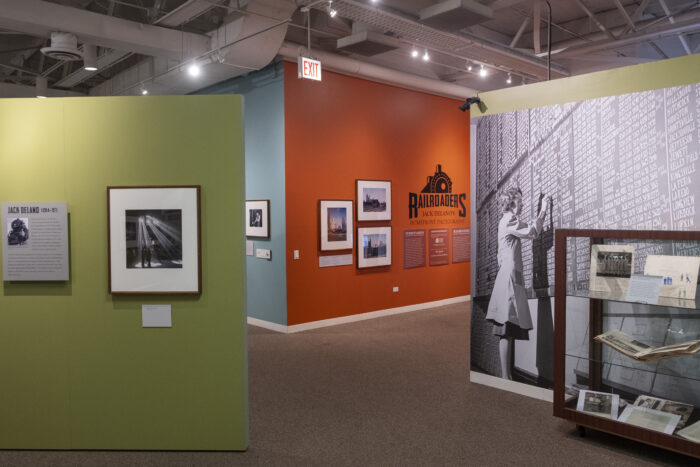
Installations of Railroaders at the the Peoria Riverfront Museum in 2021 and the Historic Pullman Foundation in 2022. Photographs by Scott Lothes
Hosting the traveling exhibition
Railroaders is available to travel on a limited basis from the Chicago History Museum. The exhibition includes more than sixty framed photographs, life-size wall panel enlargements, original videos, an interactive touchscreen, artifacts, and other materials. Please reach out to the Center for more information at info [at] railphoto-art [dot] org or 608-251-5785.
Past venues
- Pullman Historic Site, Chicago, Illinois, May 14 to December 31, 2022
- Peoria Riverfront Museum, Peoria, Illinois, October 9, 2021, to February 6, 2022
- Chicago History Museum, Chicago, Illinois, April 5, 2014, to January 3, 2016
In gratitude
The Library of Congress holds more than 2,500 photographs Jack Delano created during his time with the FSA-OWI. James E. Valle presented many of them in his 1977 book The Iron Horse at War, which emphasizes locomotives and operations. The Center’s research builds on his pioneering effort.
Generous support of individuals and foundations alike made this project possible. Sponsors include Bon and Holly French, the North American Railway Foundation, the Union Pacific Foundation, CN, the Candelaria Fund, and David and Cynthia Kahler.