COLLECTION TRACKING:
California’s Mojave Desert with Richard Steinheimer
By Elrond Lawrence
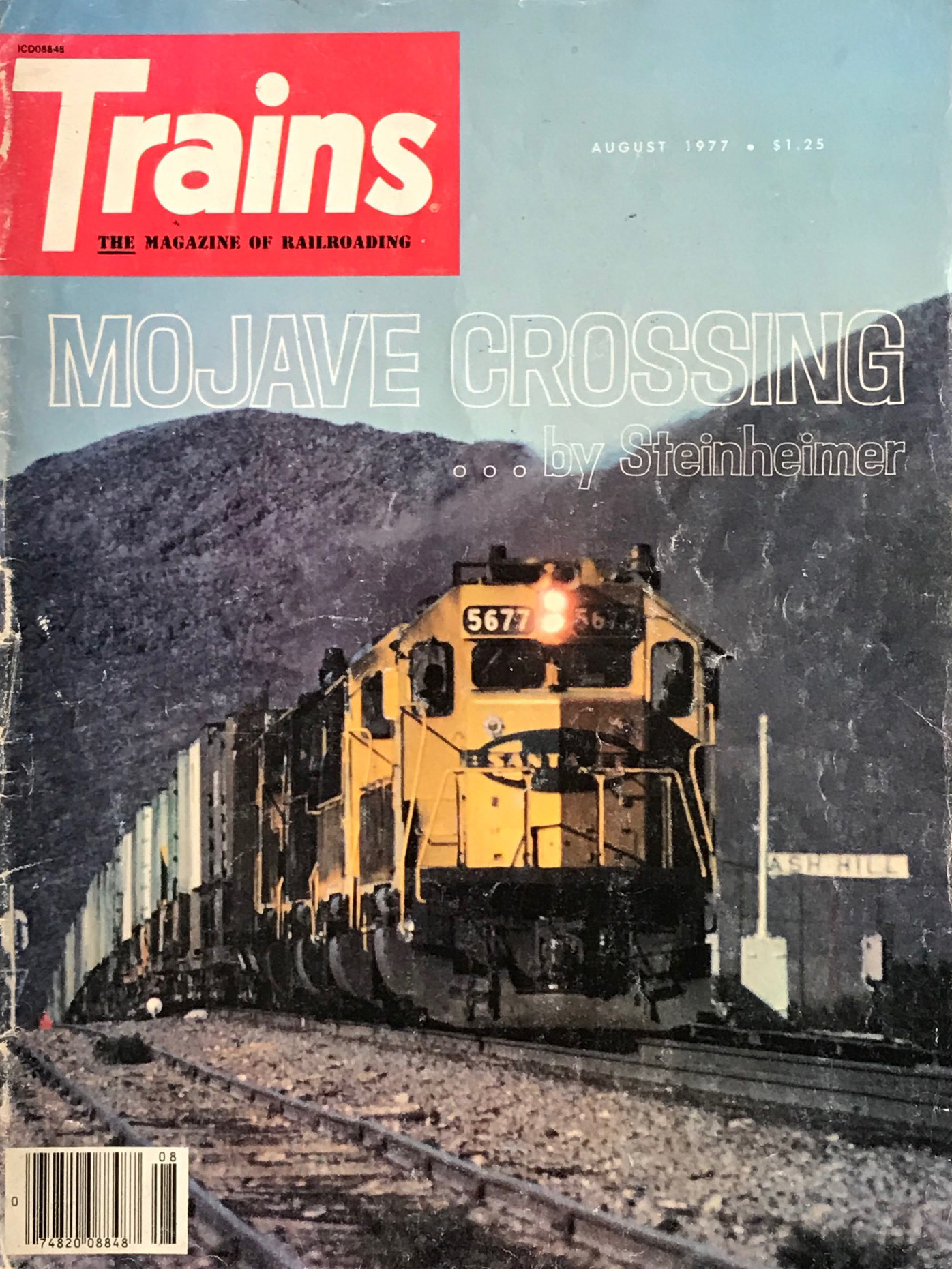
“For the Santa Fe there is always the desert,” wrote Richard Steinheimer in the August 1977 issue of Trains. That line opened his landmark photo essay, “Mojave Crossing,” which explored the wild and remote land of the Mojave Desert, and Santa Fe’s busy Needles District between Barstow and Needles, California.
This twelve-page article holds personal meaning for me: the first time I paged through a copy, given to my teenage self by friends Chuck and Artie Eason, I’d have sworn I heard a chorus of angels. Cajon Pass was my regular stomping grounds during my teenage years, but I’d gazed east during trips to Barstow and wondered what lay beyond in the unknown Mojave. Here was my answer, and it stirred my soul. I’d eventually ride along with friends and later get my own wheels to explore the Santa Fe … and the excitement of leaving Interstate 40 and setting off on the two-lane blacktop of Route 66 has never diminished.
While Stein was no stranger to deserts, his move from the Bay Area to remote Twentynine Palms in the early 1970s—thanks to a job at Ford Aerospace—placed him closer than ever before. He took full advantage of this new photographic playground that couldn’t have been further in tone, canvas, or temperature from his well-known haunts of the San Francisco Bay Area and Donner Pass. He was making return trips to Cajon Pass and Tehachapi as well, which led to his Trains stories in September 1974, “Cajon Pass Revisited,” and “Tehachapi!” in January 1977, before he dove into the Mojave project.
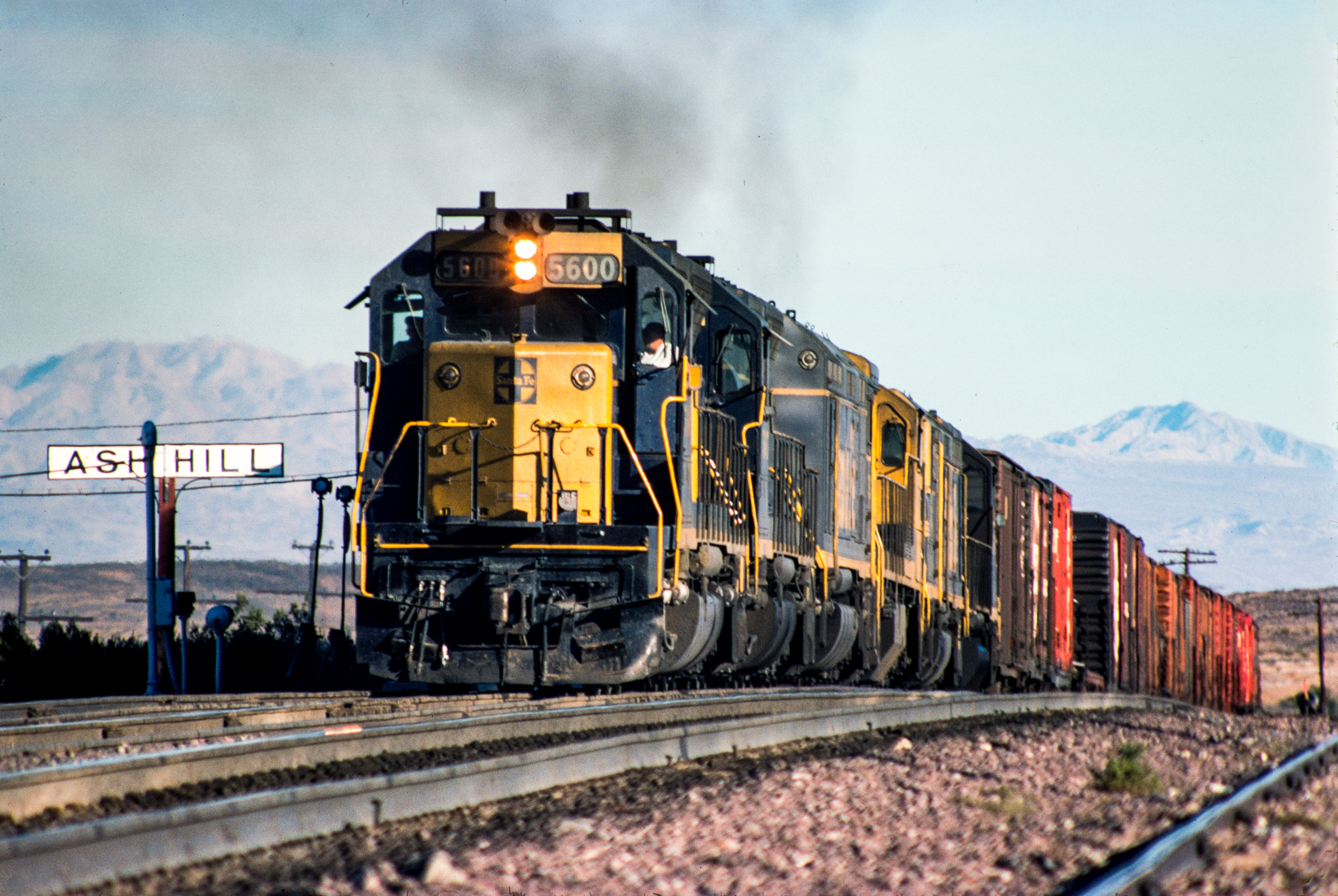
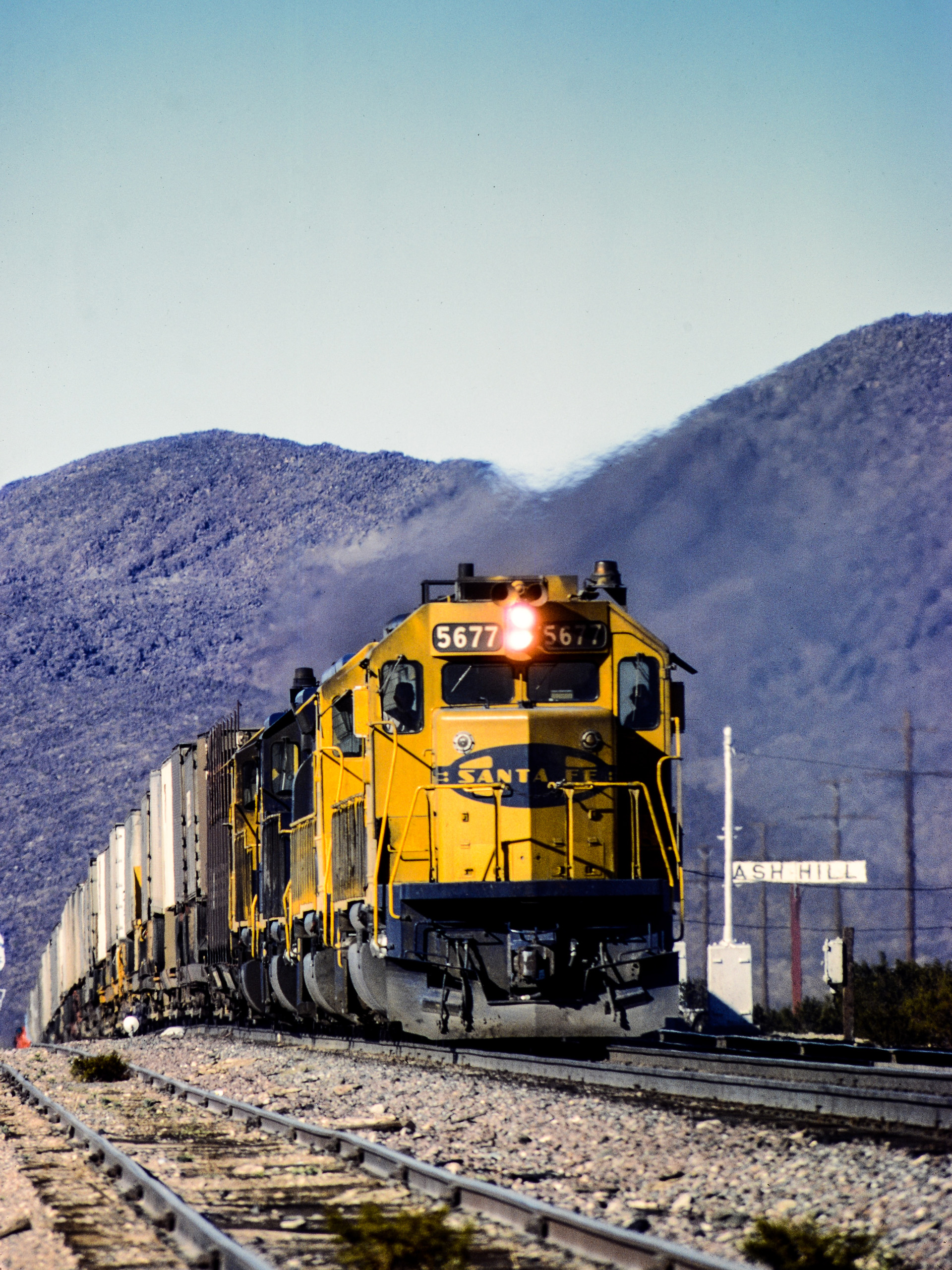
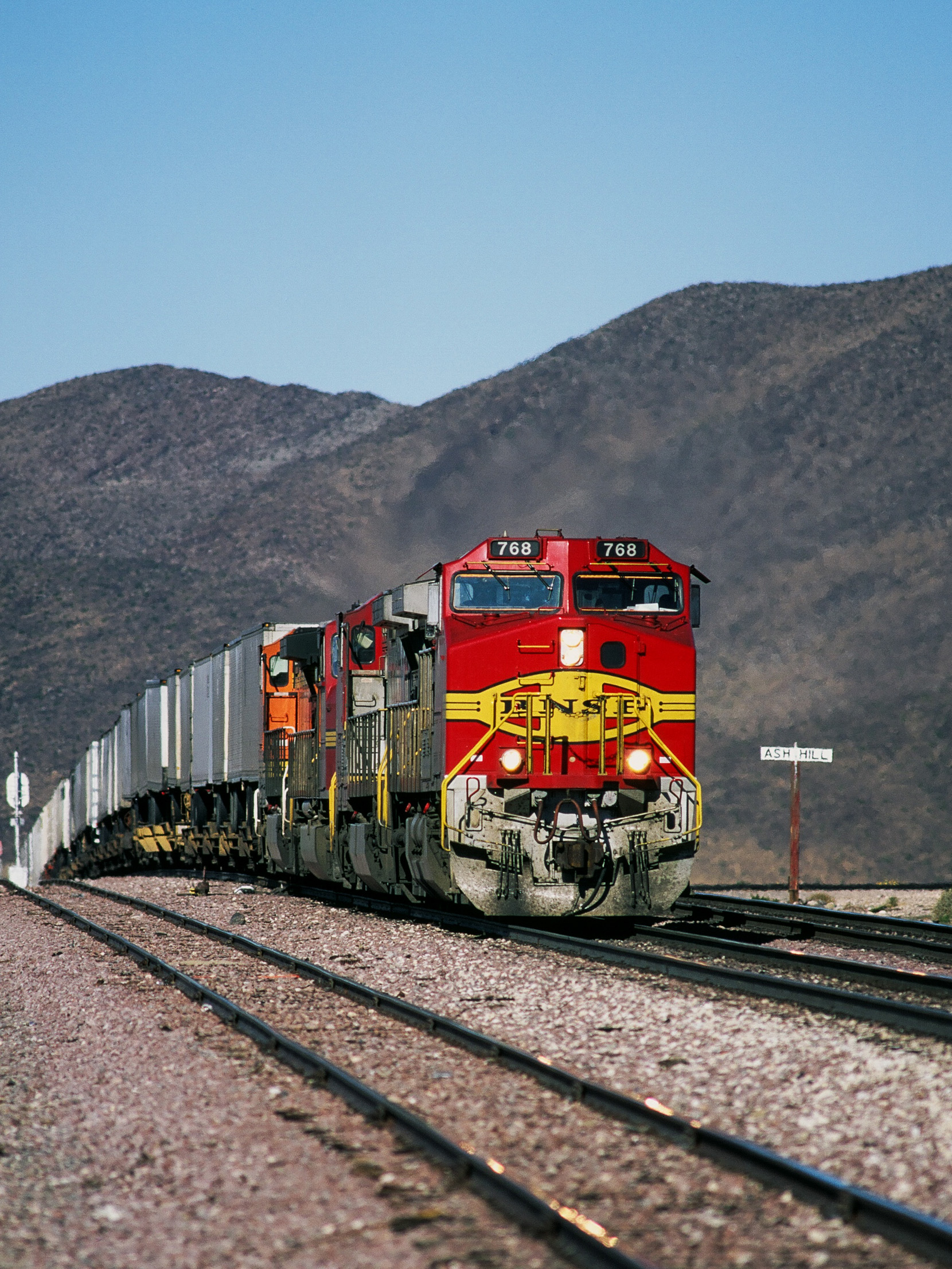
From spring through winter of 1998, I made a series of trips to cover the changing Needles District, by then renamed the Needles Subdivision and owned by Burlington Northern Santa Fe. One December morning I set out to recreate one of my favorite Stein classics: Dick’s “Mojave Crossing” cover image of Santa Fe SD45-2 5677 topping the summit of Ash Hill east of Ludlow. I’d shot the location many times, but this morning I aimed for the spot where he stood, and waited. After a less-than-exciting dry run with a freight led by a ratty looking warbonnet, I scored the money shot of shiny BNSF Dash 9-44CW 768 powering an eastbound intermodal train. Today this location has been heavily modernized and expanded with a third main line, and the scene is dominated by a looming silver signal bridge that spans all three mains and a siding.
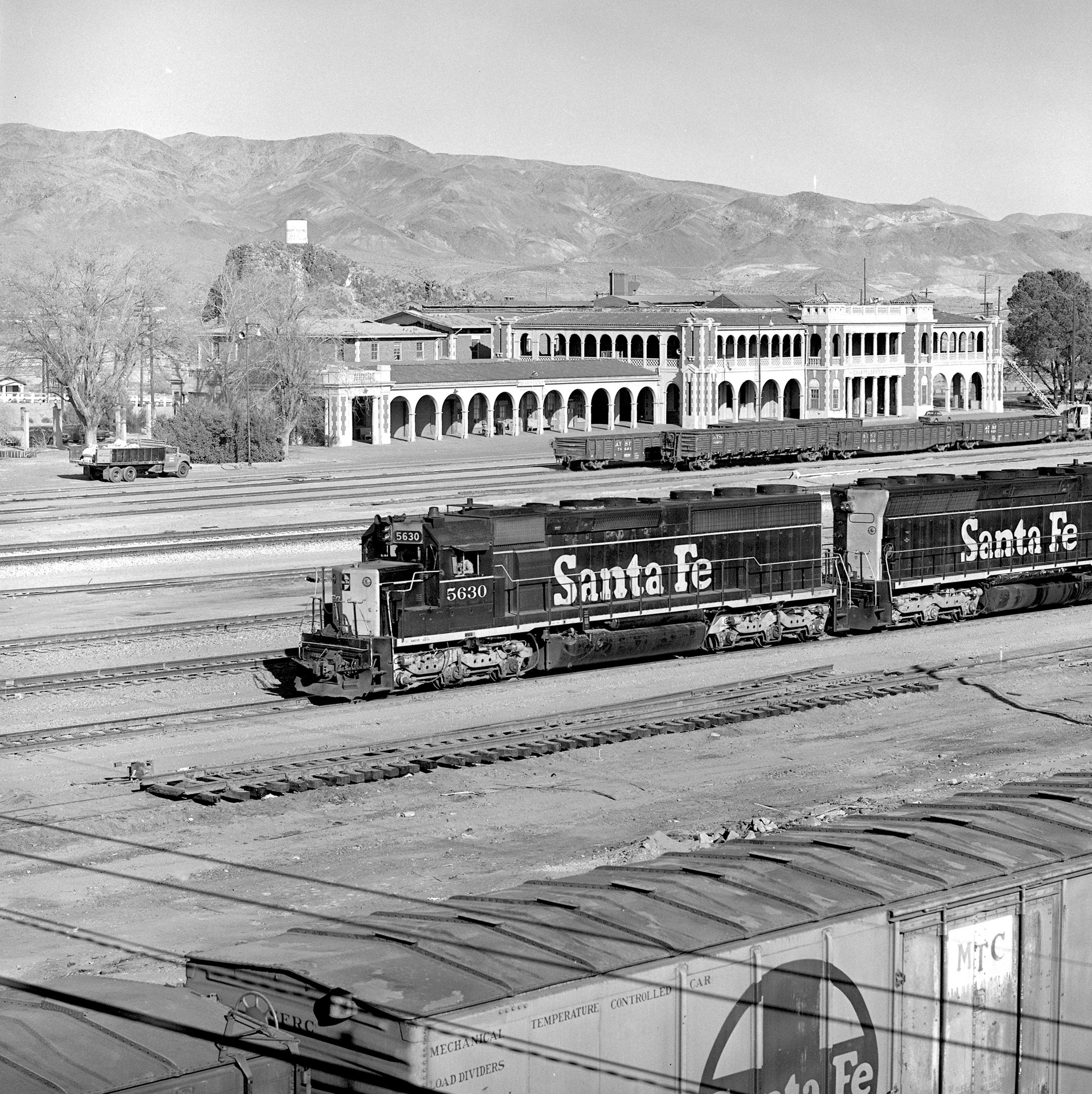
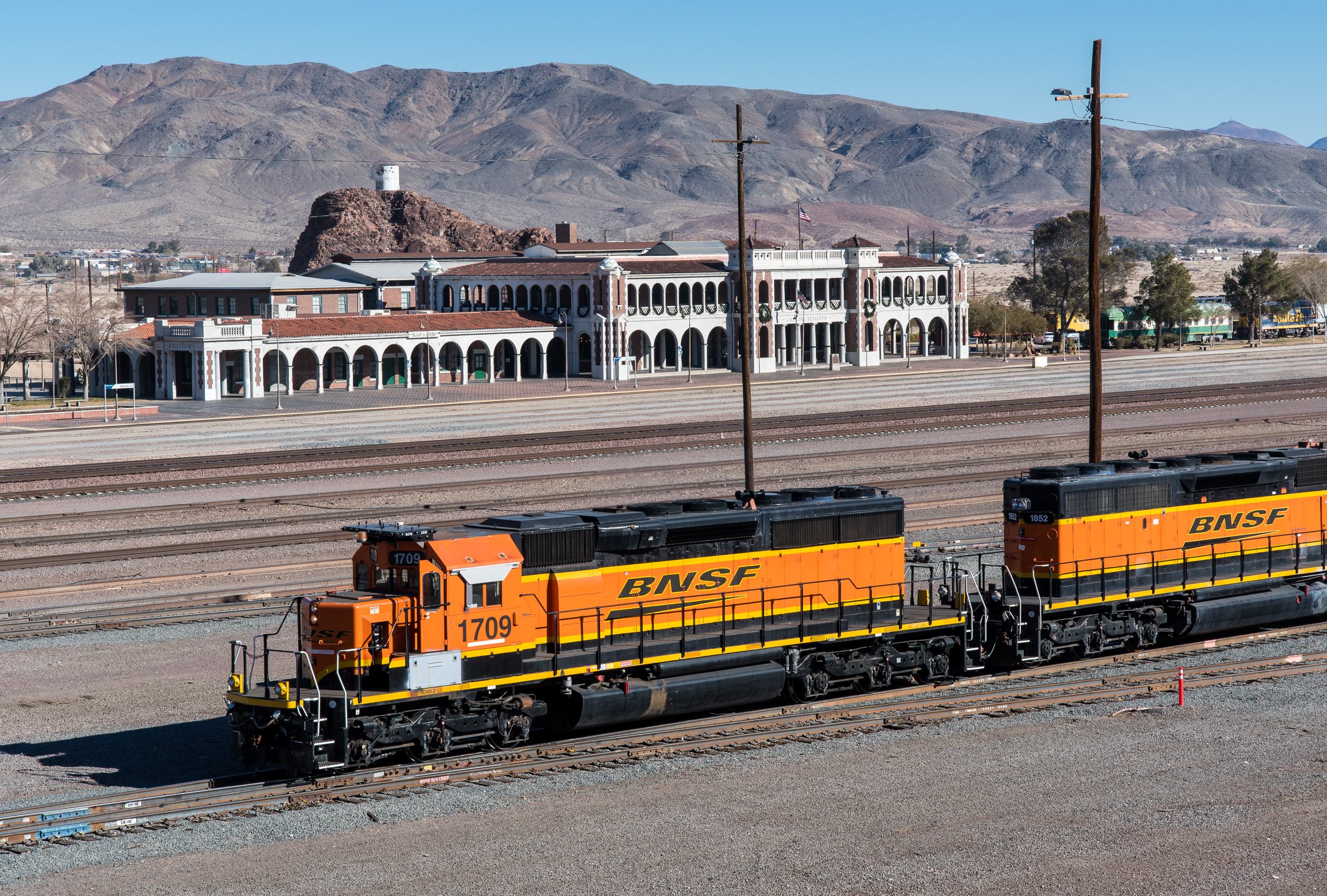
Other revisited images didn’t happen until much later – the 2020s! The iconic final image of “Mojave Crossing” shows AT&SF 5630 West arriving in Barstow and passing Casa Del Desierto (“House of the Desert”), once a jewel in Fred Harvey’s chain of trackside hotels and restaurants along the Santa Fe in the southwest. Despite being one of the easiest images to revisit, I was finally pushed into action by the impending retirement of the historic First Avenue Bridge where Dick stood to capture the scene. The 94-year-old truss bridge’s days were numbered, and one December 2022 morning I spent a lovely hour strolling the bridge, snapping detail pictures and of trains roiling underneath. Two locomotive pairs approached the bridge while switching the nearby hump yard, but only a pair of SD40-2s managed to roll east of the bridge to recreate the classic shot with the Harvey House. BNSF 1709 was formerly blue and yellow Santa Fe 5141, making the moment even sweeter! This was one of those rare occurrences where the image is no longer possible to make because the photographer’s perch has vanished. The replacement bridge opened in July 2024, and it’s far safer for traffic and pedestrians … but lousy for photographers, being fully fenced with no openings for cameras (for now).
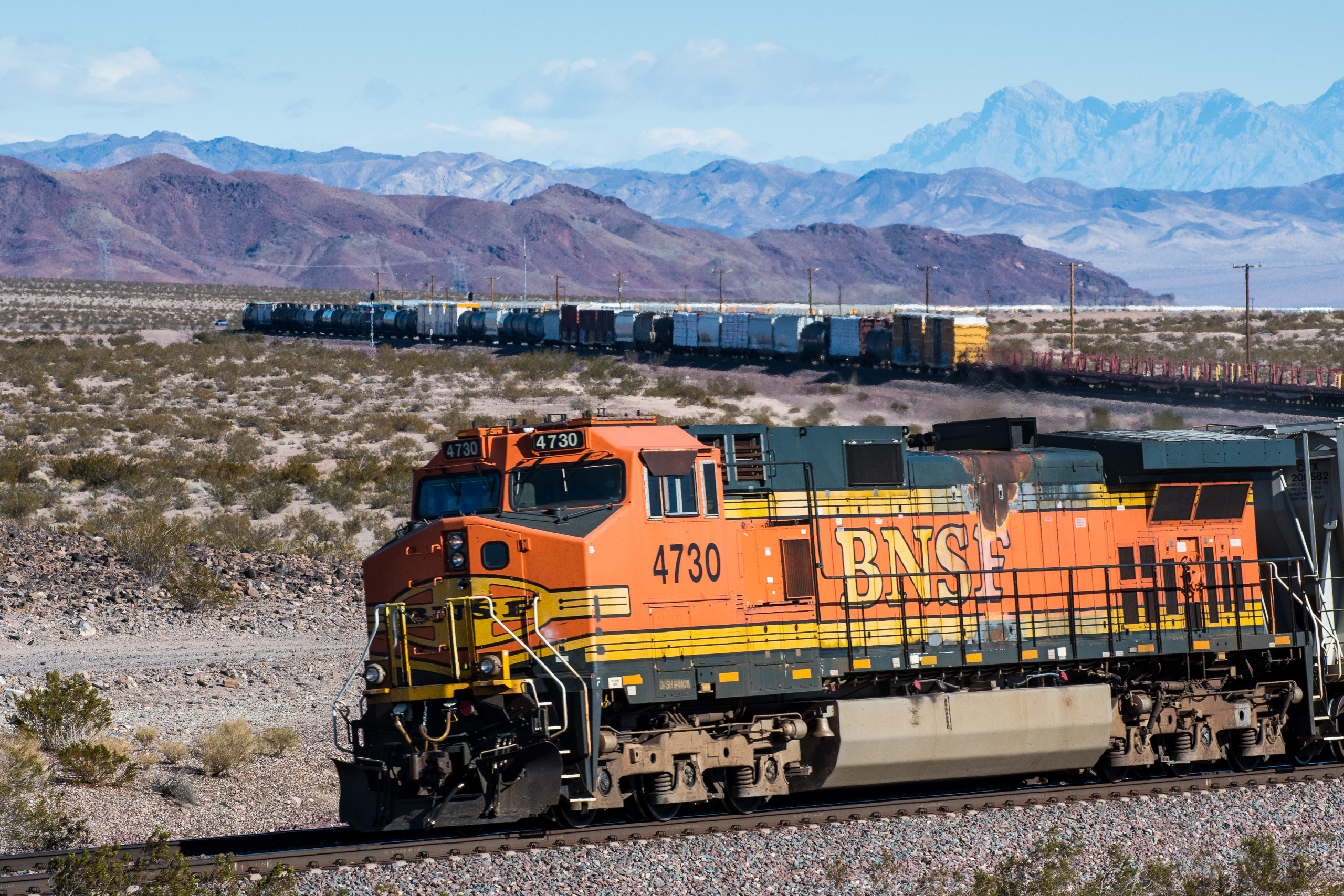
One of my favorite Stein images from the “Mojave Crossing” essay is an action shot of a Santa Fe conductor waving to the photographer from his caboose as his train twists through the curves at Lavic (east of Pisgah), with Sleeping Beauty Mountain in the distance. In early January 2024, I spent a few days with our own Scott Lothes, who was making his first visit to the Mojave Desert, and Lavic was on our hit list. Arriving at the very curve embedded in my brain, we set up to photograph an approaching eastbound manifest and I noticed a battered BNSF Dash 9-44CW working as the rear distributed power unit (DPU). A moment of “Mojave magic” materialized as BNSF 4730 suddenly rolled into the very spot where Stein once framed a red and yellow caboose in the 1970s. The clear winter’s day made Sleeping Beauty peak even more distinct than in Dick’s original image; all that was missing was a wave from the old GE’s cab window.
Of the thousands of Mojave Desert images I’ve made spanning forty years, only a handful have been intended to revisit Dick’s work. But his spirit and influence live on in the new adventures we all make and the images we create, exploring this evolving desert railroad. BNSF has added a third main line to much of the Needles Sub, and the trackside character has largely been wiped clean. But its soul is unchanged. Stein never tired of the desert, and one of his earliest dates with Shirley Burman took place in the Mojave that he loved. Read about their adventures in her article, “A Desert Date on “Mars.”
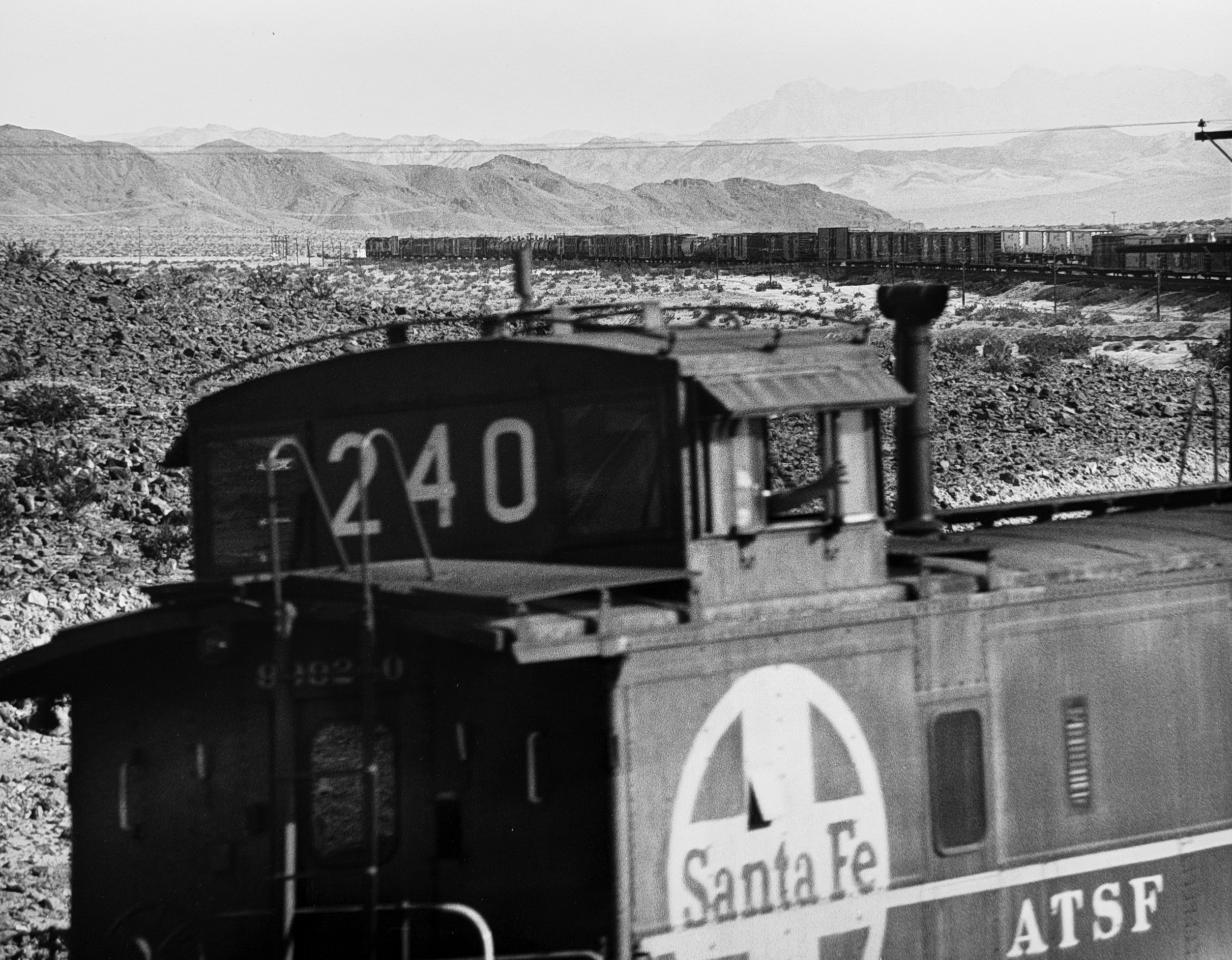
Above: A conductor’s wave greets photographer Steinheimer as his eastbound AT&SF manifest drops from the summit at Lavic, California, and winds through a series of curves on its way toward Ludlow and points east. Above the power is Sleeping Beauty Mountain, named for its resemblance to a princess laying down to sleep. Photograph by Richard Steinheimer
Below: Nearly fifty years after Stein’s mid-1970s image, BNSF 4670 is the rear distributed power unit for an eastbound manifest, twisting through the same series of curves on January 4, 2024. Sleeping Beauty Mountain again provides a rugged backdrop on this crisp winter day, joined by waves of additional mountain ranges. Photograph by Elrond Lawrence
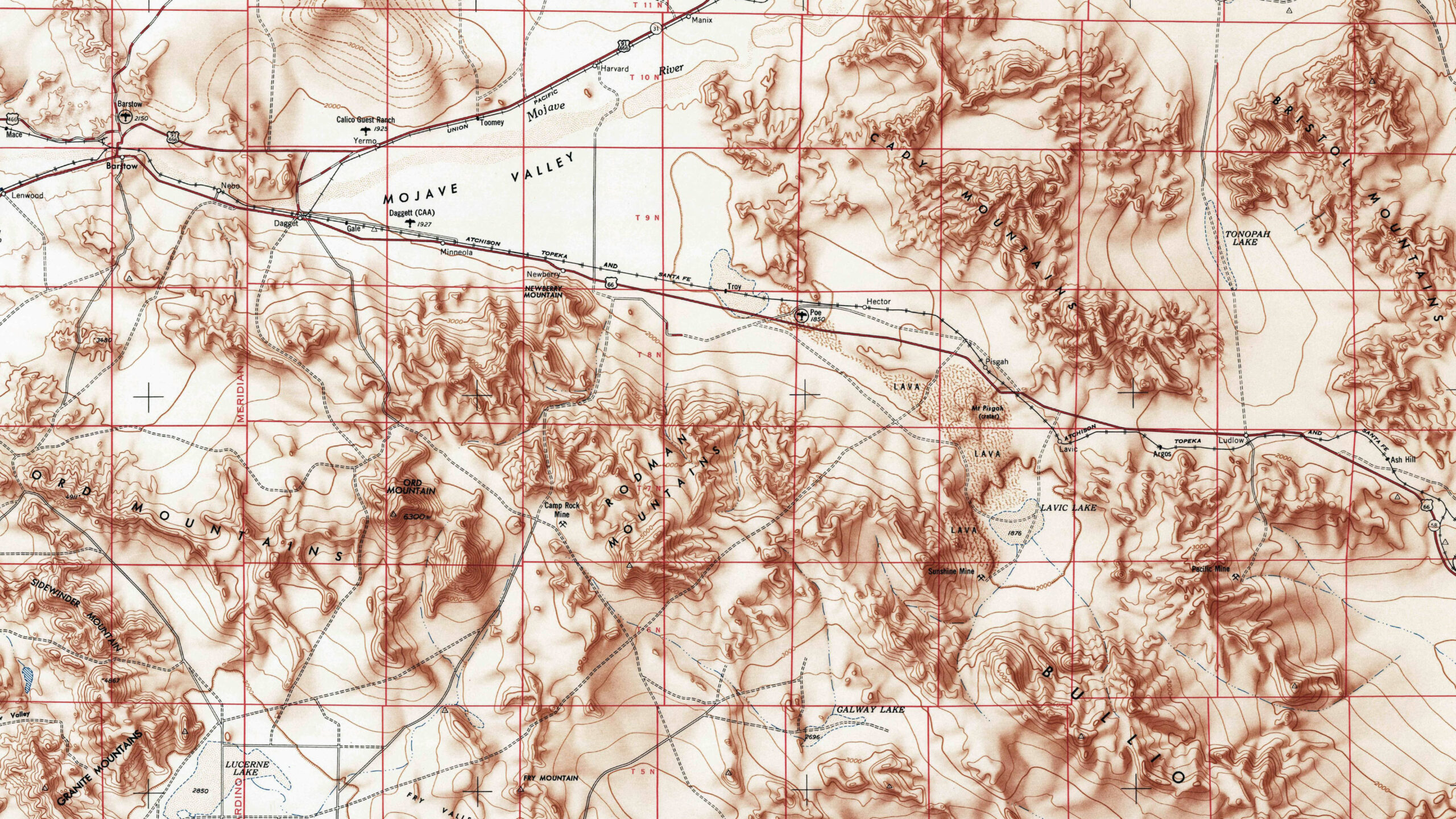
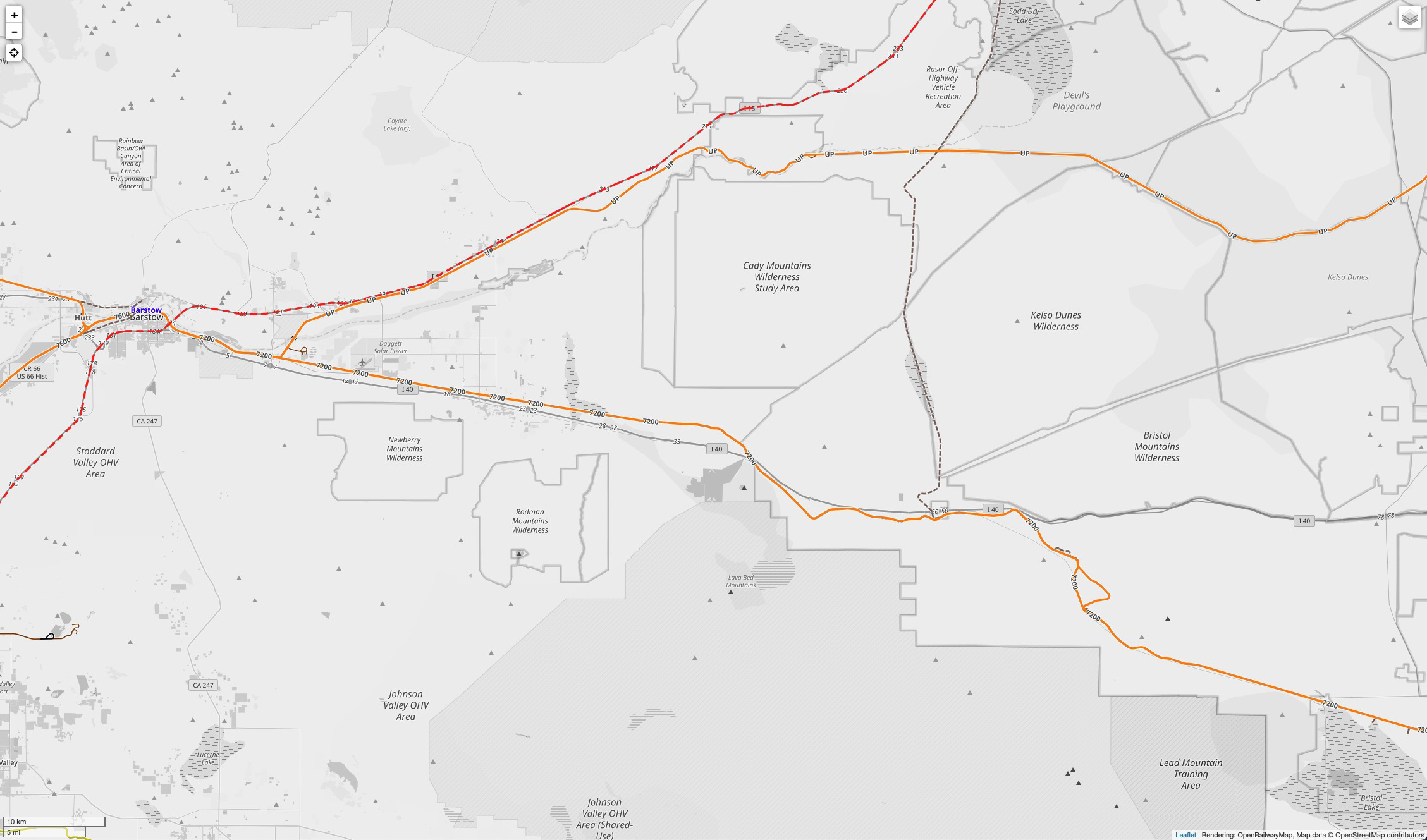
Current map
For more
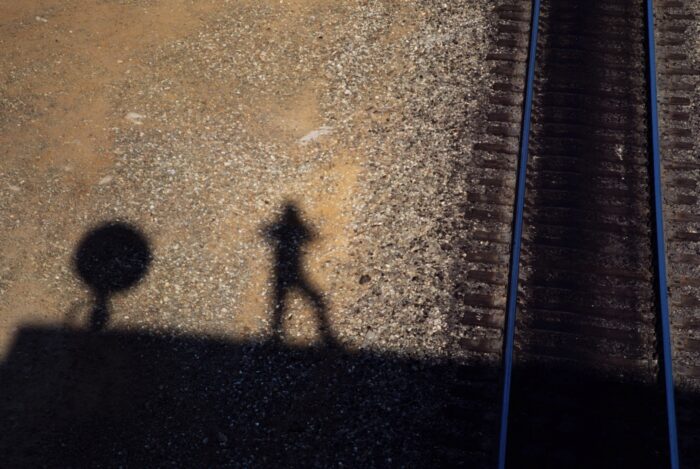
Explore selections of Richard Steinheimer’s photography in our digital collections. The initial batch features his color work from Donner Pass, and additional batches are in the works, including one with images from the Mojave Desert.
In the photograph at left, Richard Steinheimer casts his shadow between rails reflecting the blue sky and a silhouetted signal at Shed 47 on Donner Pass by Andover, California, on July 4, 1985. Photograph Richard Steinheimer, Steinheimer-Burman-AR-076