COLLECTION TRACKING:
Montana’s Two Medicine Bridge with Ron Hill
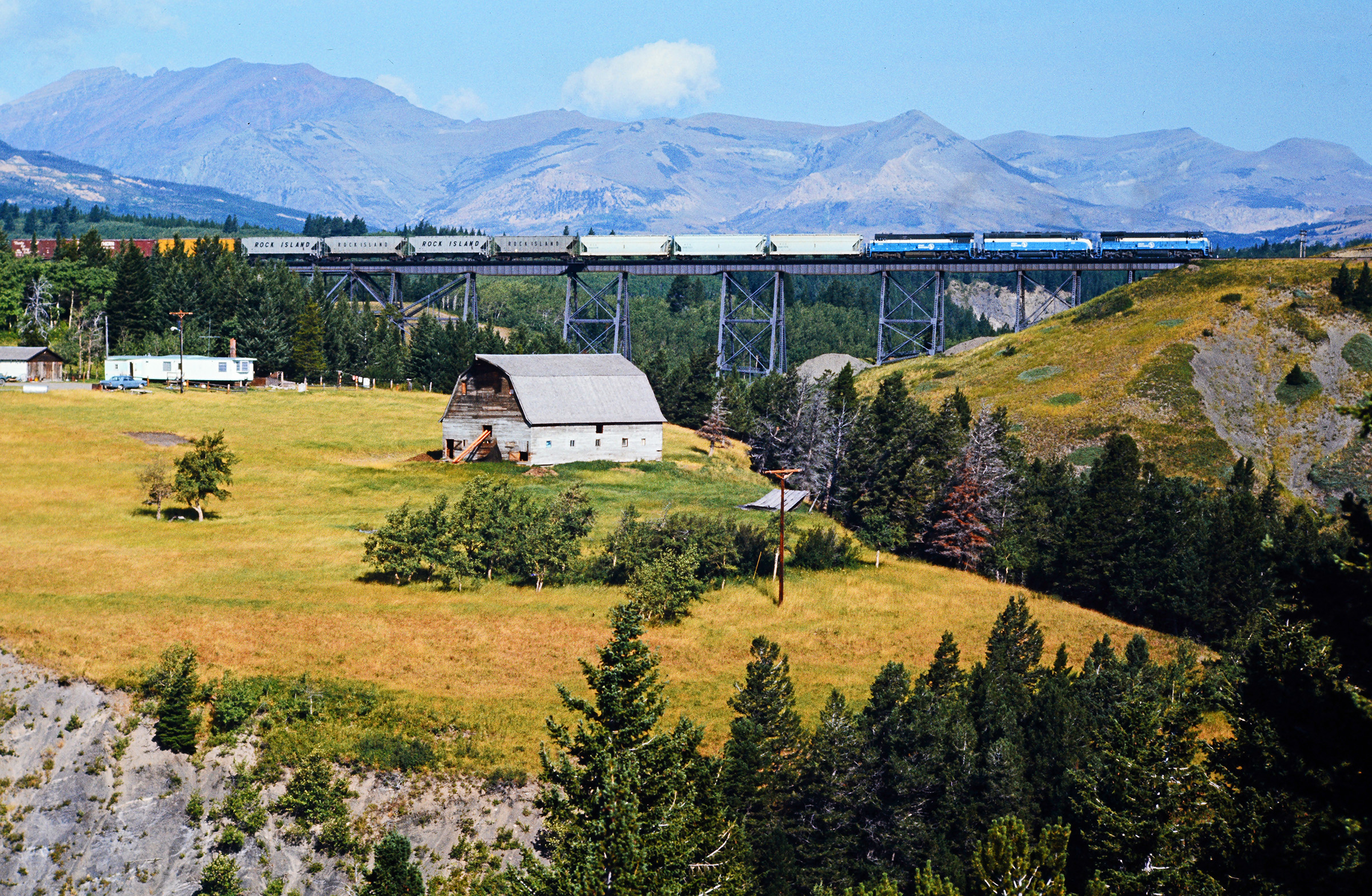
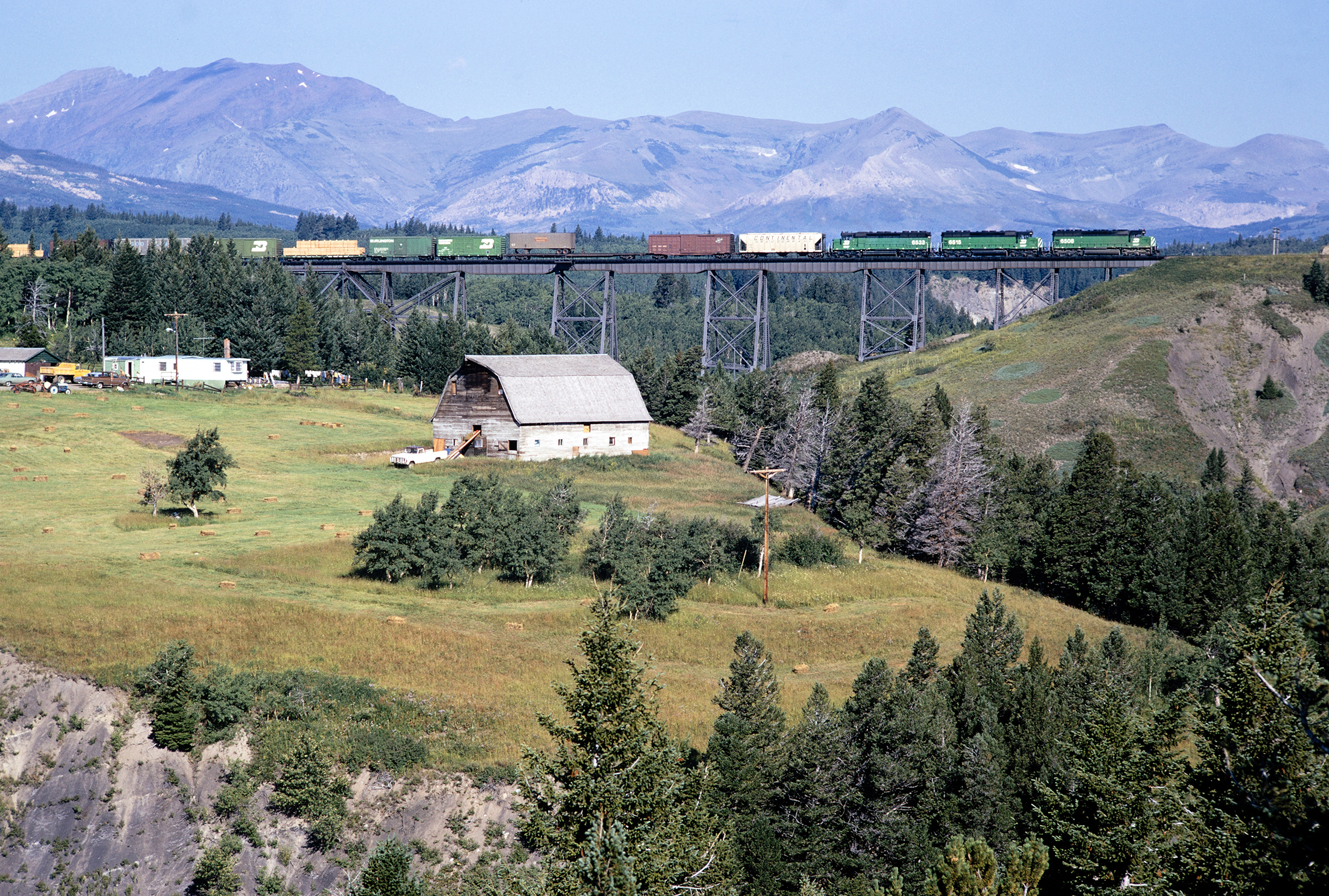
Left: Two U33Cs and an F45 lead an eastbound manifest over the Two Medicine River near East Glacier Park, Mont., on August 16, 1969. Photograph by Ron Hill, Hill-10-23-28.
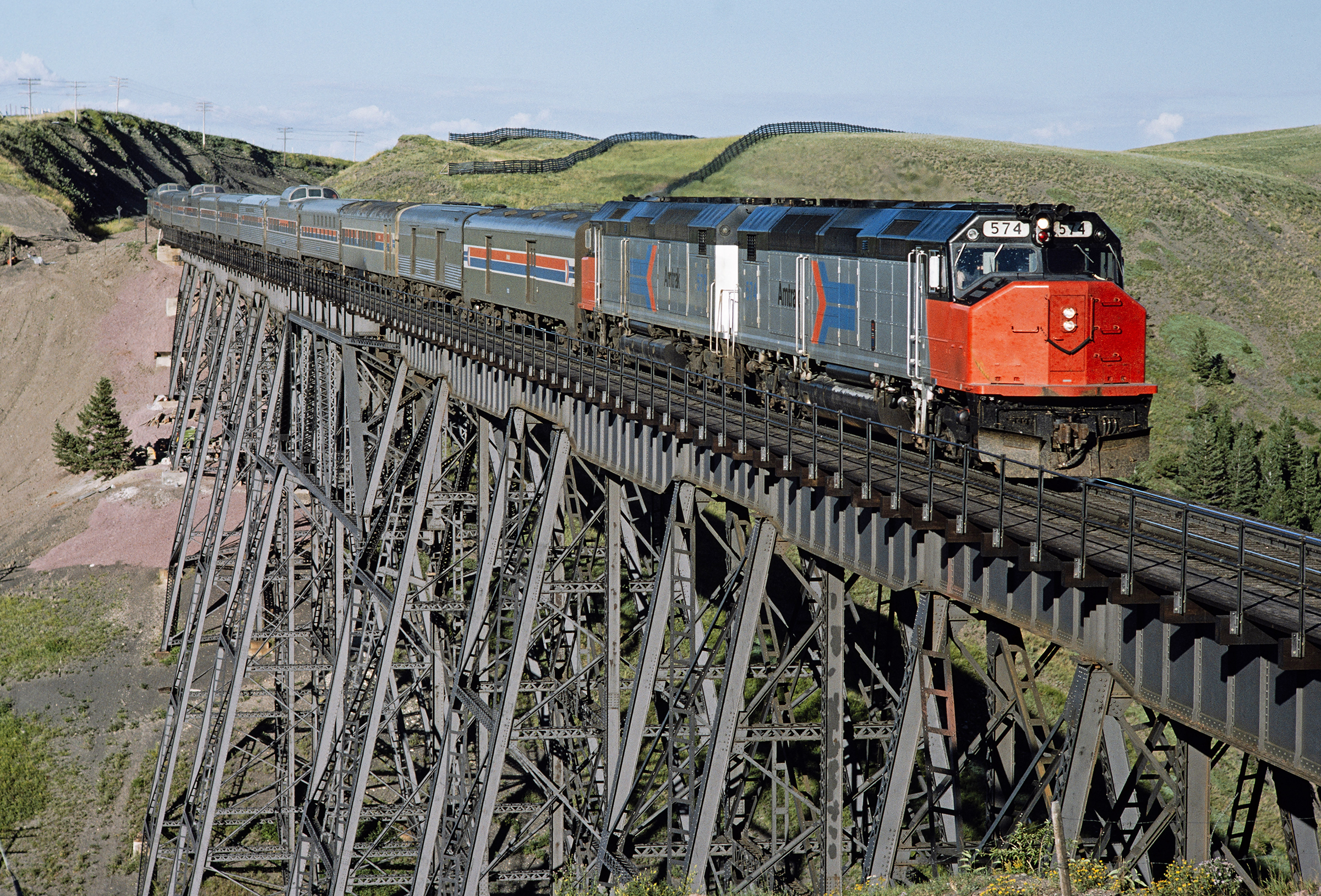
Right: Three years later, on August 21, 1972, a trio of Burlington Northern SD45s wearing the road’s classic Cascade Green livery crosses the same trestle. Photograph by Ron Hill, Hill-11-03-33.
By Justin Franz
Every piece of railroad has a “signature shot,” that must-have photo location that stands above all others. The one image every visiting photographer has to come home with.
While there are dozens of spectacular spots along the former Great Northern Railway over Marias Pass, one location has drawn photographers for decades: the trestle over the Two Medicine River near East Glacier Park, Montana. Behind the trestle looms the imposing Lewis Range of Glacier National Park, and in front of it is “the most photographed barn in Montana.” While some iconic railroad locations demand long hikes or rugged climbs, this one only requires you to pull over on the side of U.S. Highway 2.
The Great Northern first laid rails here in 1890. To cross the Two Medicine River, the railroad constructed a 1,000-foot-long wooden trestle just east of Midvale (now called East Glacier Park). Ten years later, the railroad replaced it with a sturdier steel bridge that still carries BNSF Railway trains today, 126 years later.
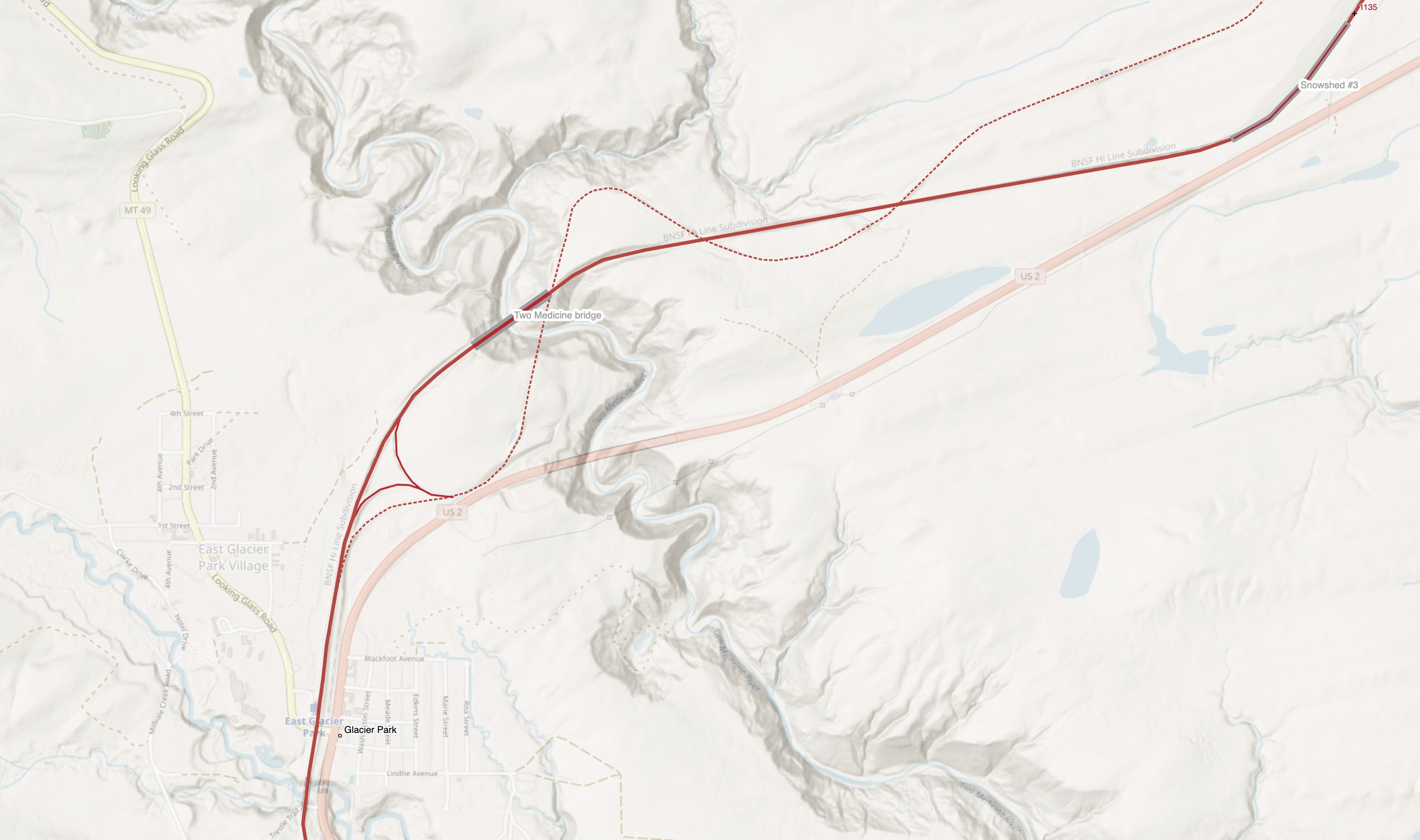
While the GN wanted to modernize all its mainline bridges, building something more rugged was especially prudent on the Rocky Mountain Front, where hurricane-force winds are not unheard of. In February 1910, a conductor walking across the top of his train at Midvale was blown off a boxcar and landed 50 feet away. Thankfully, he survived with only a few bruises. According to the book A Glacier Gallery, later that same day, six boxcars were blown off the bridge. Even today, the wind is a problem for BNSF. Special instructions in the railroad’s Montana Division timetable tell crews to reduce speeds when winds exceed 60 miles per hour and to stop entirely when they exceed 70 miles per hour.
One of the reasons photographers like to return to the same spots time and time again is because it is an excellent way to show the passage of time and record the changes that have occurred on a railroad. Photographer Ron Hill did this especially well at Two Medicine, which he first photographed in the 1960s with the Great Northern and continued into the Burlington Northern and BNSF eras, as seen in the two images at the top of this story.
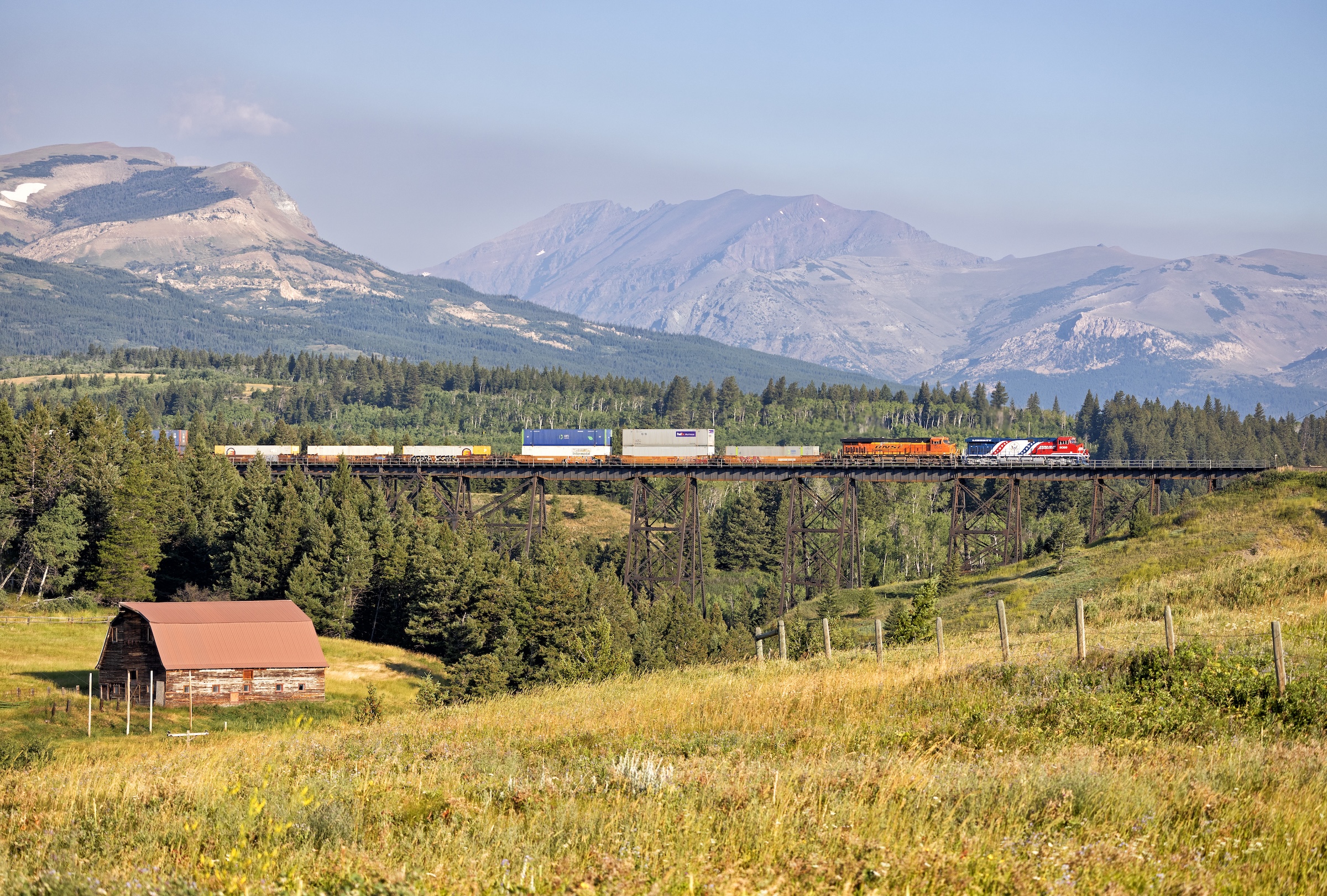
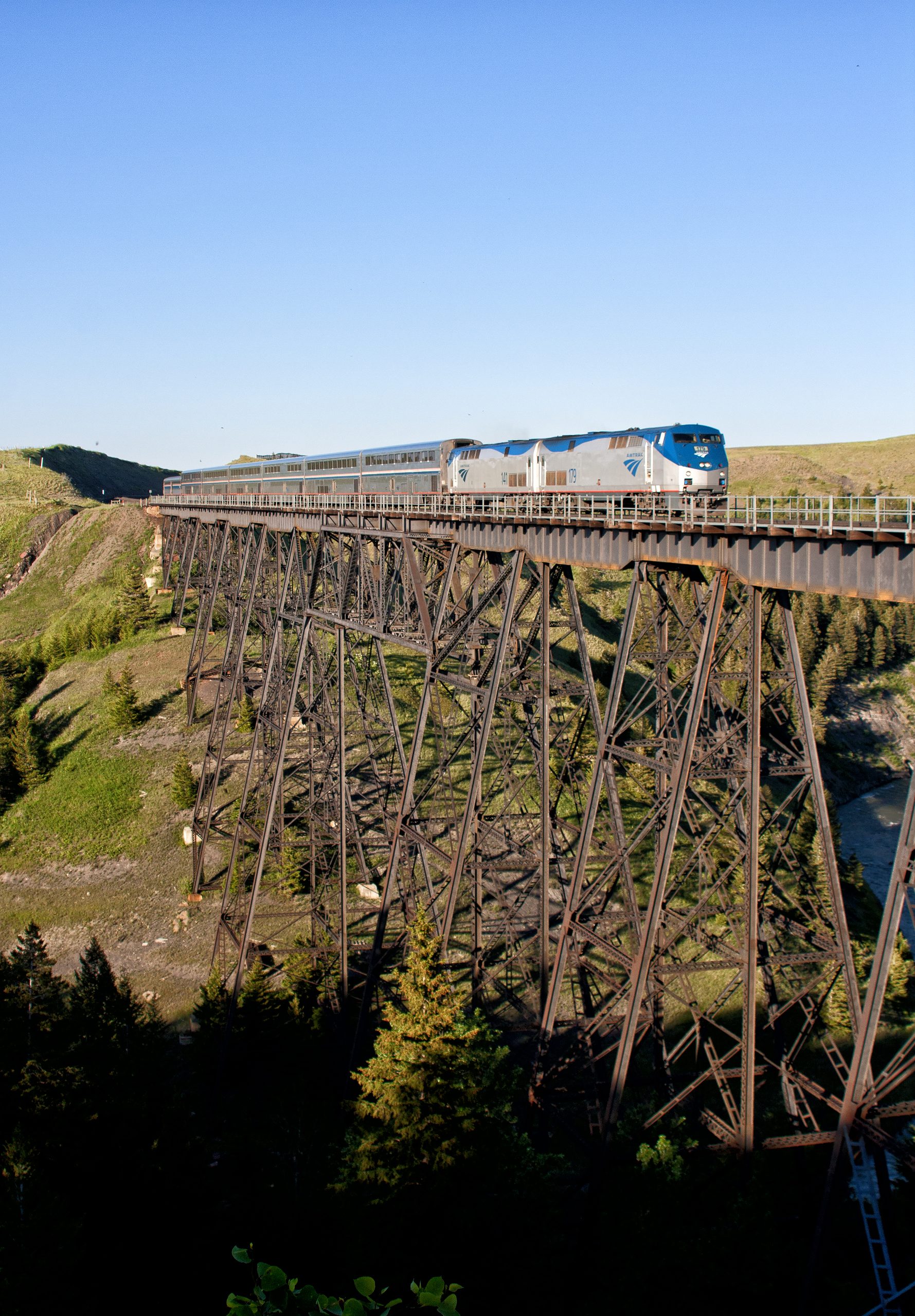
Like Hill, I have pulled off on the side of U.S. 2 countless times to photograph trains crossing the Two Medicine River. This summer, as I followed a Portland-to-Chicago Z train east over Marias Pass one morning, I knew the bridge would be the perfect spot to record yet another change on the railroad: the arrival of BNSF’s new Semiquincentennial locomotives.
For Hill, me, and countless others, one of the most popular trains to photograph on the trestle is the Empire Builder, which has long passed through East Glacier Park eastbound in near-perfect morning light.
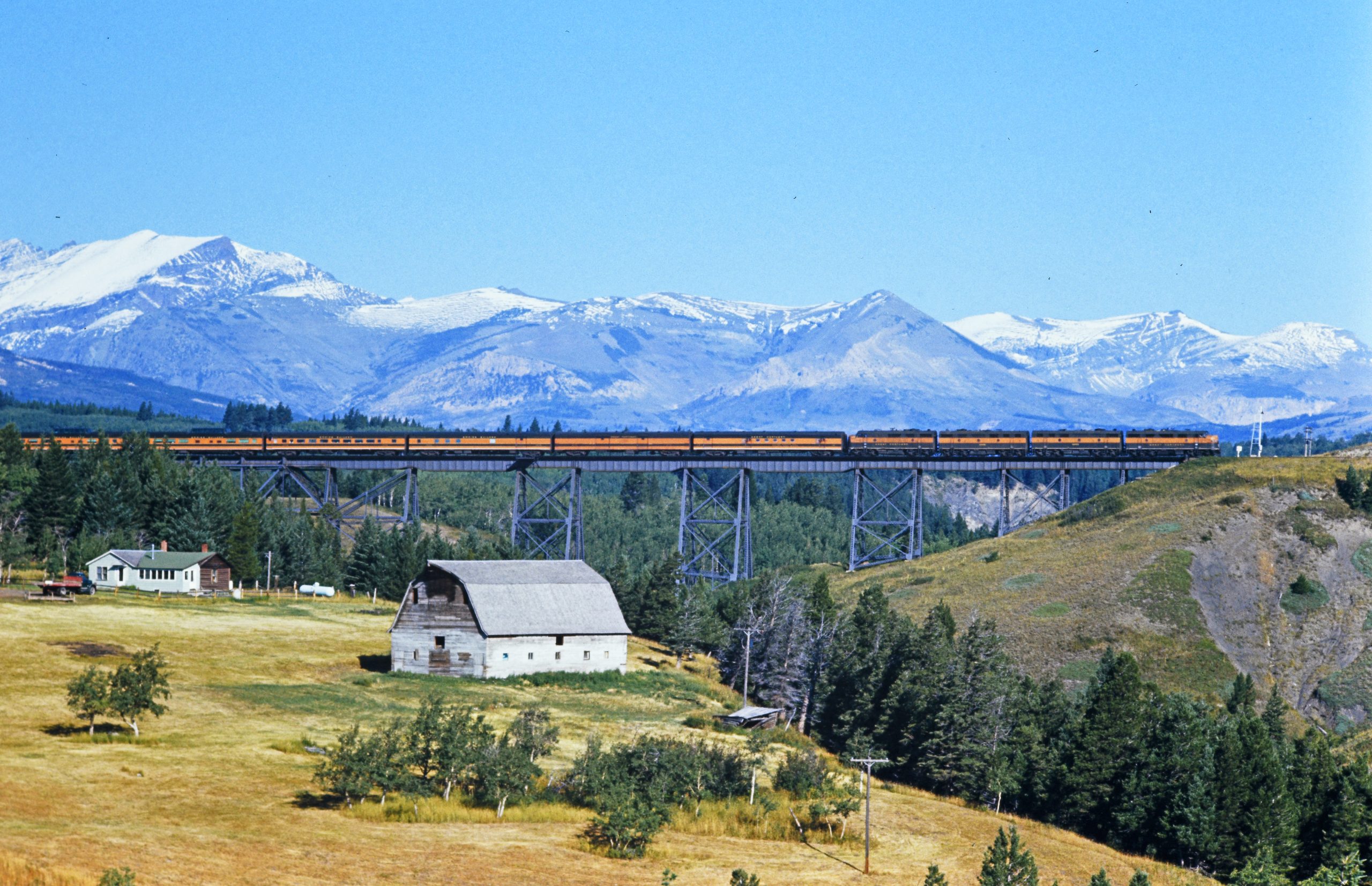
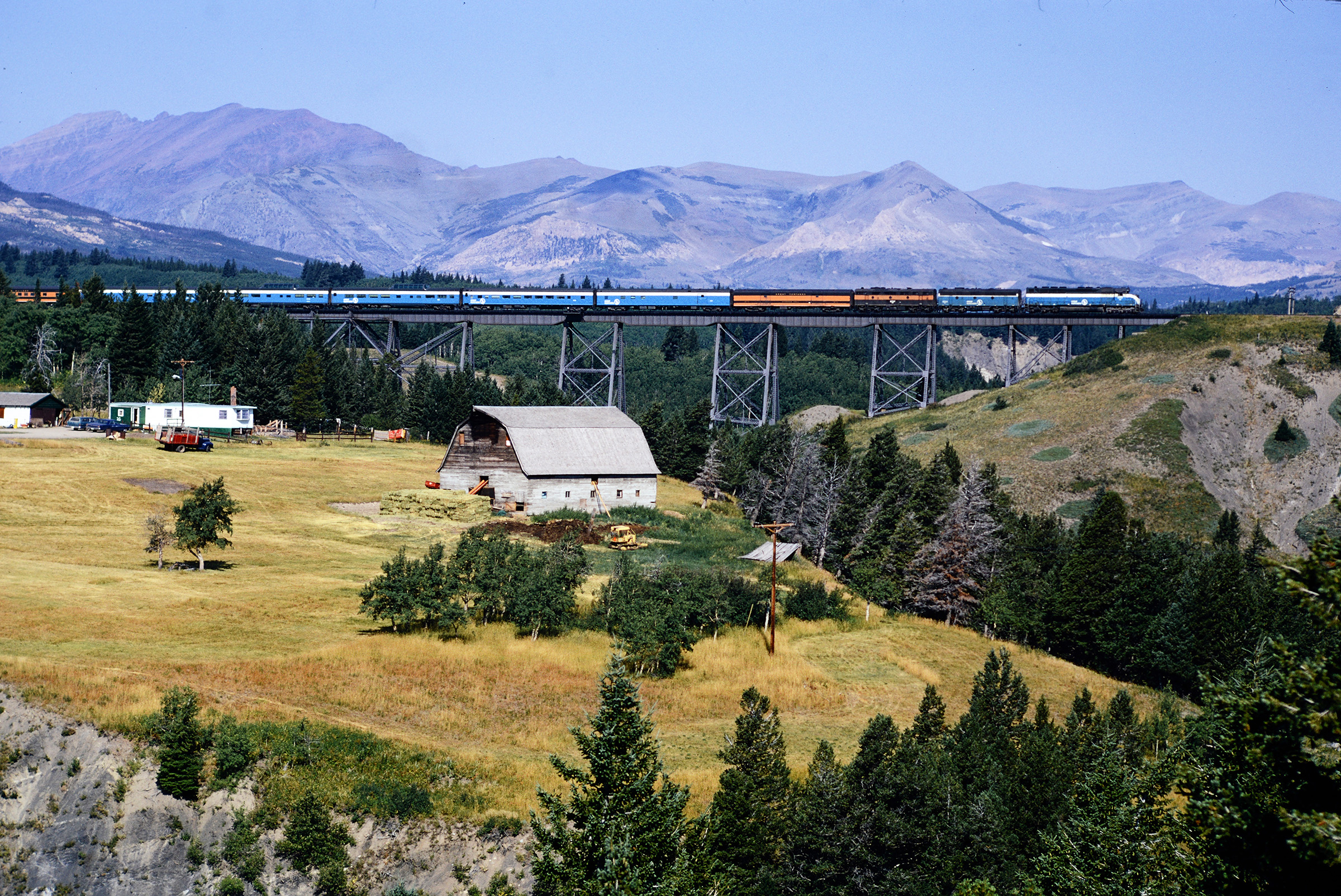
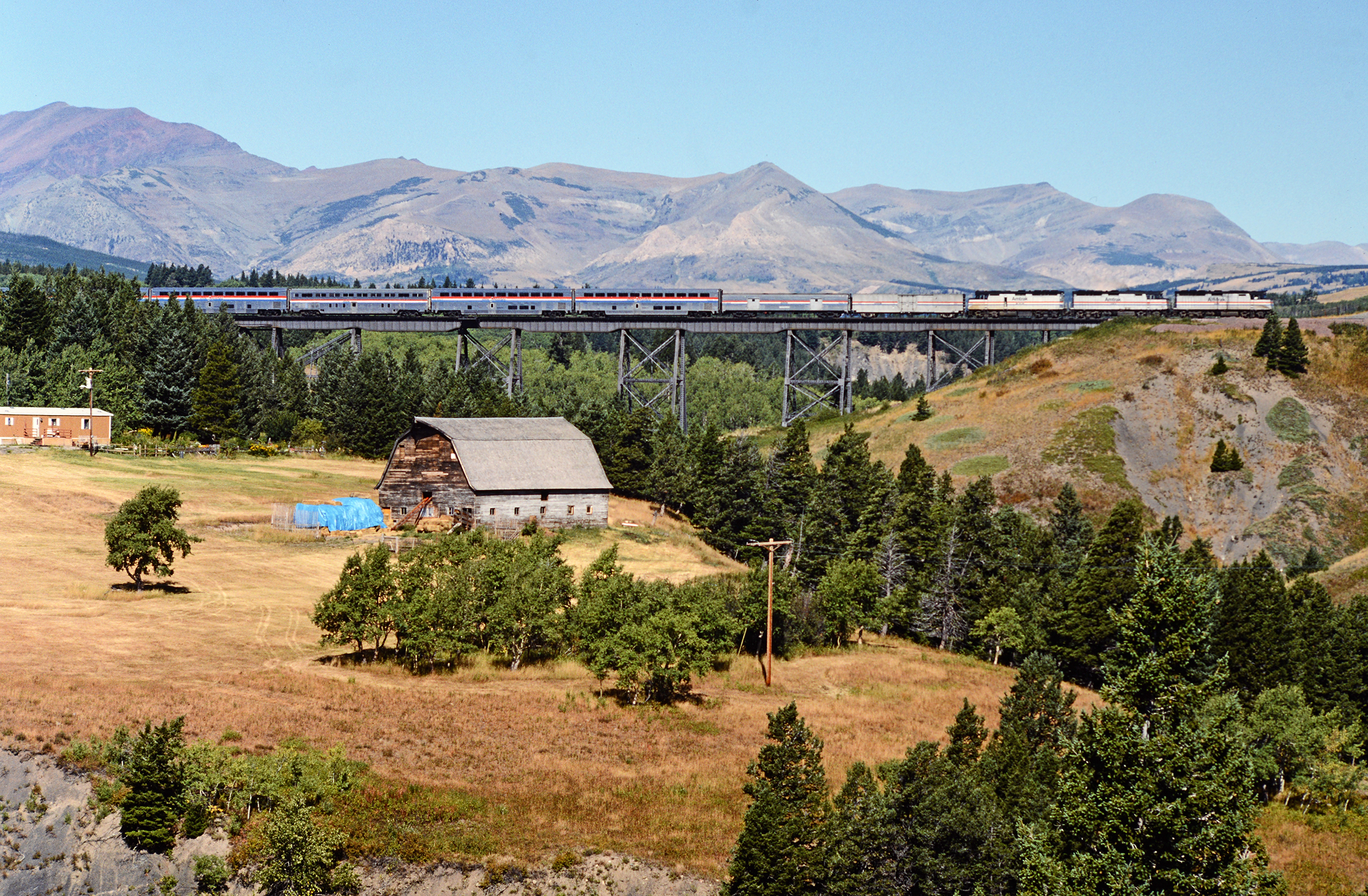
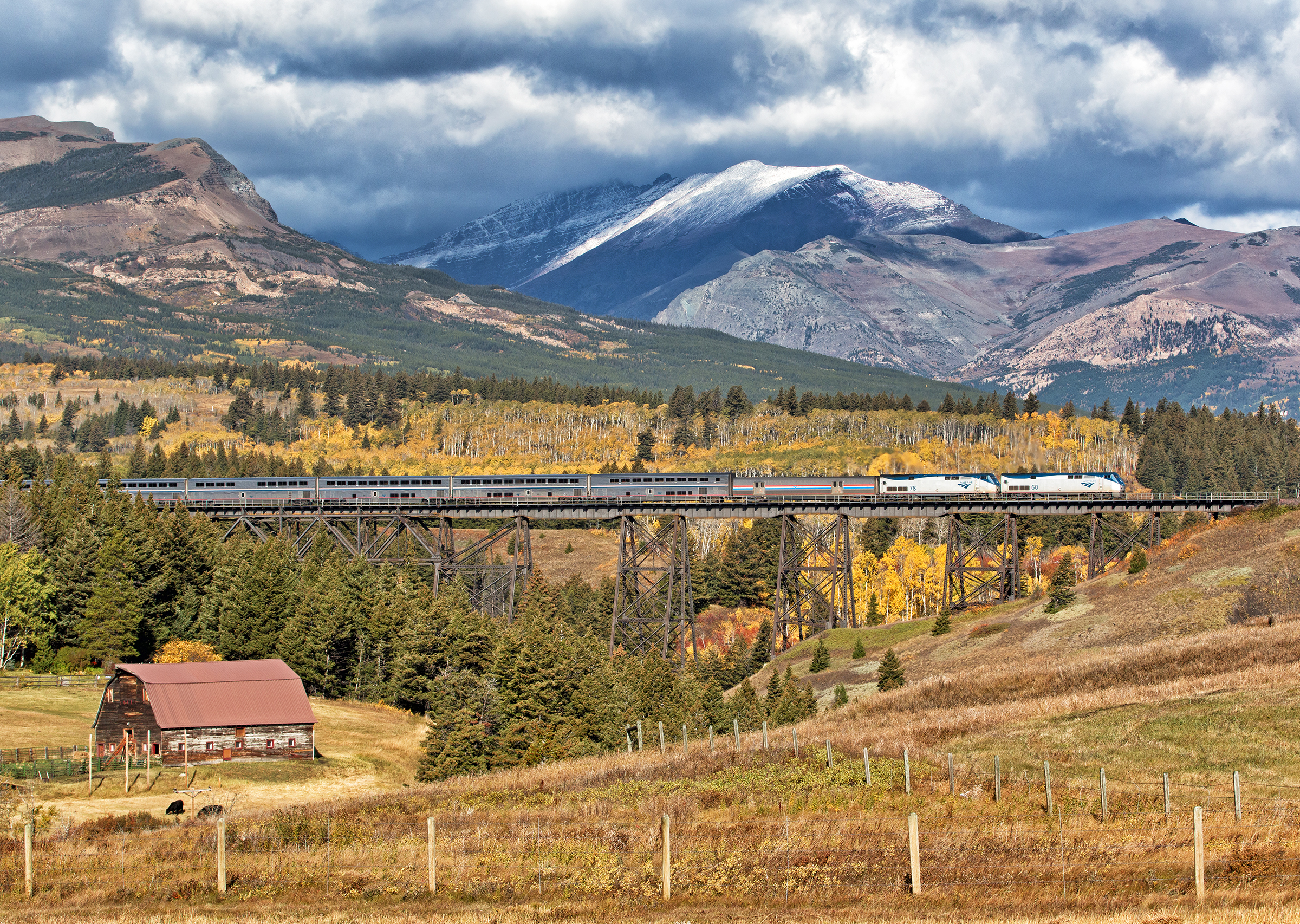
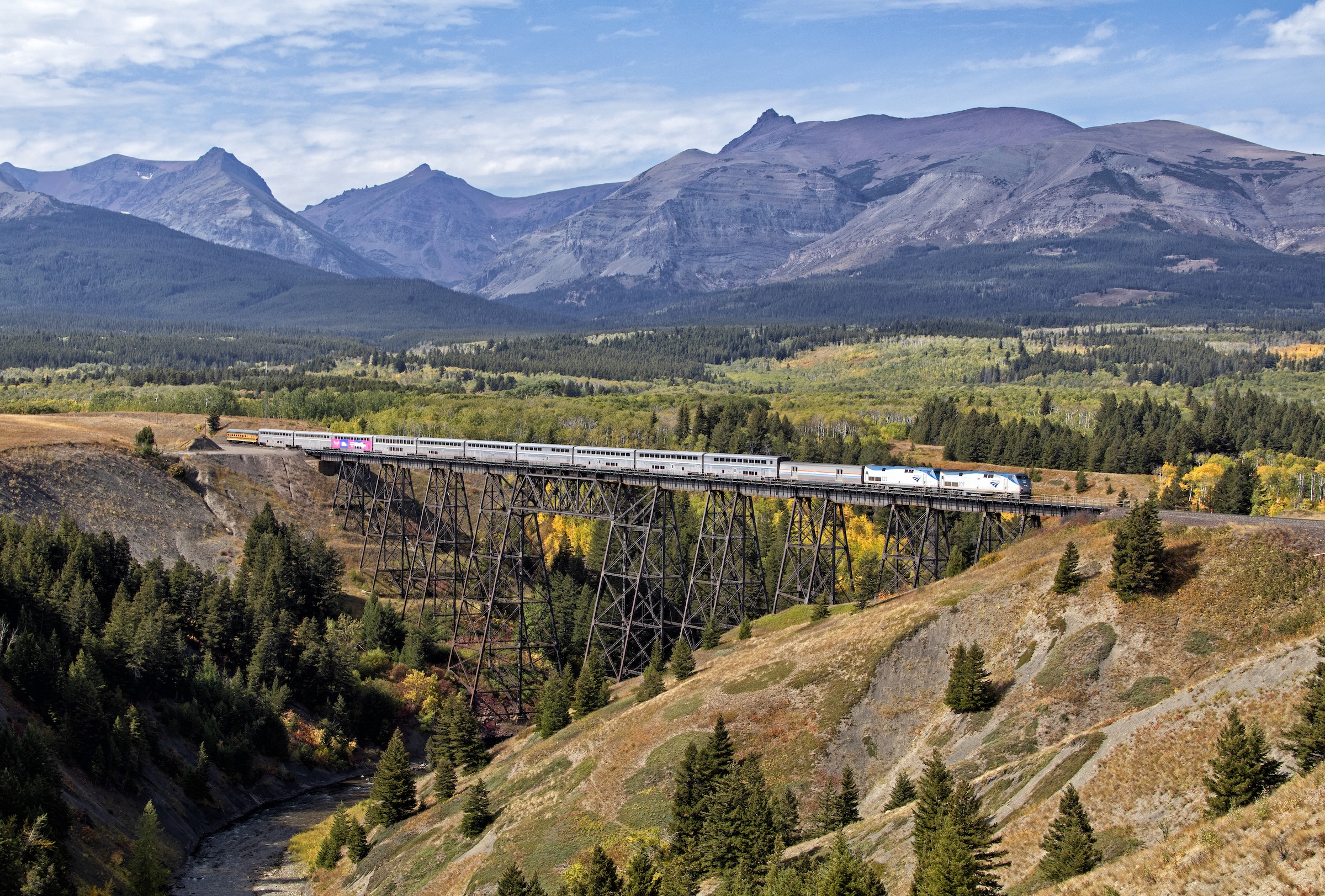
Eagle-eyed observers might note that the angle on the bridge in Hill’s photos differs slightly from my contemporary view. That’s because the highway bridge over the Two Medicine River was rebuilt in the early 2010s, so today’s photographers have a slightly more elevated view that lets them see a bit more of the middle of the trestle. While the barn is an iconic part of the scene, including it means sacrificing a full view of the bridge, which you can get with a little effort by hiking in, as seen below.
While the classic shot at Two Medicine is of a morning eastbound, you can also photograph afternoon westbounds from the north side during the longer days of summer, as Hill did in 1975 and I did in 2011.
Hill visited Montana every August for more than a decade in the late 1960s and early 1970s, often driving from his home in Denver in one of his Porsches. (“Montana didn’t have a speed limit for a long time, and there were rarely any cops around,” Hill told Scott Lothes for a 2021 story in Classic Trains. “You could go as fast as you wanted.”) While Hill was obviously drawn to the scenery of northwest Montana, he was undoubtedly fascinated by the changes underway on the railroad itself, as GN became BN and Amtrak took over passenger service all within a few years. For Hill, no place was better to track those changes than the railroad’s dramatic crossing of the Two Medicine River.
For more
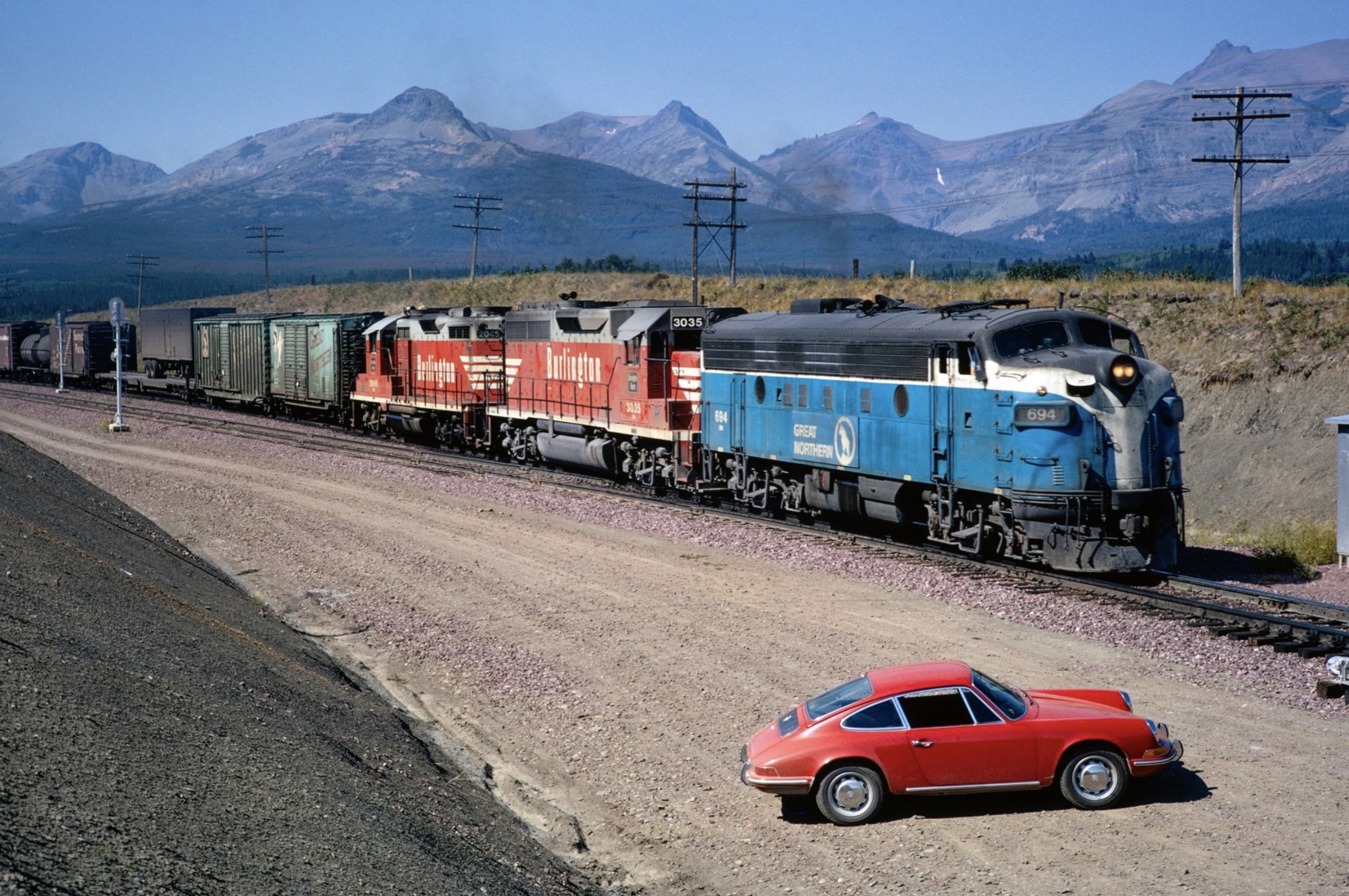
Hit the road with Ron Hill and his new red Porsche 911 (seen here on the railroad access road just west of the Two Medicine Bridge on August 24, 1970. Hill-11-01-04) and explore more of his incredible imagery in Montana and across the western United States and Canada, much of which is now available on our digital collections portal.