COLLECTION TRACKING:
Switzerland’s Lötschberg Pass with Karl Zimmermann
By Scott Lothes
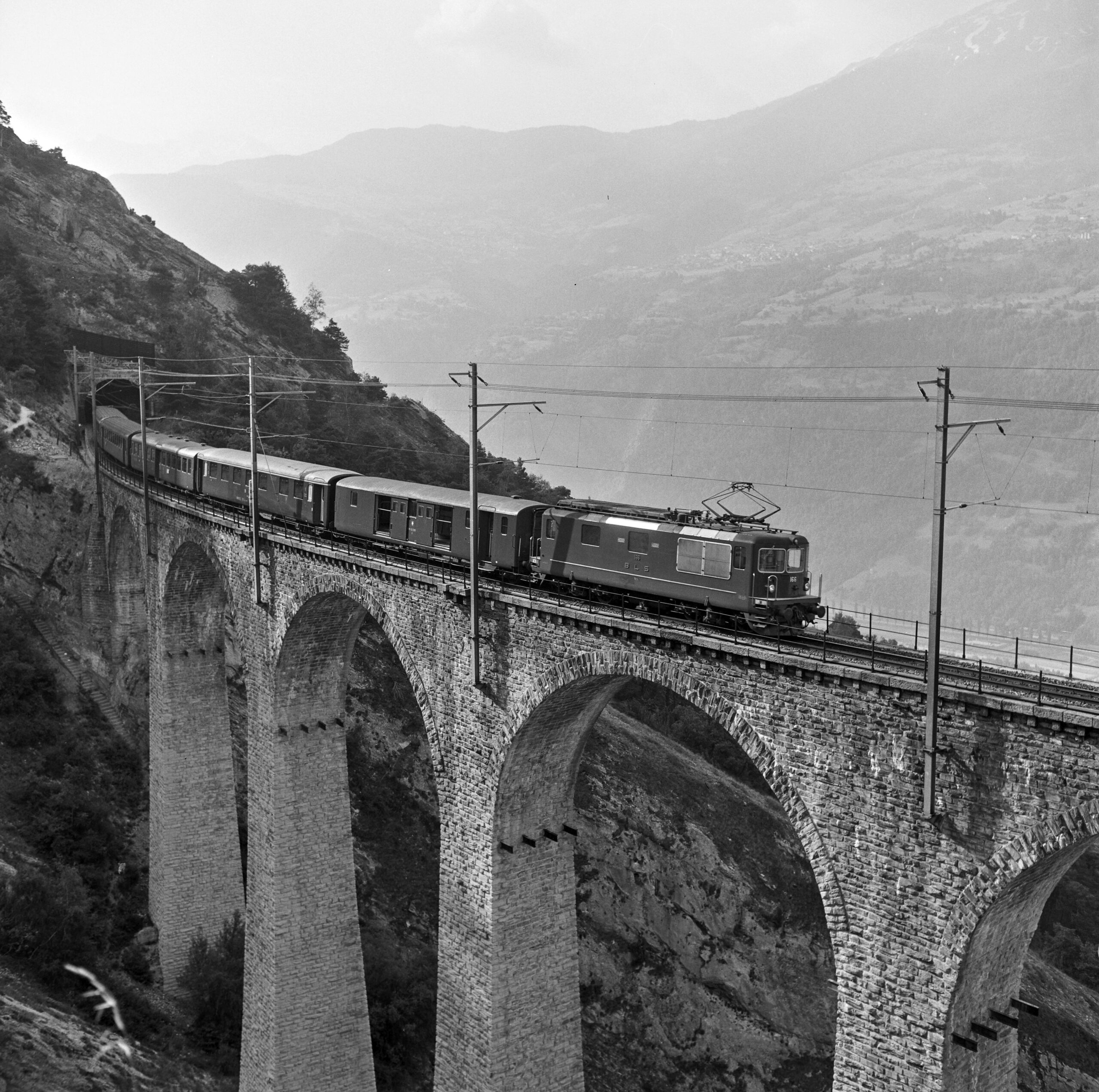
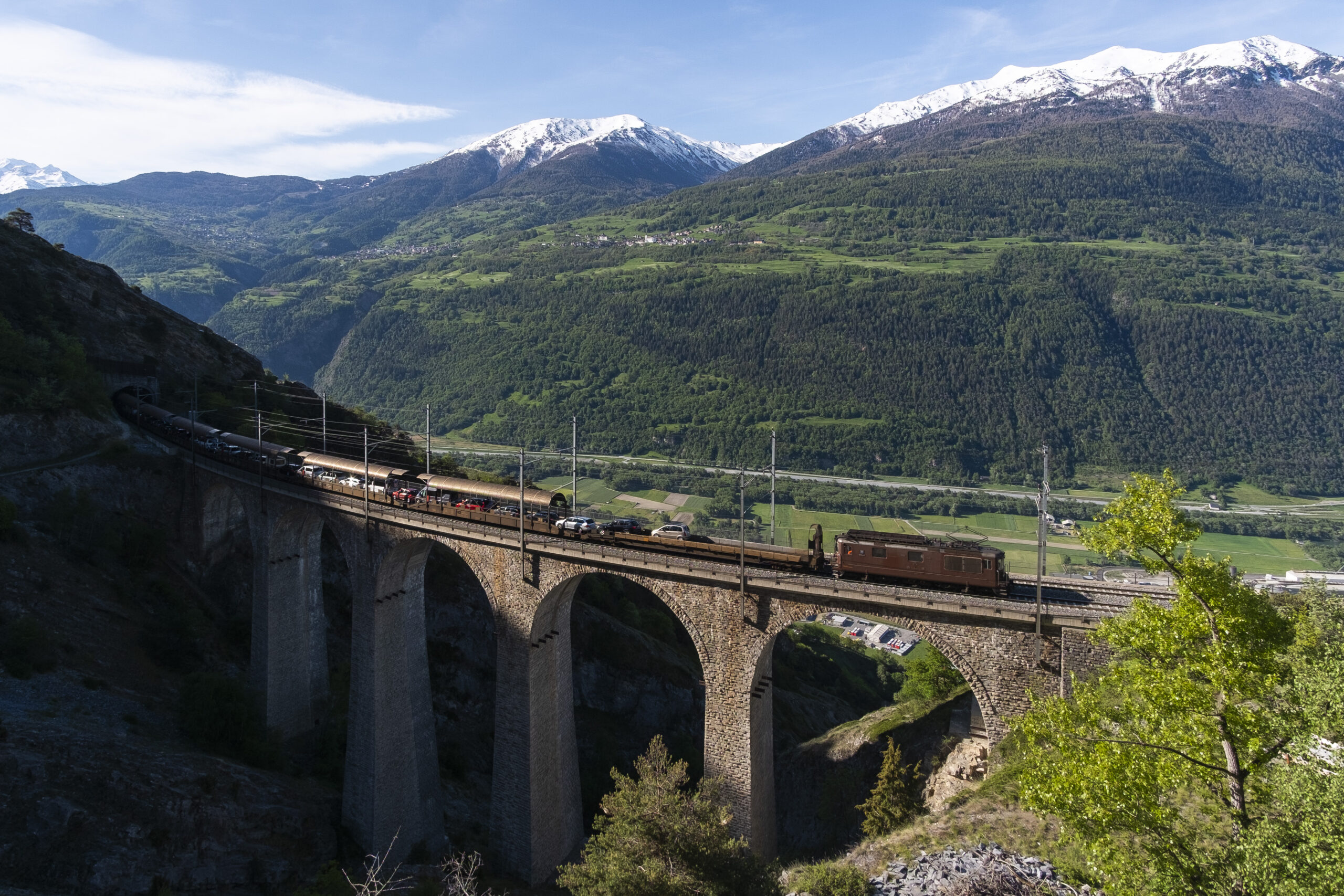
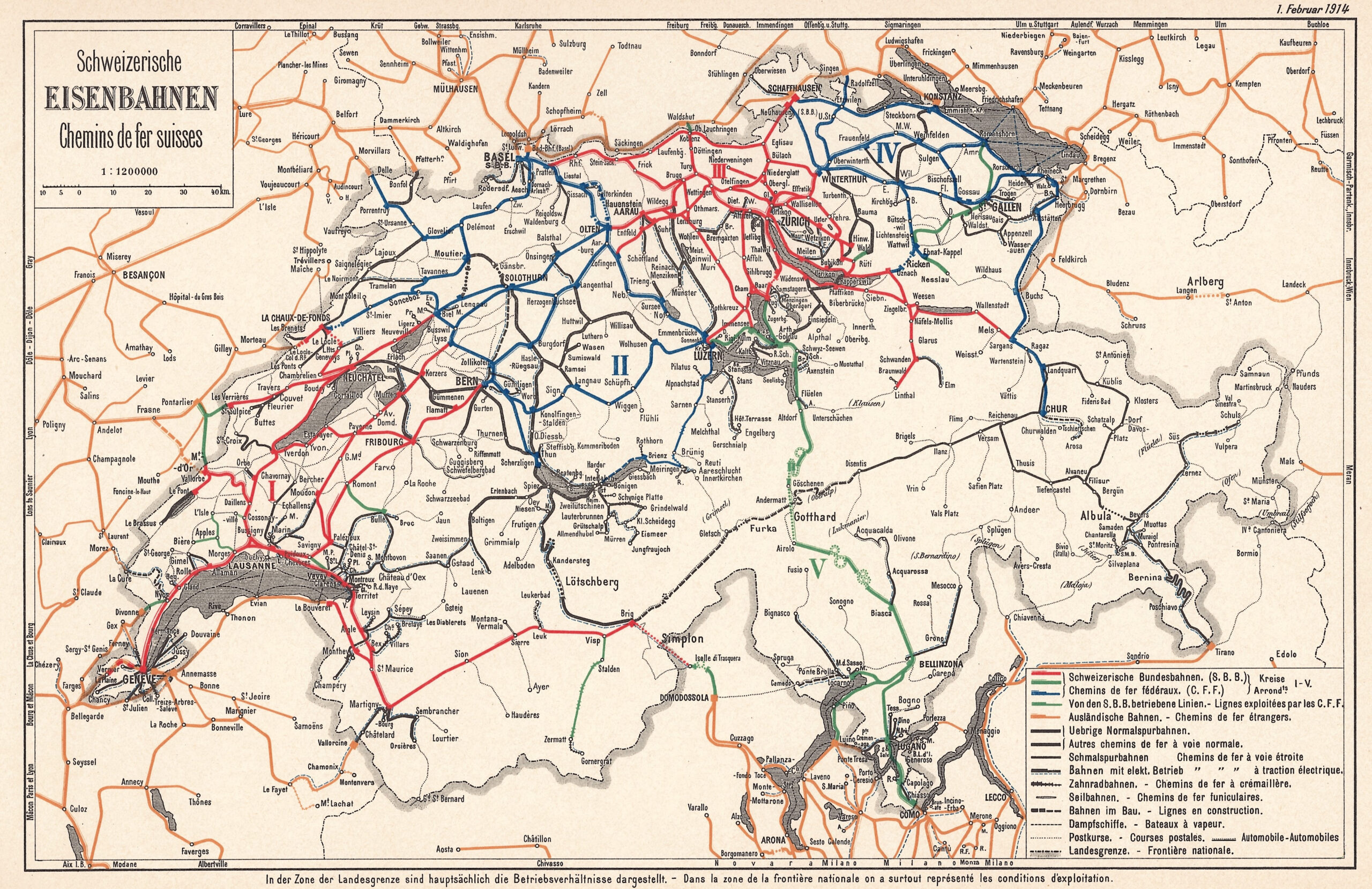
On July 13, 1977, Karl Zimmermann disembarked from a Bern-Lötschberg-Simplon (BLS) train at Hohtenn, a lonely station on the southern flank of Switzerland’s Bernese Alps. The station sits 800 feet higher than the village it serves, a necessity dictated by the railway’s 2.3% climb out of the Rhône Valley toward the southern portal of the nine-mile-long Lötschberg Tunnel at Goppenstein. The route opened in 1913 and (along with the Gotthard line to the east) is one of two principal north-south rail crossings of the Alps in Switzerland.
The southern ramp includes three towering bridges, and the last of them, Luogelkin Viaduct, is just down from Hohtenn Station. A hiking trail follows the tracks from Hohtenn all the way down to the city of Brig in the bottom of the valley, 13 miles away and 1,300 feet lower. Much of the trail runs on the abandoned grade of the narrow-gauge construction railway used to build the BLS line in the early 1900s.
It’s an easy walk of just half a mile from the station to the viaduct. Karl did it that morning, and I did it 39 years later in 2016. Mornings near the summer solstice are key for getting sunlight on the north side of Luogelkin’s five stone arches; there’s a window of less than two hours from when the shadows clear to when the sun swings to the other side. Karl caught passenger trains in both directions, pulled by BLS Re 4/4 “Brownie” electric locomotives. The four-axle, dual-end units generate 6,700 horsepower, and the first ones entered service in the early 1960s. At the time of Karl’s visit, they were still in production at SLM Winterthur and BBC Baden, with the last ones delivered in 1983.
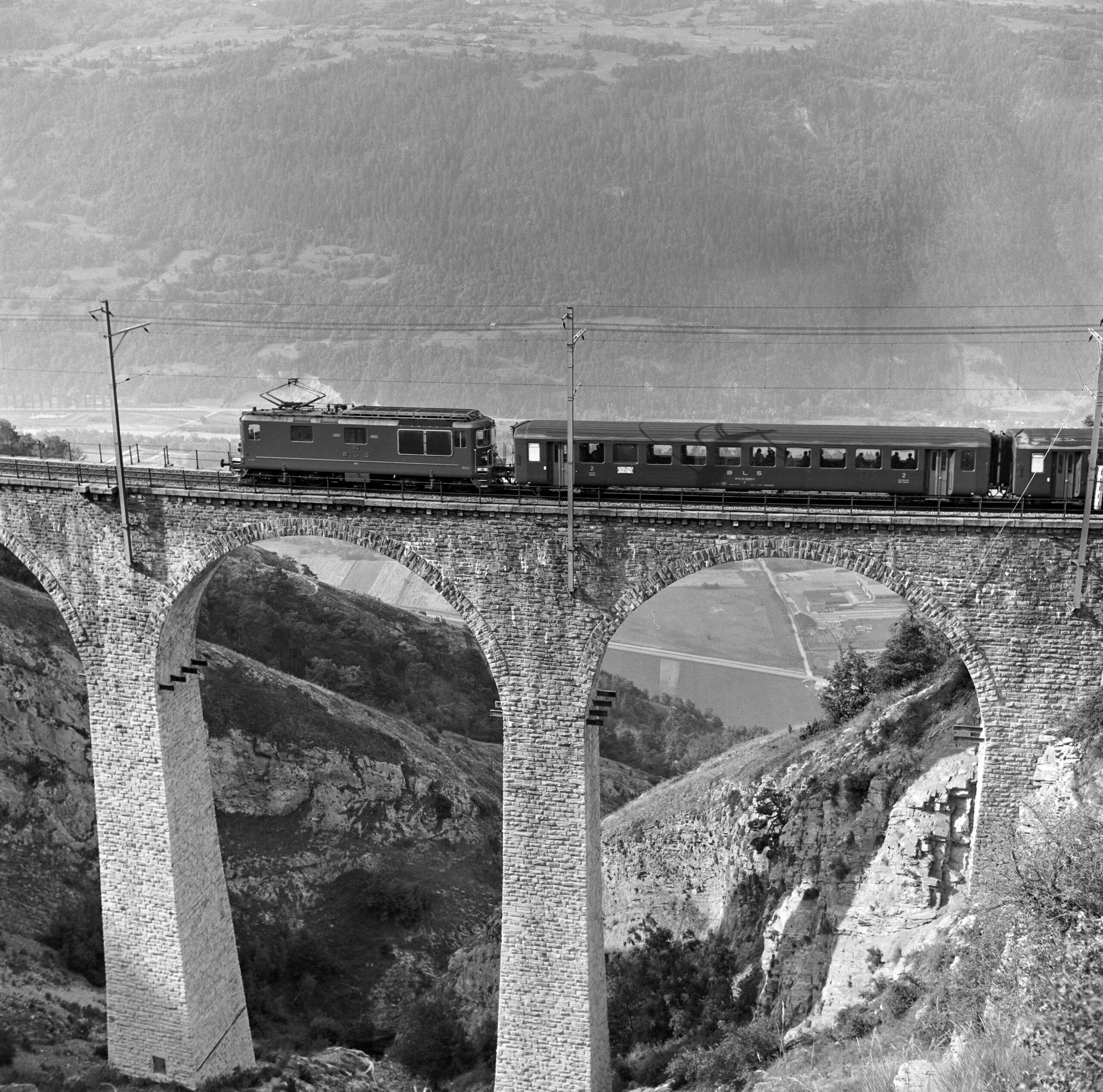
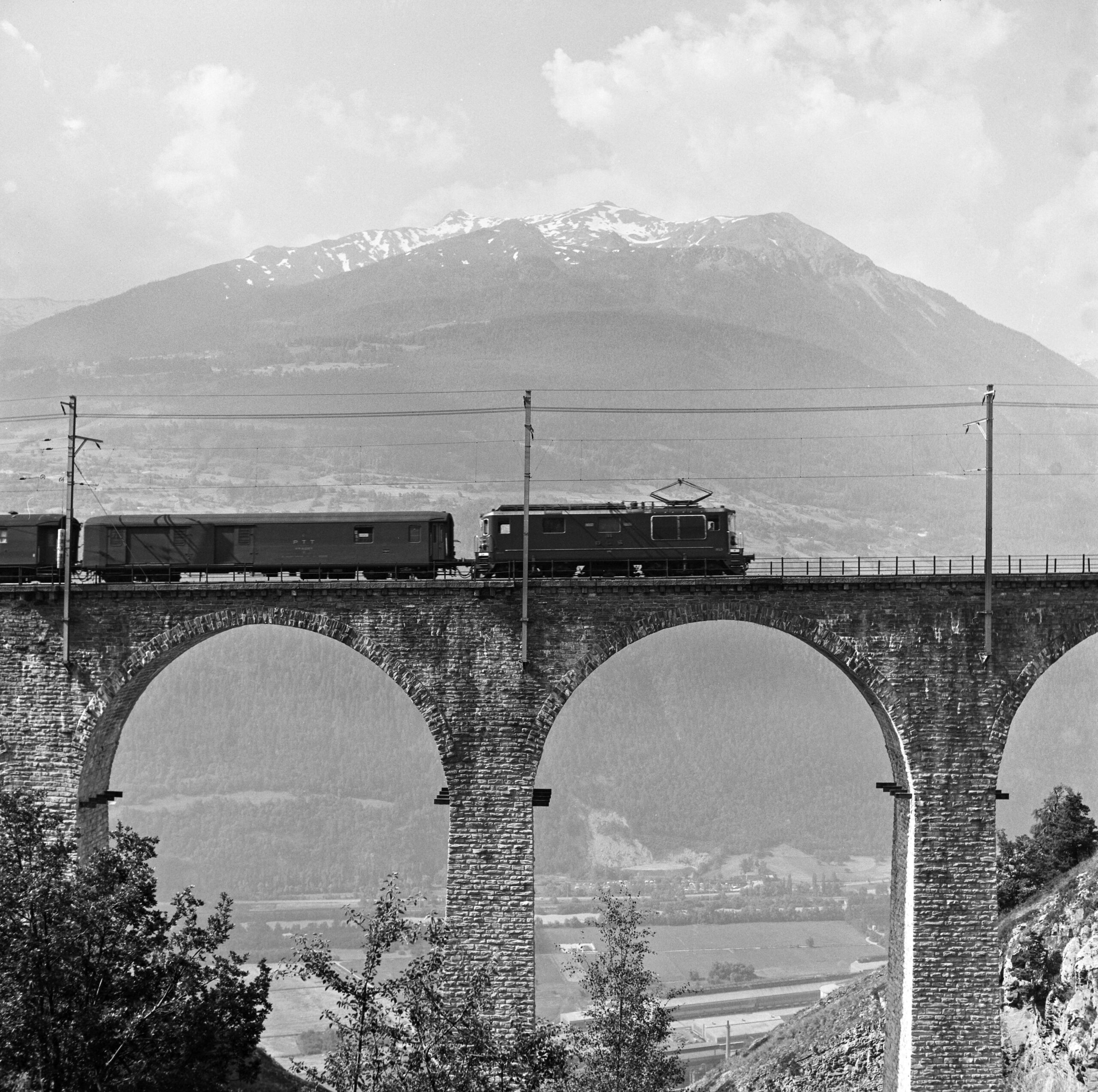
Many of the Brownies were still running over Lötschberg Pass during my visit nearly four decades later, reclassified as Re425s. They still pulled some freight and were the regular power on the car shuttle trains through the tunnel and also down the southern ramp through Hohtenn to Italy via the even longer Simplon Tunnel. Lots of other changes had come to the railway, though.
Karl’s 1977 visit coincided with the beginning of a massive BLS undertaking: adding a second main track to the entire Lötschberg Pass route between Brig and Frutigen, a distance of more than 37 miles and a project that would take 15 years. While much of the route had been built to allow for the future addition of a second track, several key locations required substantial work. Construction crews widened Luogelkin Viaduct on the side facing the valley, blending the addition almost seamlessly into the original stonework. When the second track opened in 1992, it nearly tripled freight capacity over Lötschberg Pass, yet before the decade ended, BLS broke ground on an even bigger project.
In 1999, work began on the 21.5-mile Lötschberg Base Tunnel. It opened in 2007, running almost directly under the original line at an elevation that’s 1,300 feet lower. The reduction in grades, curves, and length cut travel time in half compared to the original route, but there’s a catch: only part of the base tunnel is double track. Its builders unexpectedly encountered high pressure water and other instabilities, resulting in an expensive realignment. To reign in burgeoning costs, the middle 12 miles of the base tunnel remain single track. The bottleneck is so great that up to 40 percent of freight trains still have to use the longer and slower original route.
That challenge to the railway is a boon to photographers. I rode to Hohtenn and walked out to Luogelkin Viaduct on two consecutive mornings of my visit in 2016. On the first day, I saw only the hourly Lötschberger regional passenger trains. The second morning, May 21, yielded two container trains climbing the grade as well as a car shuttle going to Italy and back via the Simplon Tunnel, just south of Brig. After a visit to the north side of the pass that afternoon, I returned to Luogelkin for twilight and caught three additional freight trains north along with the regular passenger trains.
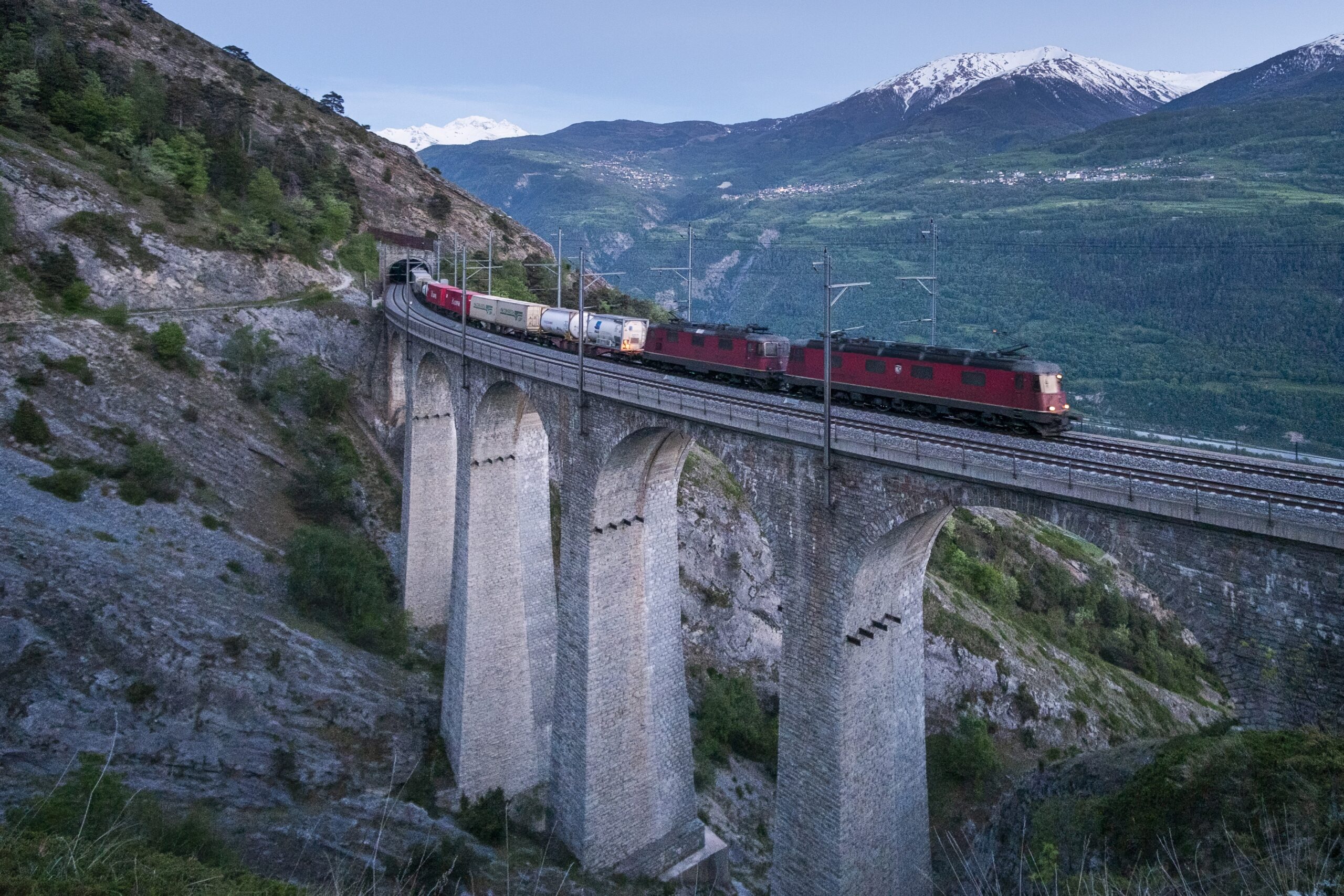
An Re620 and Re420 from the Swiss Federal Railways lead a container train north at 9:19 p.m. on May 21, 2016.
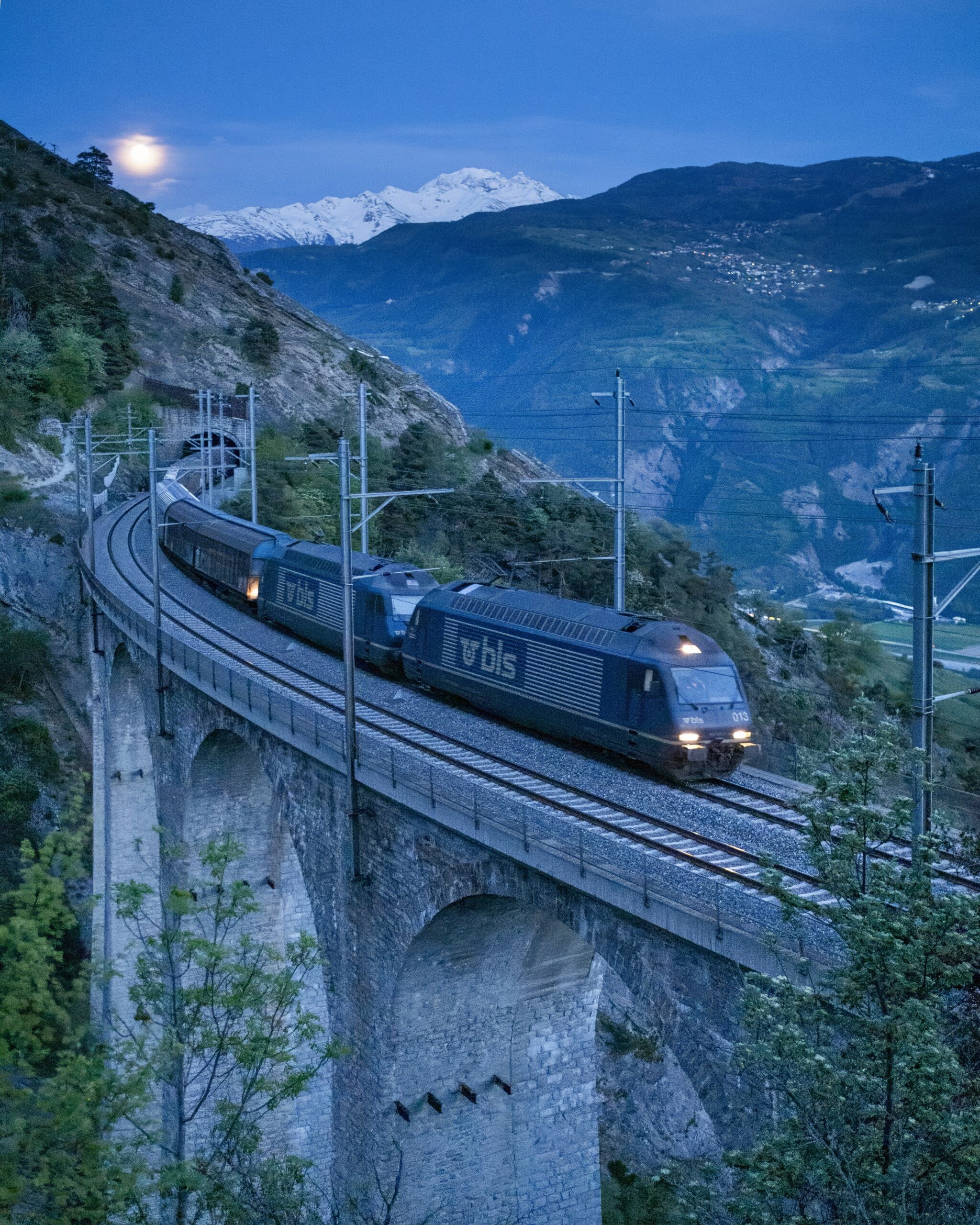
Six minutes later, a pair of BLS Re465s lead another container train north as the full moon rises above the snow-capped Pennine Alps.
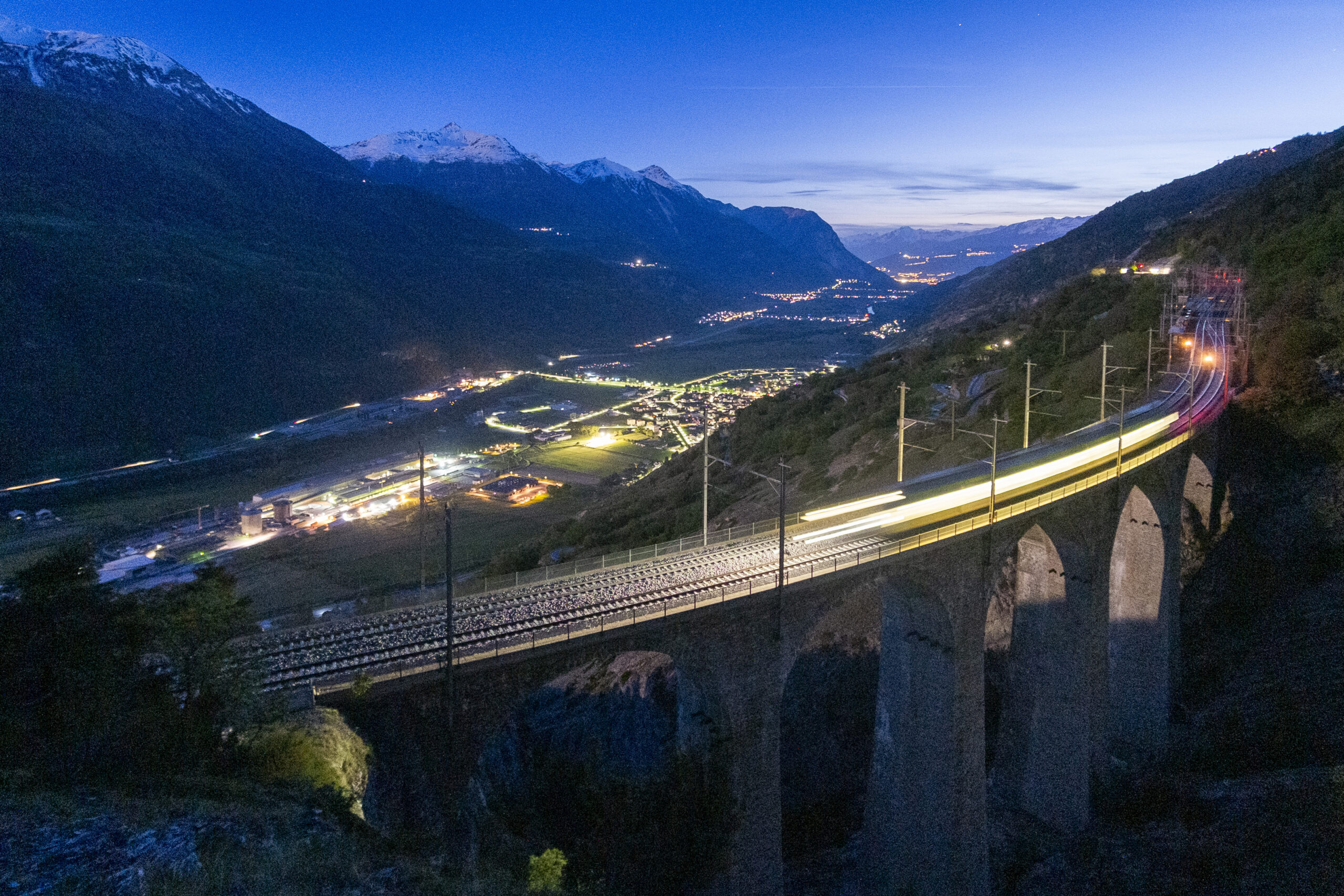
A Lötschberger passenger crosses the viaduct later that evening at 10:01 p.m.
Changes have continued in the decade since my visit. The Re 425s are no longer in regular service and most have been retired. In 2024, the Swiss parliament approved funding to complete the second bore of the Lötschberg Base Tunnel. When it opens, freight trains should no longer need to use the original mountain line. It’s a natural progression in Switzerland’s long history of innovative engineering in the face of difficult terrain, with the railways becoming more efficient but less visually interesting. Photographs help preserve the appearance and operations of the past.
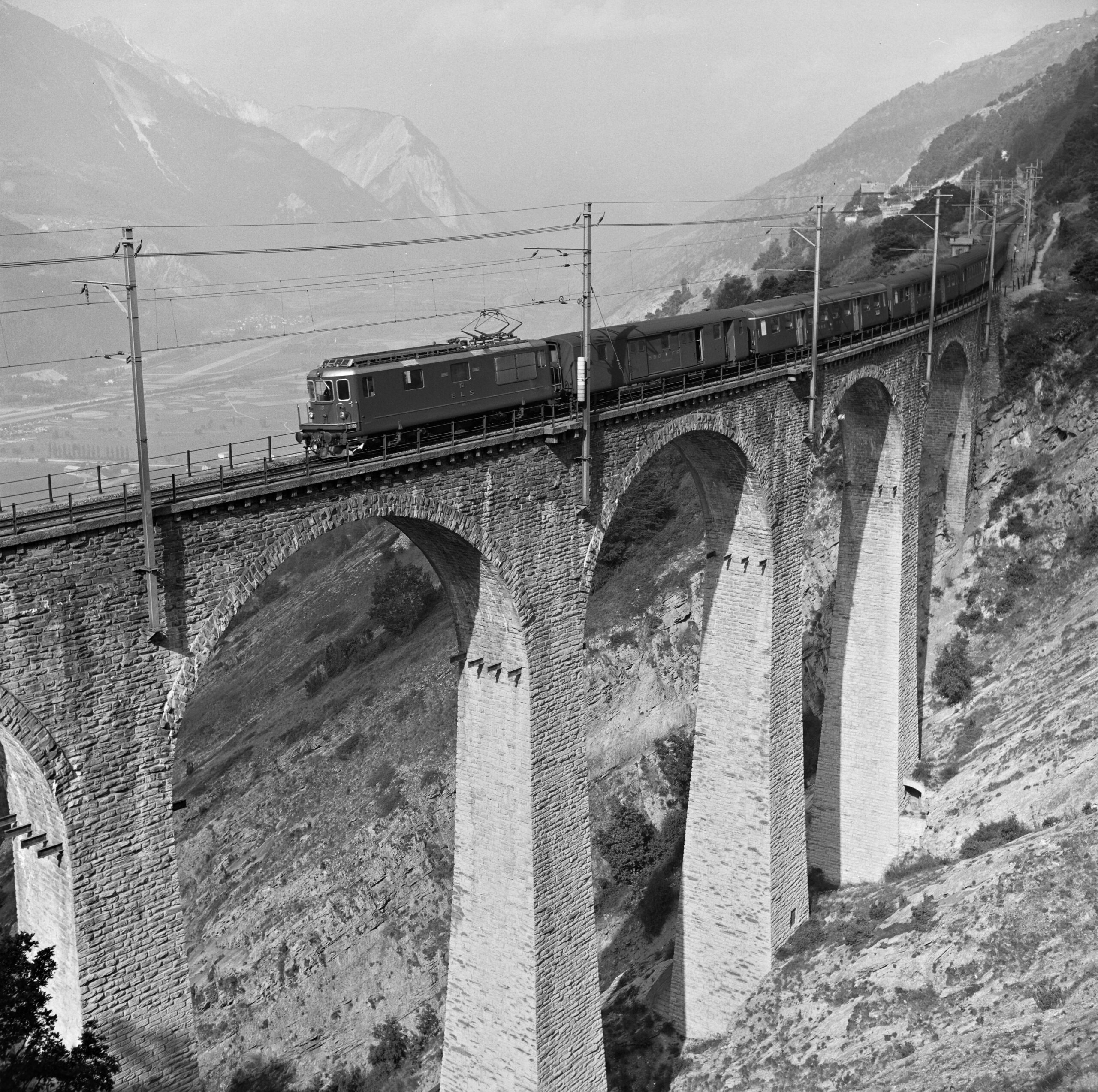
Above: A BLS passenger train crosses Luogelkin Viaduct on the morning of July 13, 1977. Photograph by Karl Zimmermann, Zimmermann-07-084-11
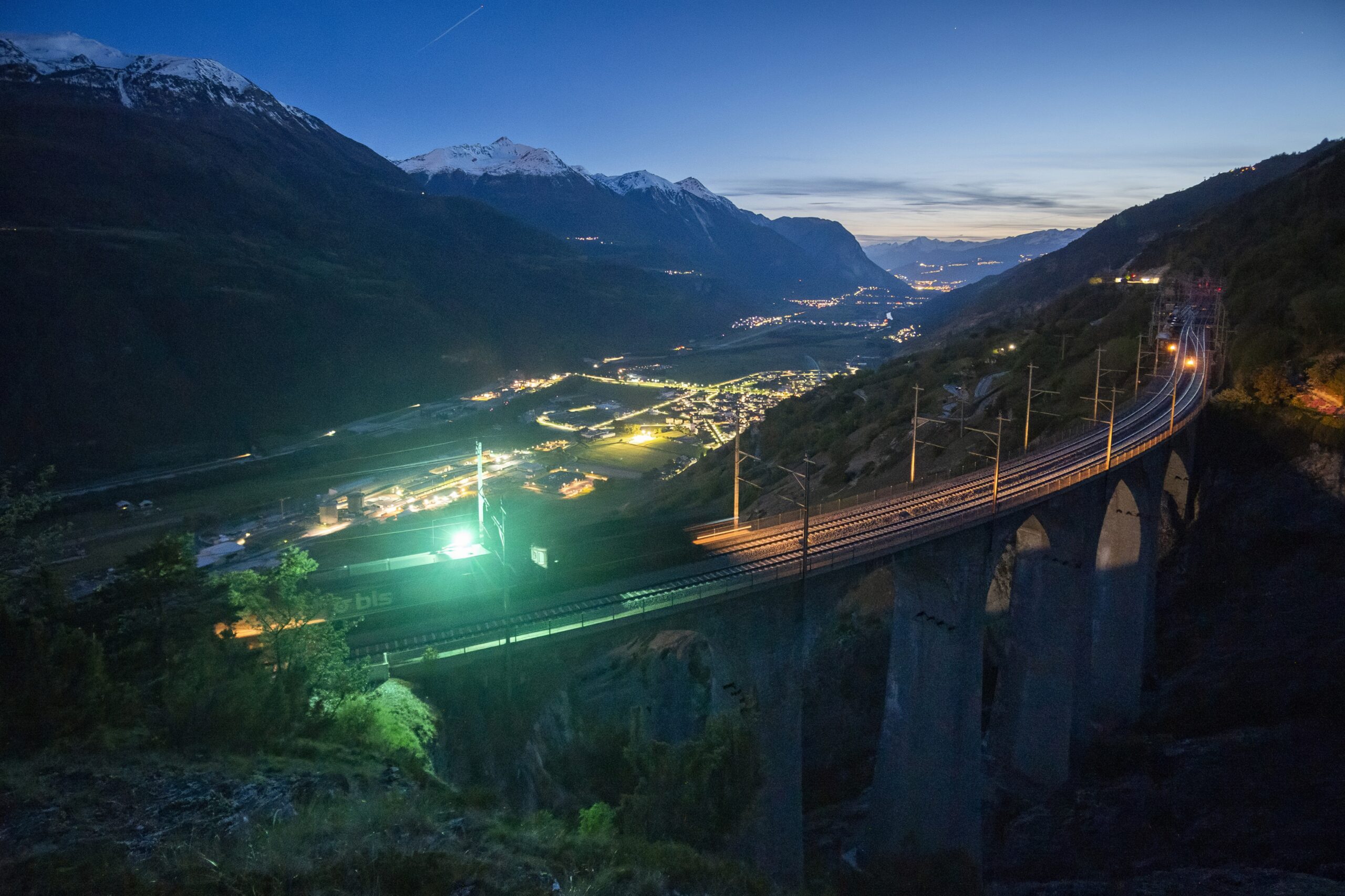
Below: An arcing pantograph flashes blue-green over the Luogelkin Viaduct as a BLS container train races north at 9:55 p.m. as the last light of May 21, 2016, drains from the western sky above the glow of villages in the Rhône Valley. Photograph by Scott Lothes
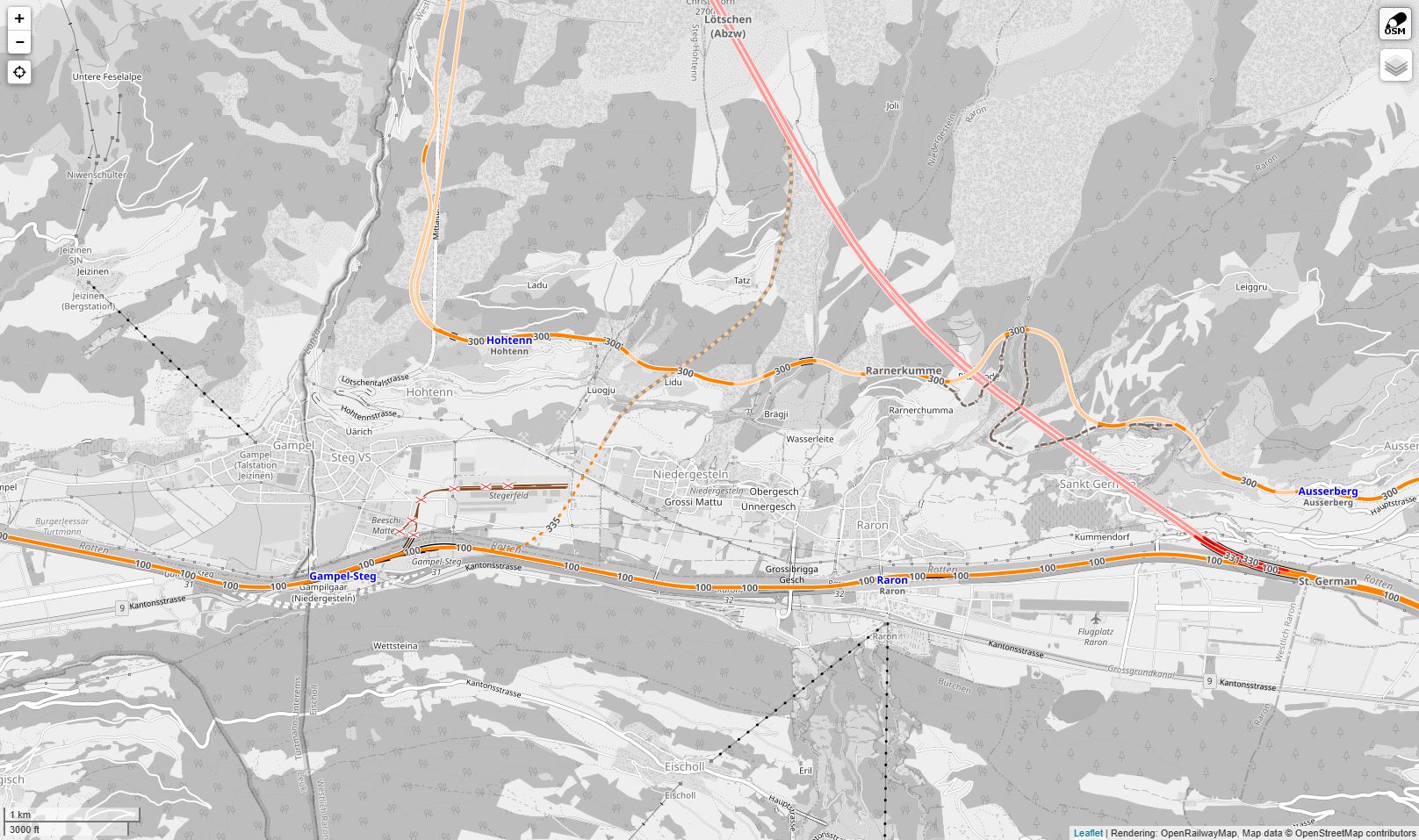
Current map
For more
Explore 28 of Karl Zimmermann’s photographs from Switzerland in our digital collections from his 1977 visit. In addition to the BLS line over Lötschberg Pass, he also visited the Swiss Federal Railways line over the St. Gotthard Pass and three meter-gauge railways: the Brig-Visp-Zermatt, the Furka Oberalp, and the Rhaetian.
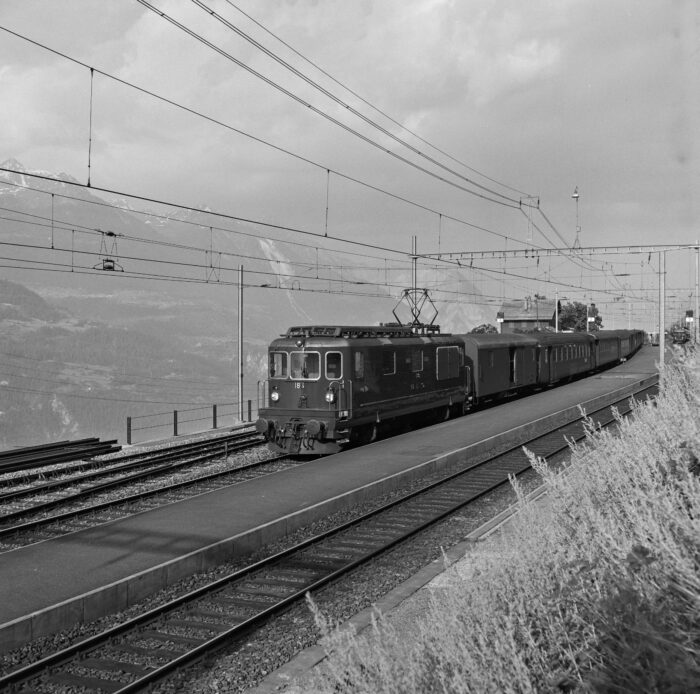
In the photograph at left, a BLS passenger train makes its stop at the Hohtenn Station on July 13, 1977. Luogelkin Viaduct is half a mile to the left. Photograph Karl Zimmermann, Zimmermann-07-084-05