COLLECTION TRACKING:
Northwest Synchronicity
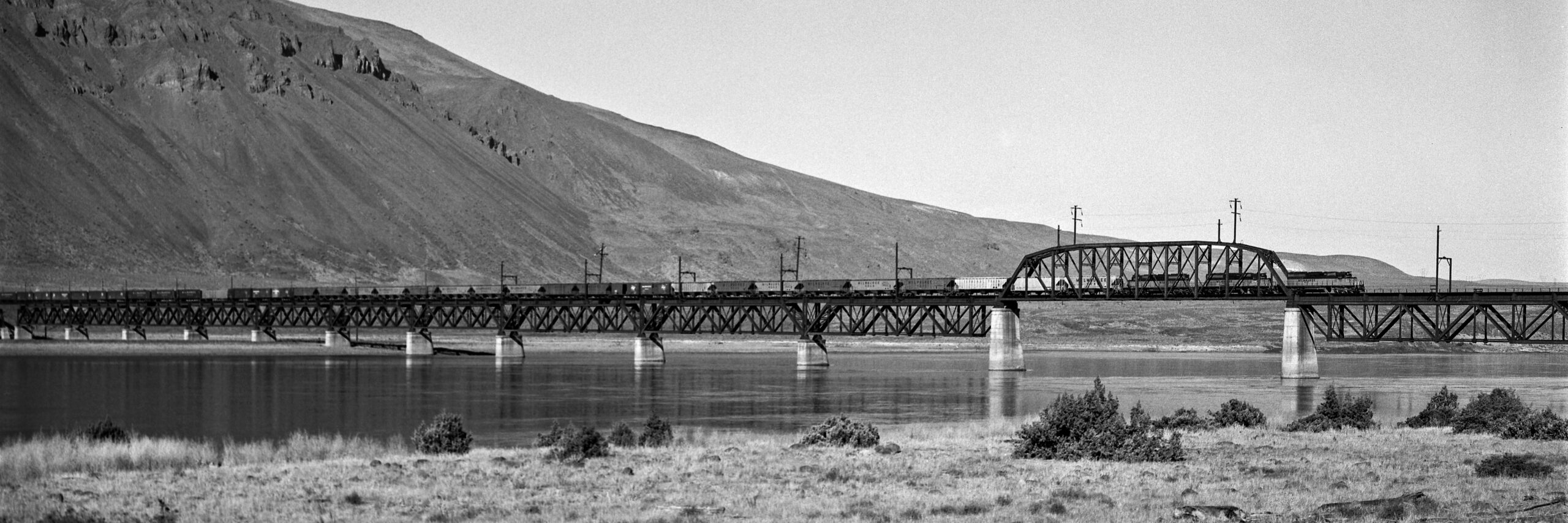
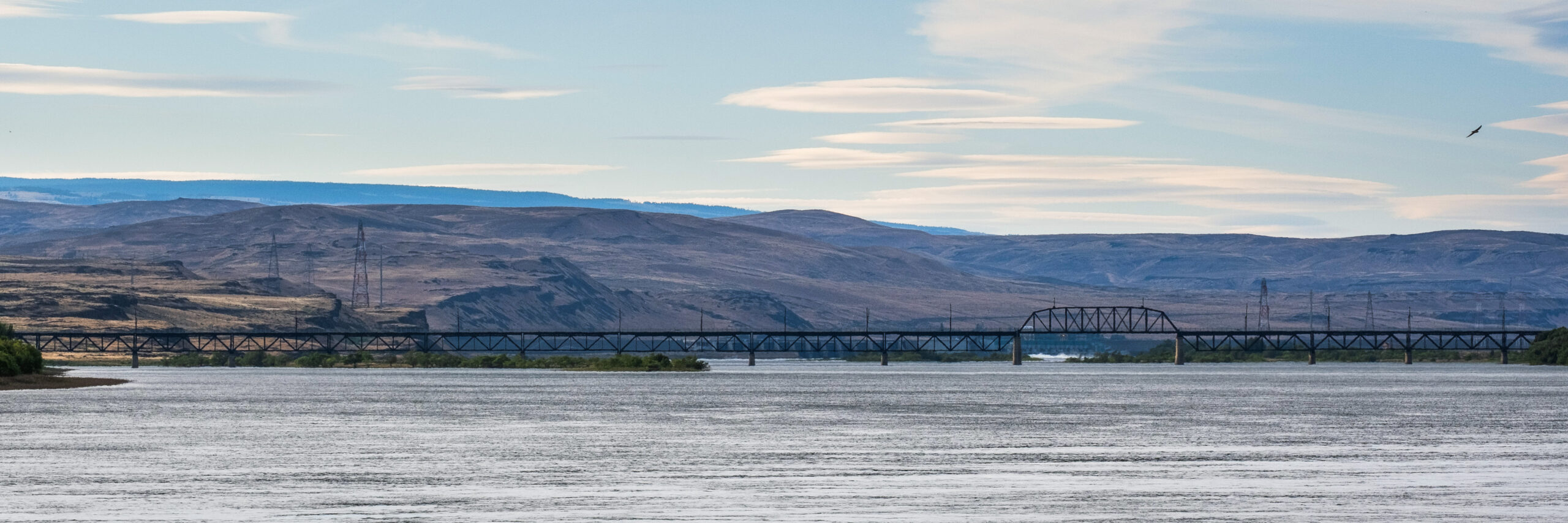
On September 12, 1979, a Milwaukee Road grain train crosses the Columbia River at Beverly, Washington. Rail service ended just six months later. In 2026, the bridge still stands and is part of the Palouse to Cascades State Trail Park. Photographs by Victor Hand, Hand-067-0139, and Scott Lothes
By Scott Lothes
Railroading has changed greatly in the Pacific Northwest over the past half century. A once-dense network of branch lines, mainly to gather lumber and grain, has been greatly retrenched, and even entire main lines have been abandoned. Most famous among the latter is the Milwaukee Road’s Pacific Extension, but Burlington Northern also abandoned a large chunk of the Spokane, Portland & Seattle route in eastern Washington in the late 1980s. Yet new operators have emerged and who work hard to keep traffic on the rails and bring it back. I took in some of those changes during a trip in June of 2026 that at times brought me, unexpectedly, to places that photographers in our collections had visited decades earlier.
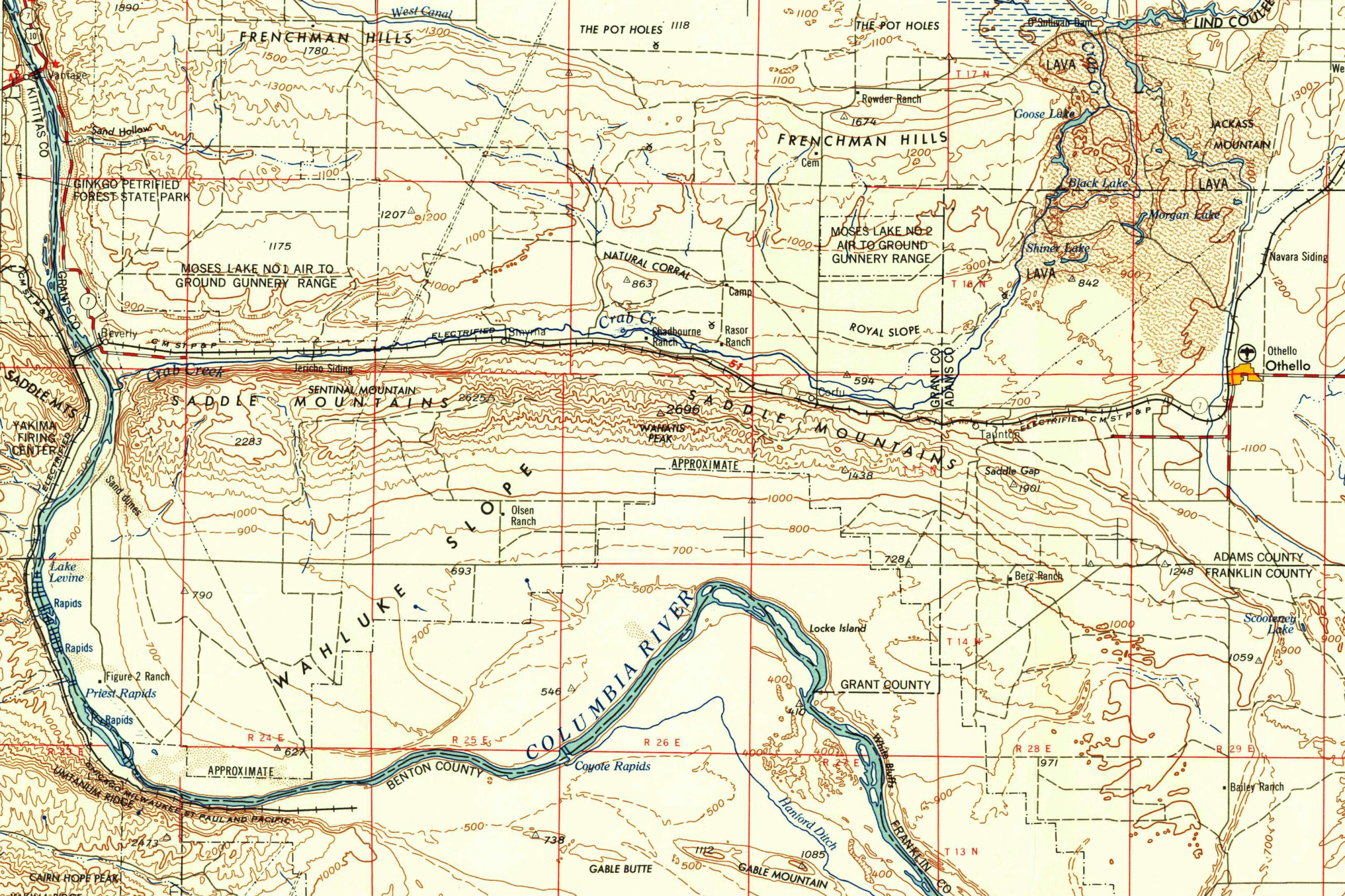
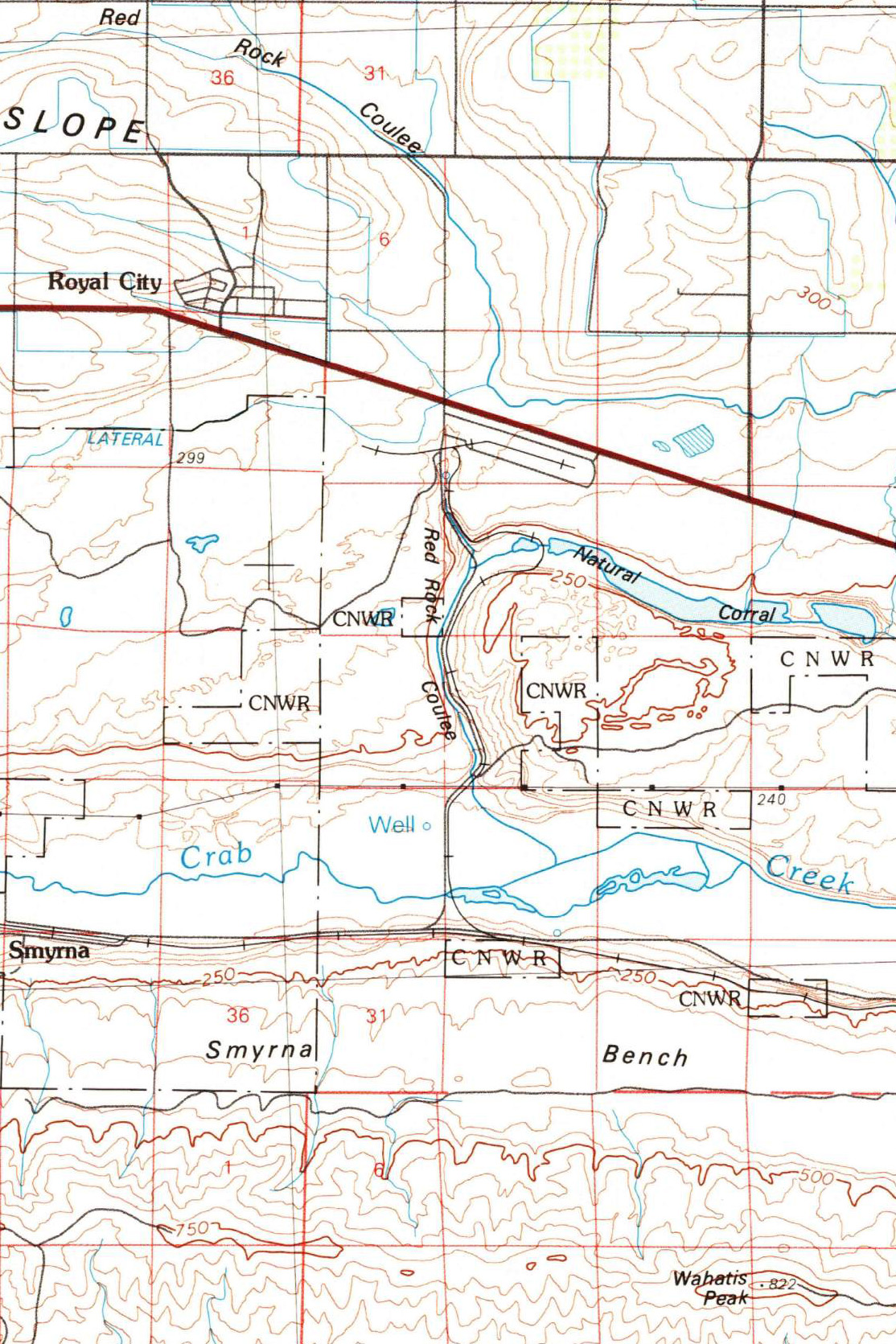
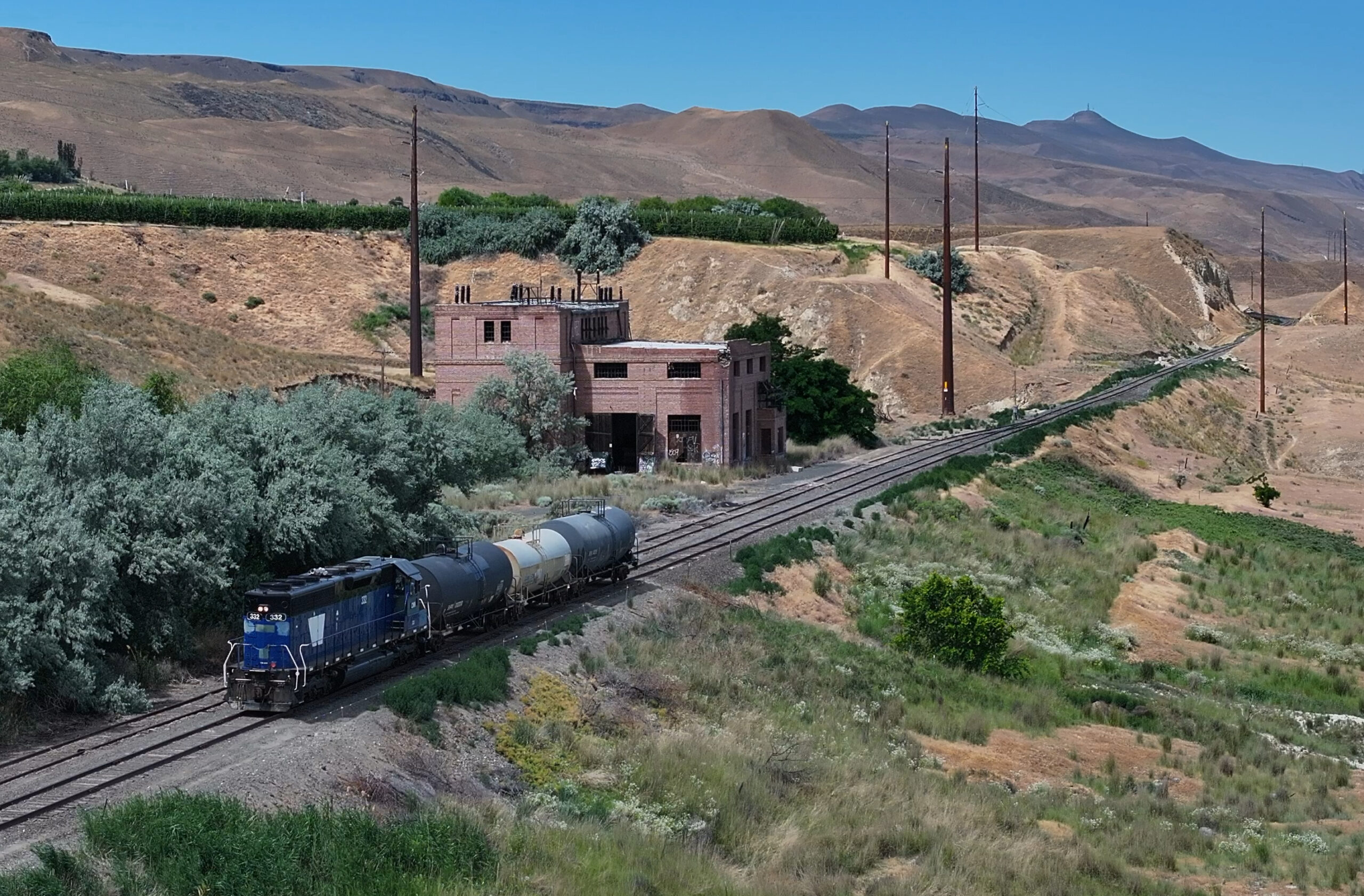
While most of the Milwaukee Road across Washington is just a memory, thirty-three miles of its main line, plus the four-mile branch line to Royal City, remain in service near the middle of the state. The Columbia Basin Railroad runs on ten miles between Warden and Othello, while the Washington Royal Line operates the rest, extending west of Othello to an industrial park at the Port of Royal Slope, just east of Royal City. Current traffic is mainly agricultural chemicals with a train running once a week or so. The archeological highlight is the former Taunton Substation for the Milwaukee’s electrification; it still stands next to the tracks just west of Othello.
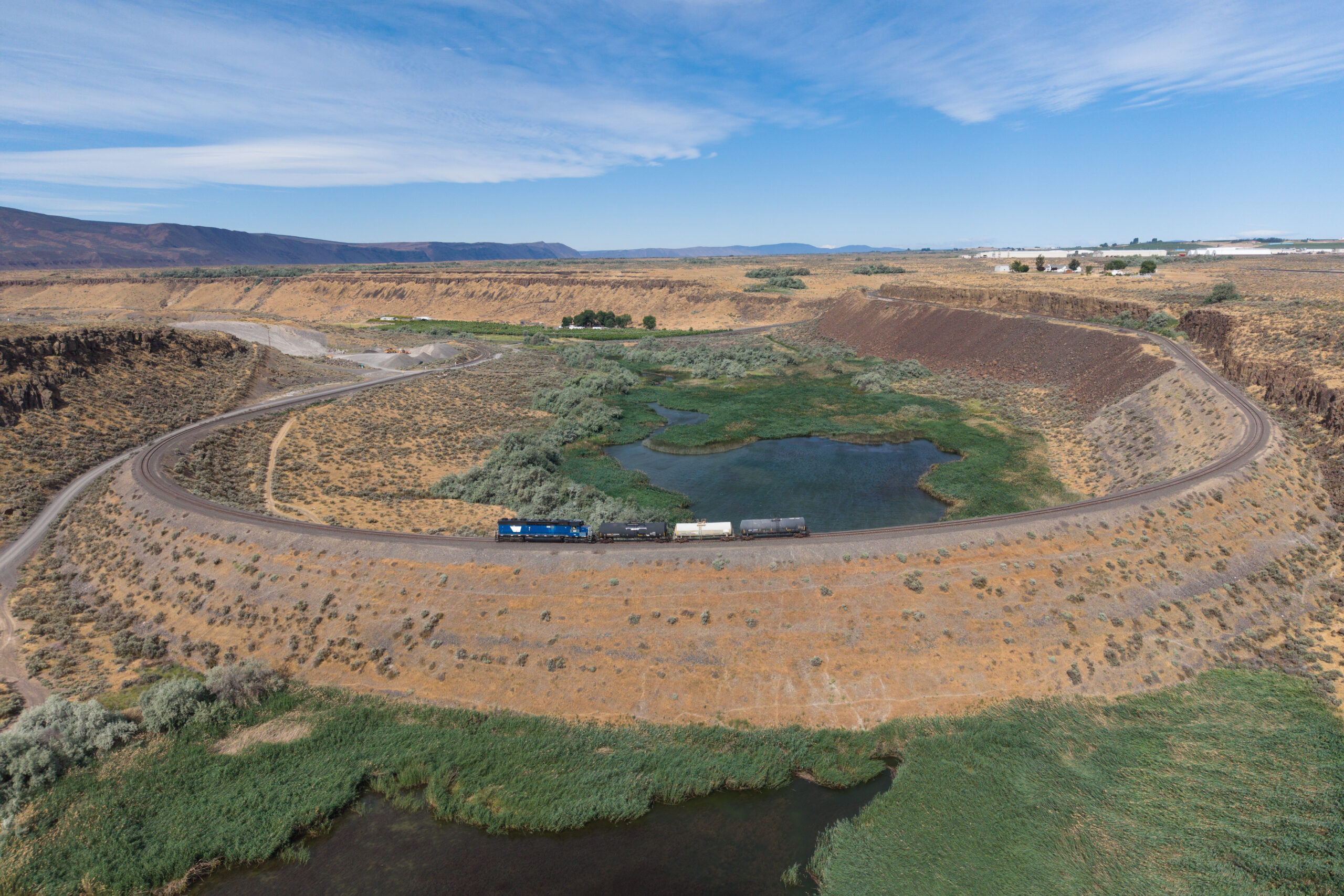
On the morning of June 16, 2026, my friend Camron Settlemier and I caught the Washington Royal Line train running east from Royal Slope to Othello with a former Montana Rail Link SD45-2 and three tank cars. We had a leisurely chase on the now ten-miles-an-hour track, although high winds thwarted some—but not all—of our plans for drone flights. The four-mile branch line was a late addition by the Milwaukee Road, built in the 1960s in an effort to grow online traffic. It features impressive engineering including a full horseshoe curve just south of Royal Slope.
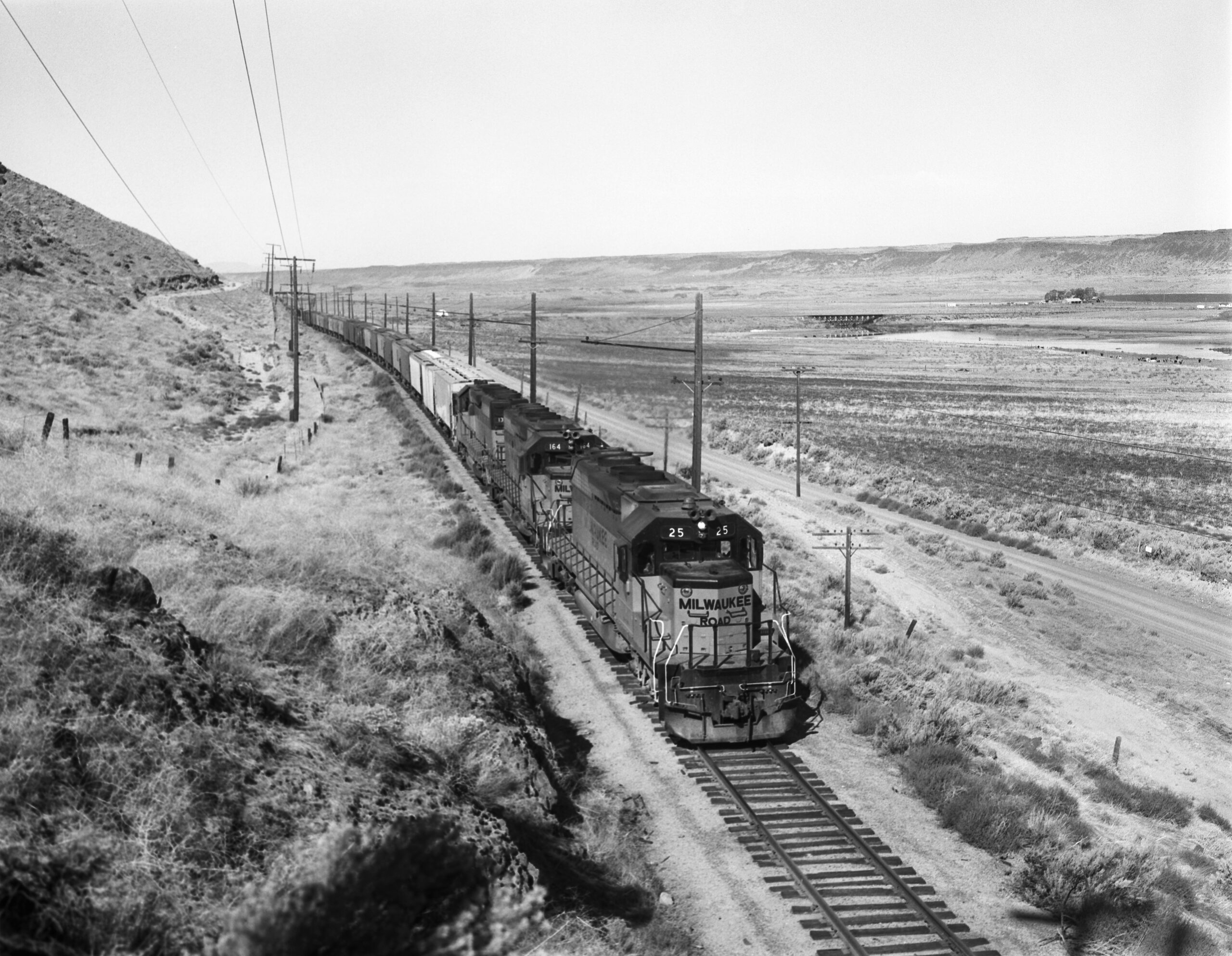
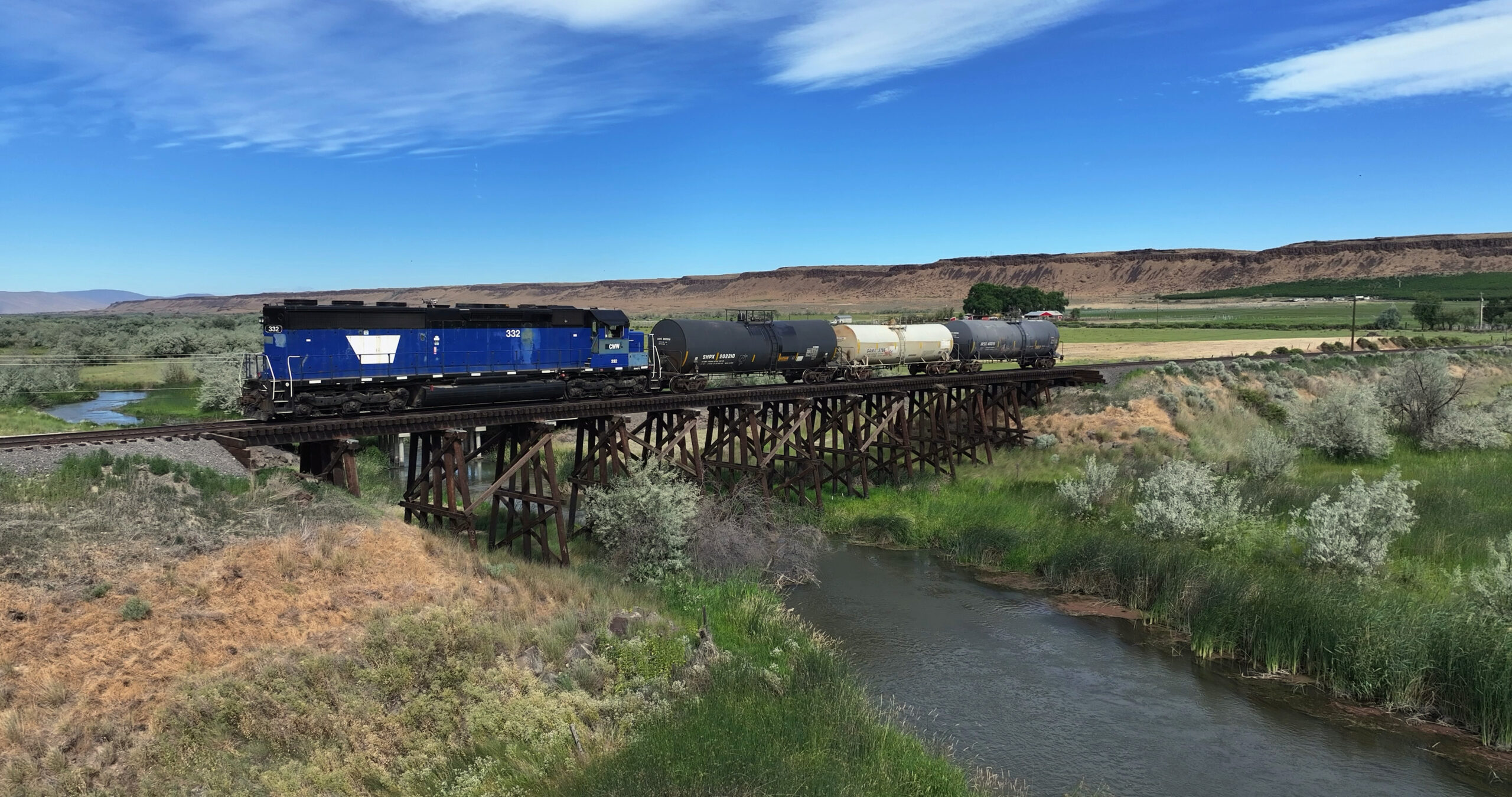
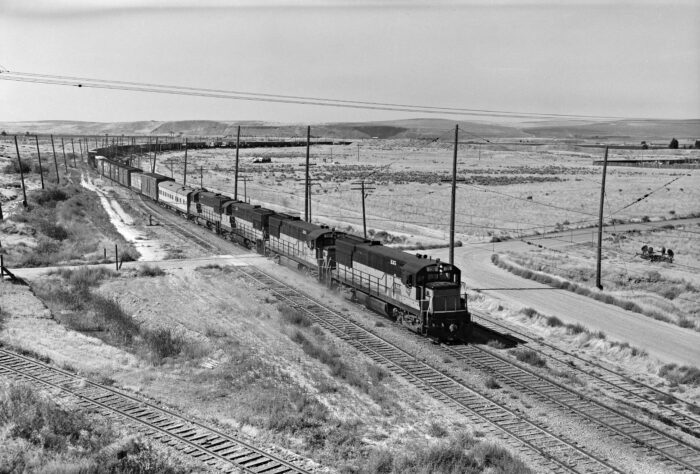
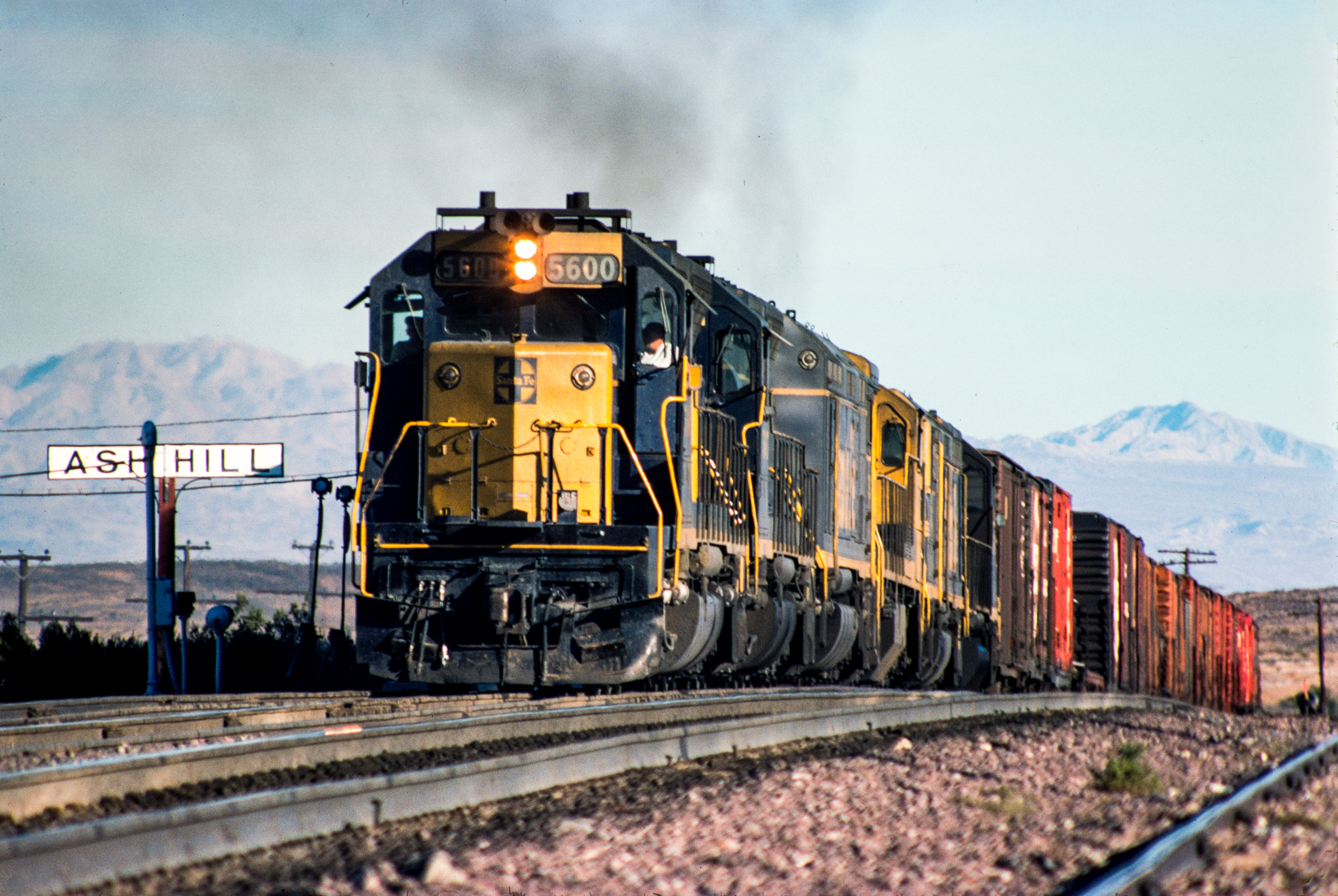
Forty-seven years earlier on September 12, 1979, Victor Hand caught a Milwaukee Road grain train running east. After photographing it crossing the Columbia River at Beverly (lead image), he caught up with it again at Royal City Junction, where the branch line joined the main line. A trestle just north of the junction appears in his photograph of Extra 25 East and also in photographs Camron and I made in 2026.
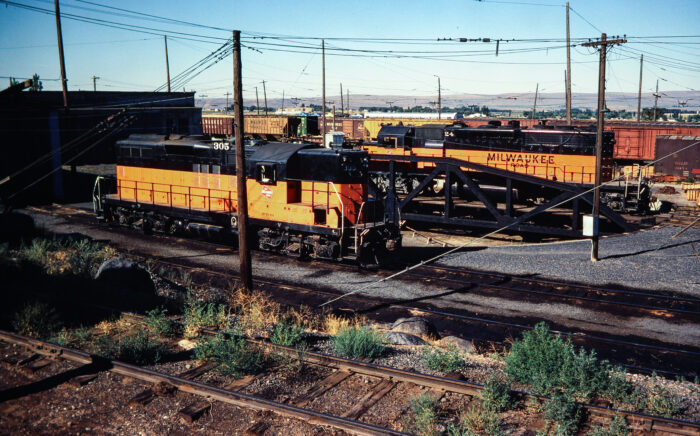
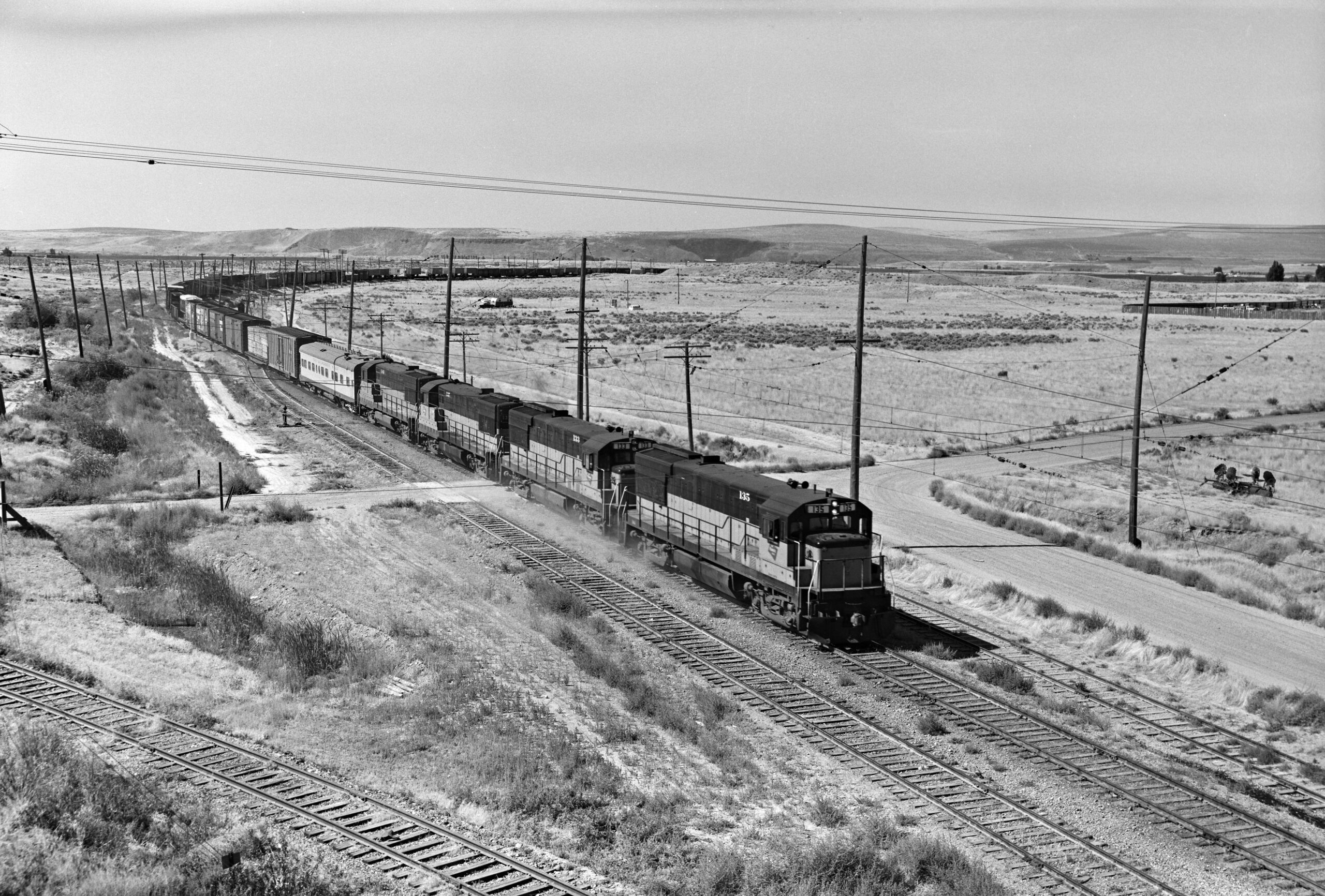
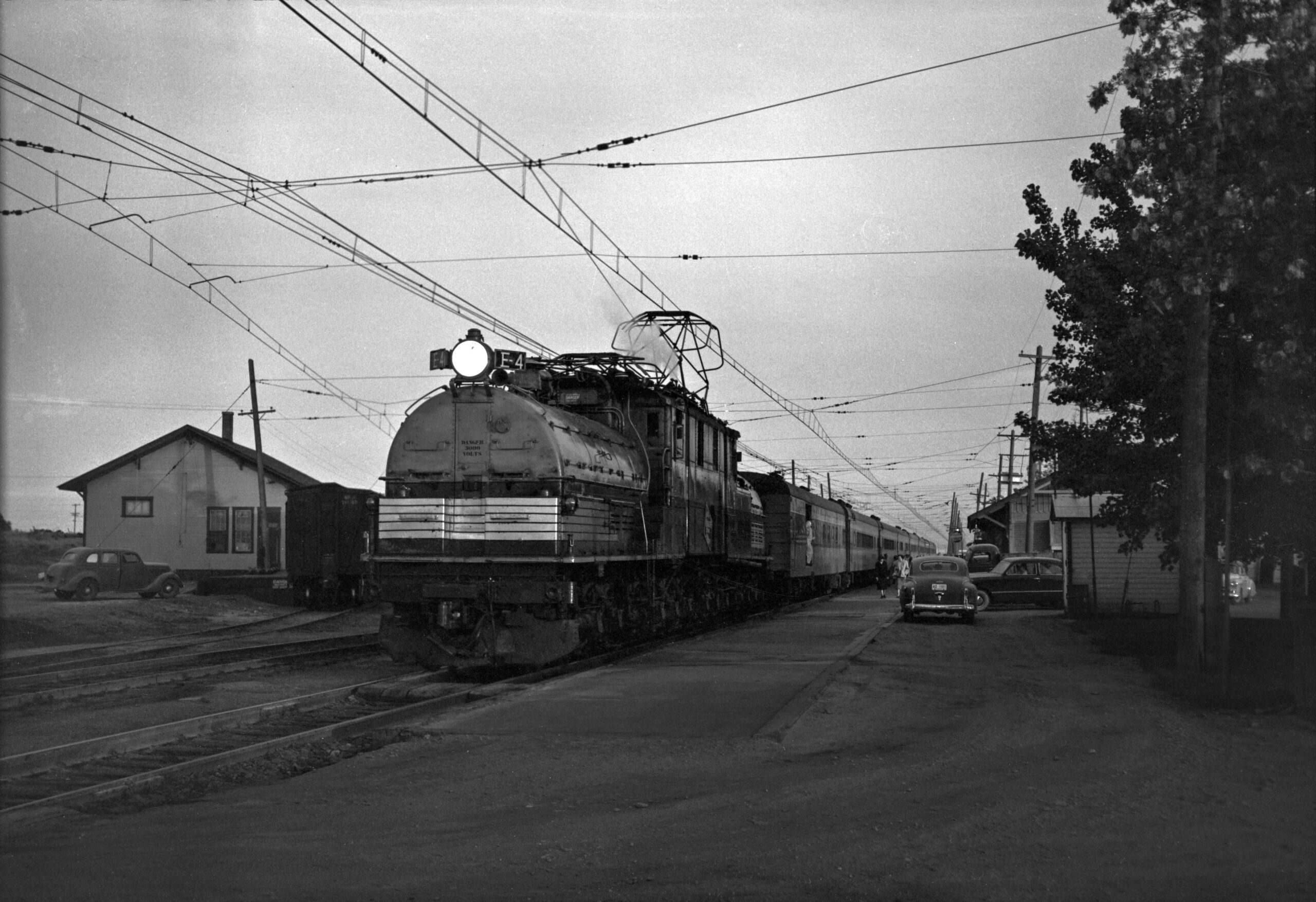
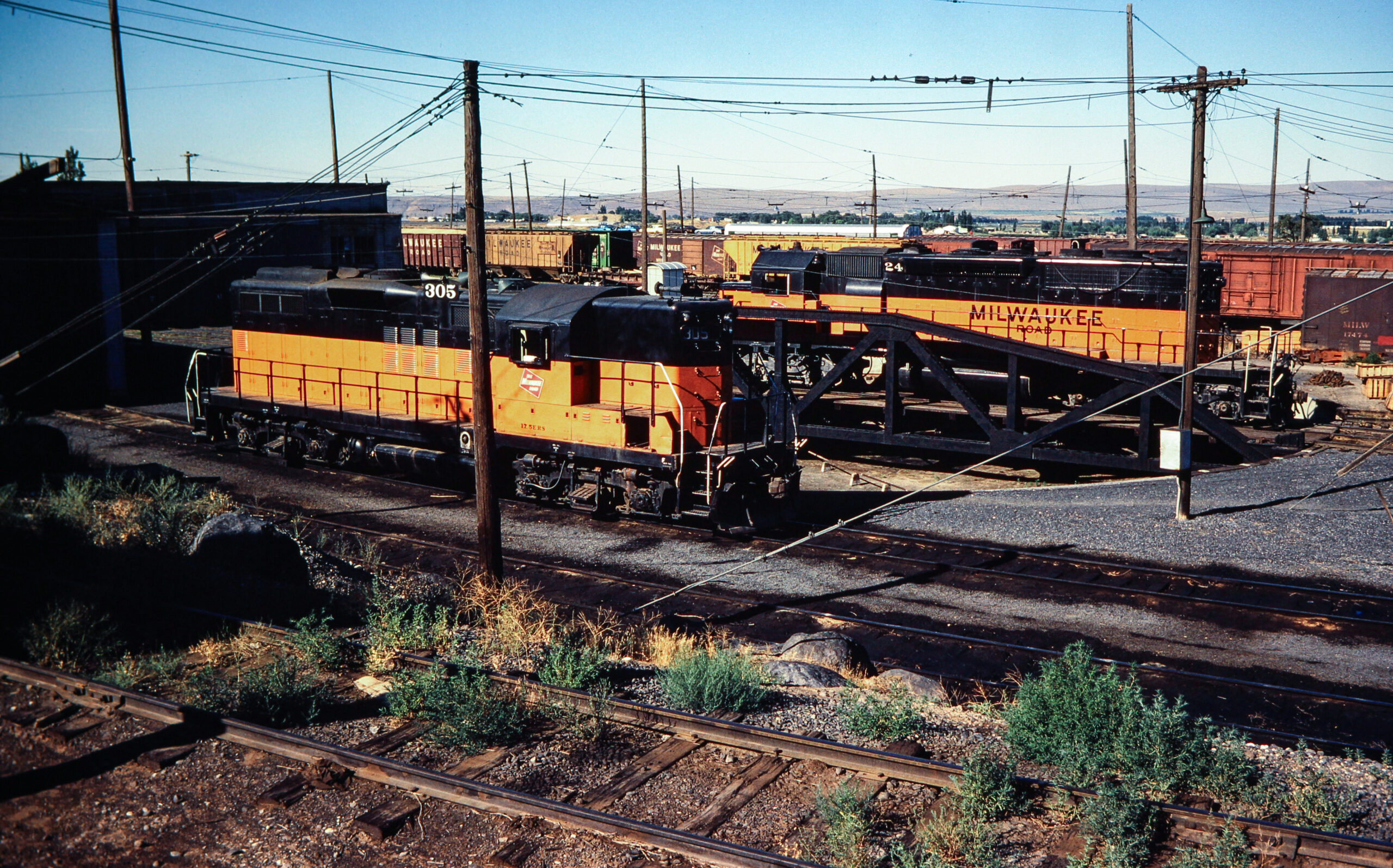
We broke off our chase after catching the train passing the shell of the substation at Taunton. So little remained of the Milwaukee Road’s once-sprawling yard and shops at Othello that we couldn’t help feeling a little depressed. Had I known at the time that two other photographers in our collections, John Bjorklund and John Illman, had made some great views of Othello in busier times, I would have tried to recreate photographs of their scenes in the present day.
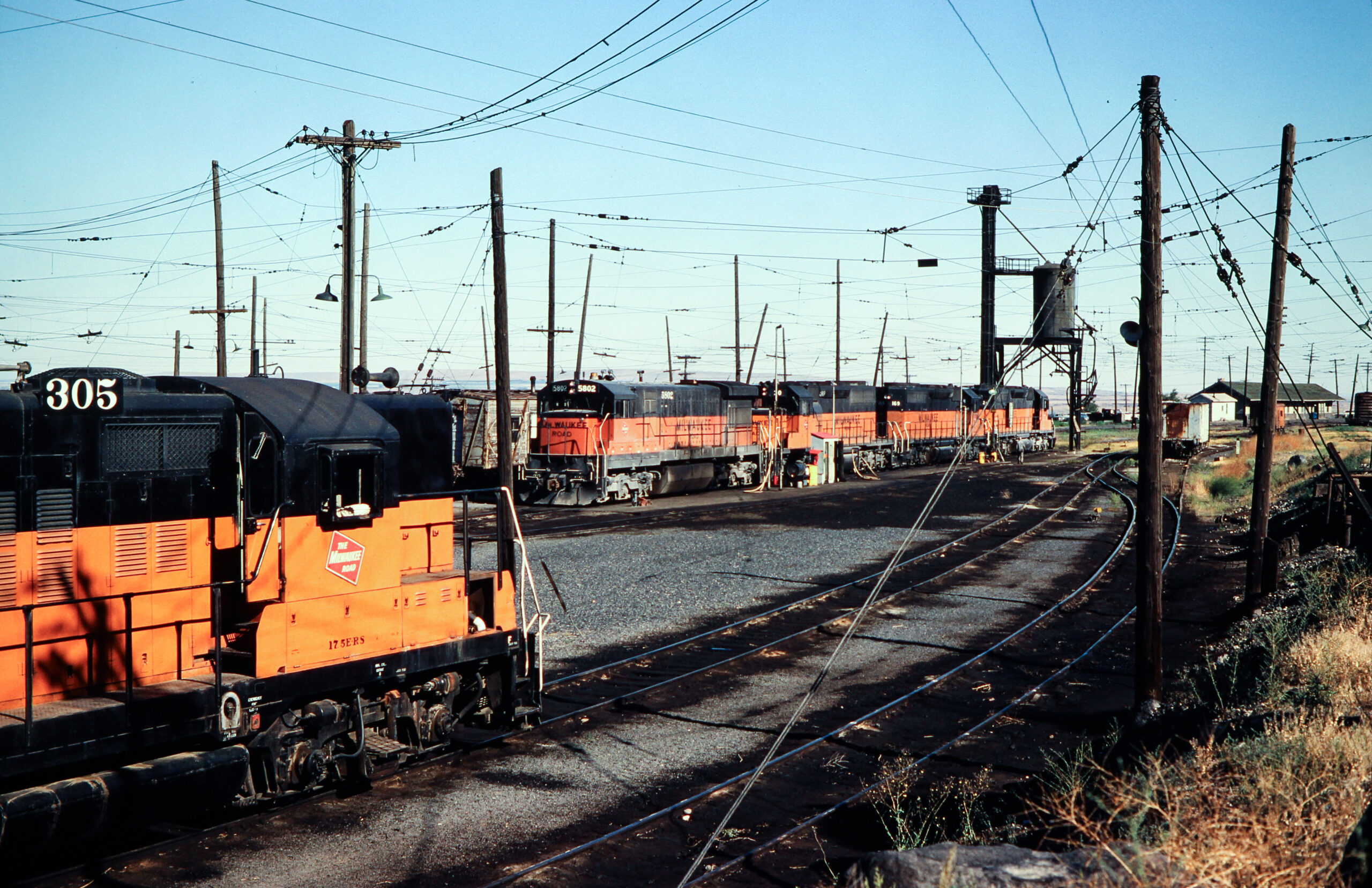
Exactly 150 railroad miles east of Othello is Plummer Junction in Plummer, Idaho, where the Milwaukee Road’s passenger route to Spokane diverged from the more direct main line for freight trains. West of Plummer, the freight main is gone for more than 100 miles, but both the passenger line to Spokane and part of the main line east of Plummer remain in service. The St. Maries River Railroad runs over more than twenty miles of the original Milwaukee Road main line to St. Maries where it serves the sprawling PotlatchDeltic lumber mill as well as a smaller mill of Stimson Lumber. Union Pacific runs over the former Milwaukee Road passenger route. Both roads typically run a local freight train three days per week, primarily to deliver empty lumber cars to the mills in St. Maries and haul away the loads.
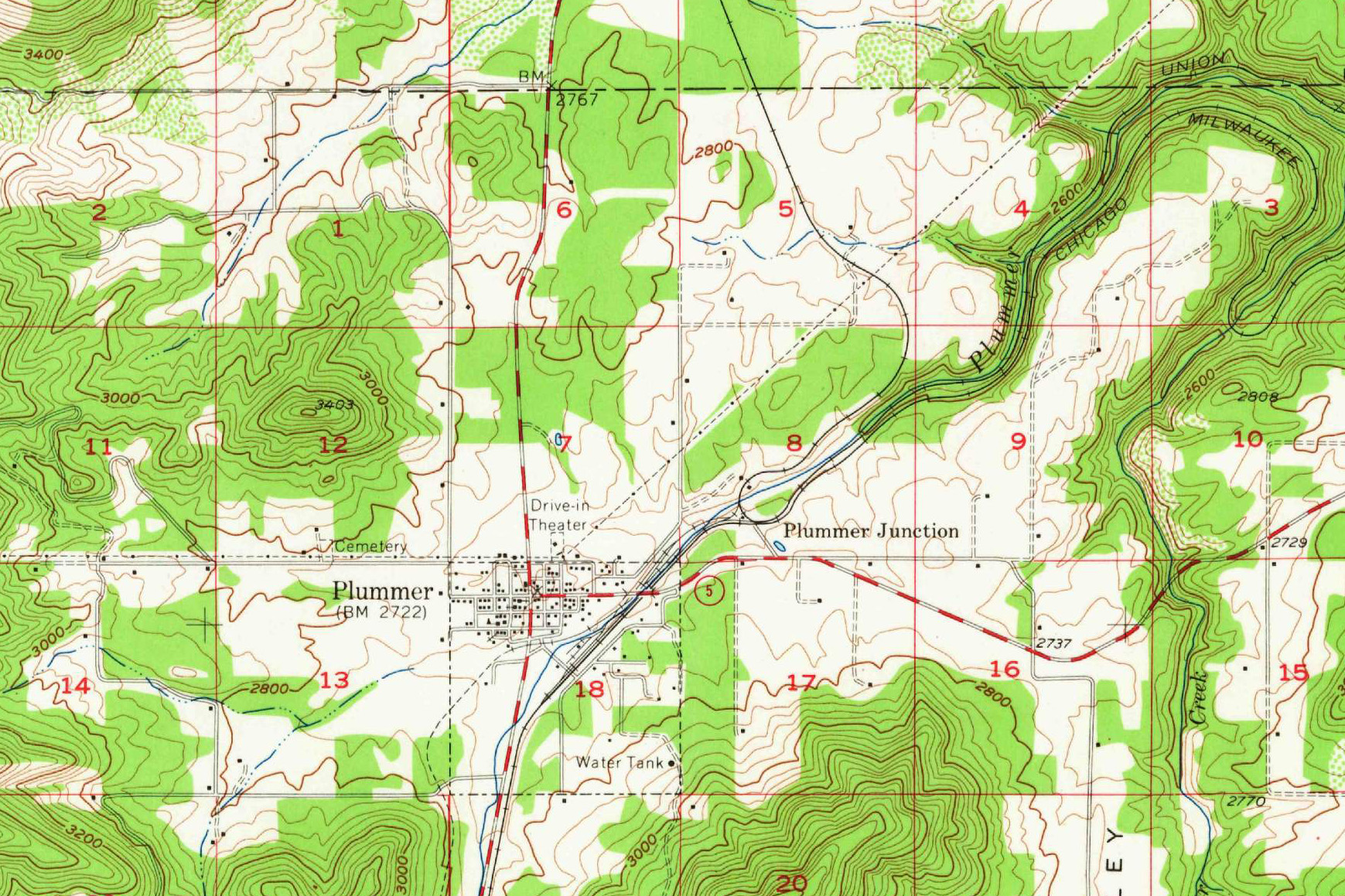
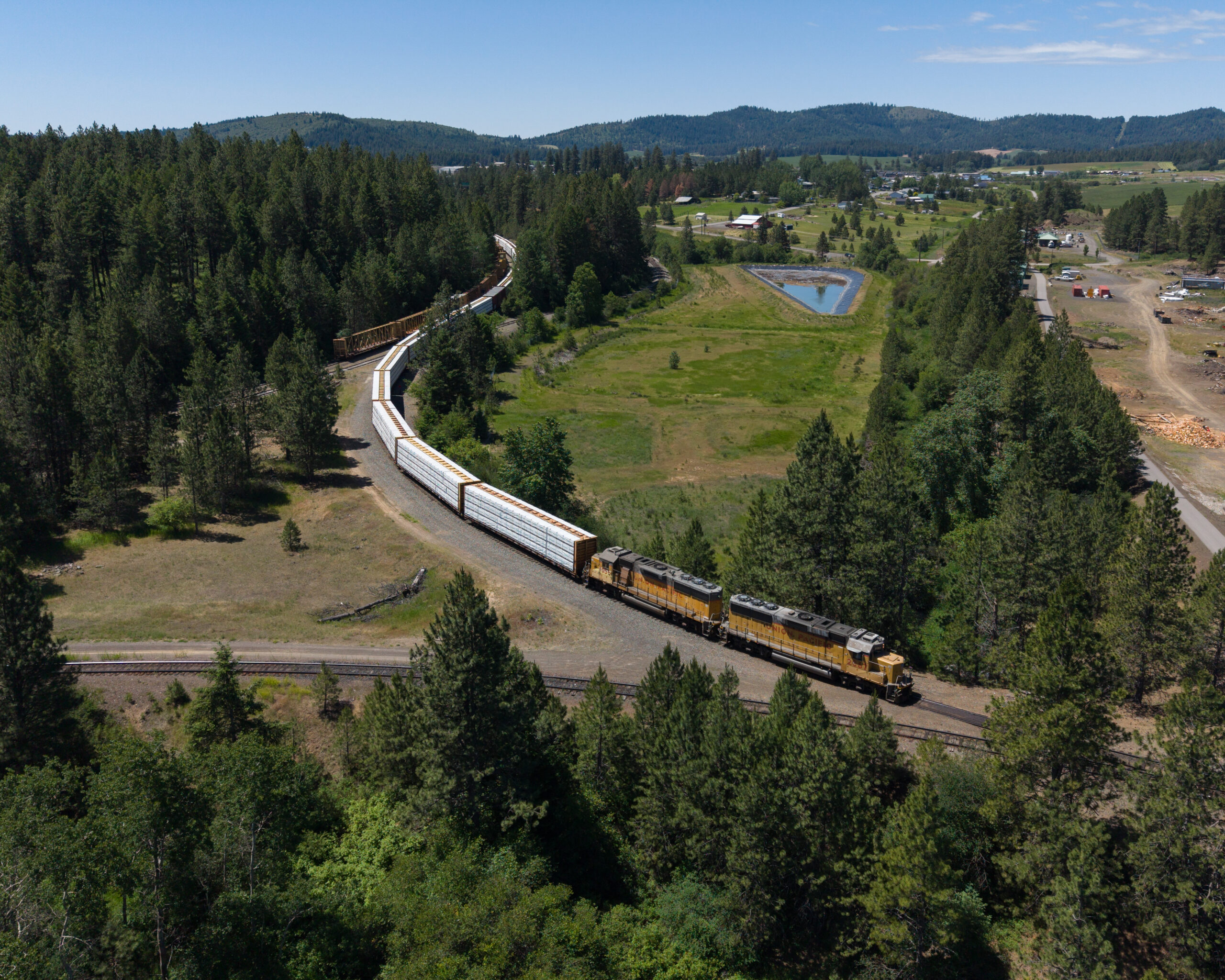
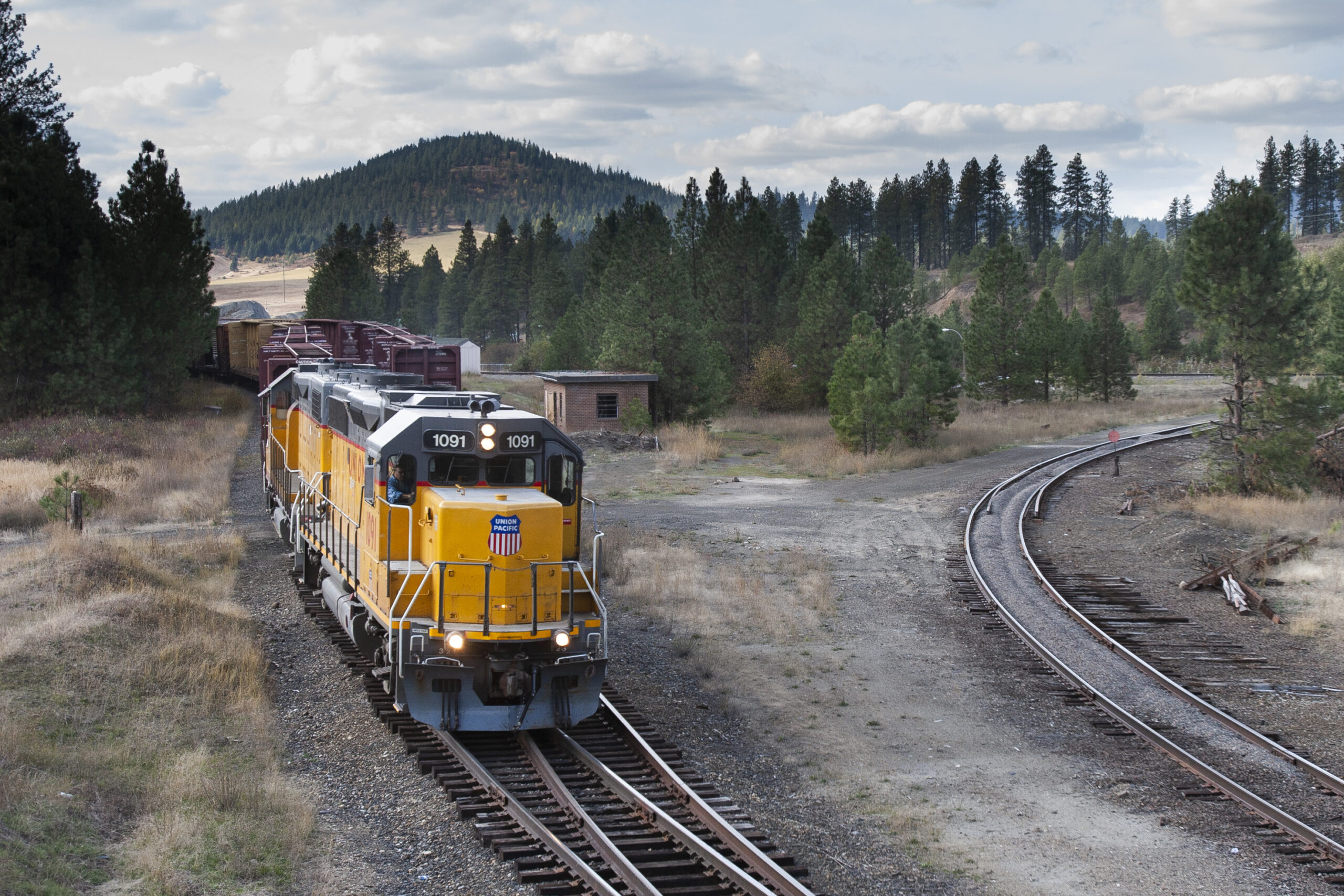
A last-minute change to the St. Maries’ operating plan prevented Camron and me from catching them, but we still got to chase the Union Pacific train from Spokane to Plummer and back. It brought seventeen empty cars to the interchange and returned with an equal number of loads. I opted for a drone view of the train departing Plummer, although on a prior trip eighteen years earlier, I nearly stood in the footsteps of John Bjorklund at the junction. The depot and train order office are long gone, though.
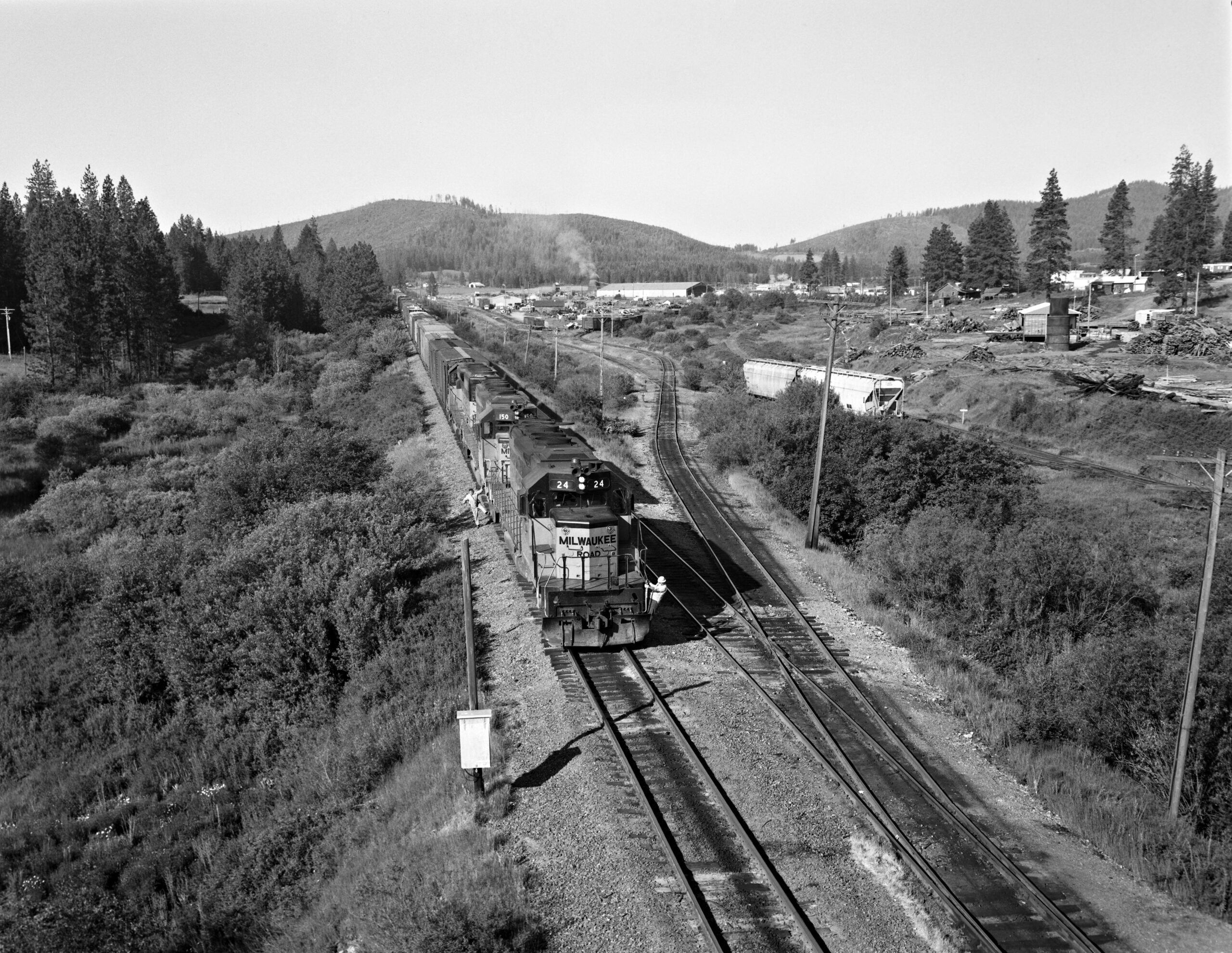
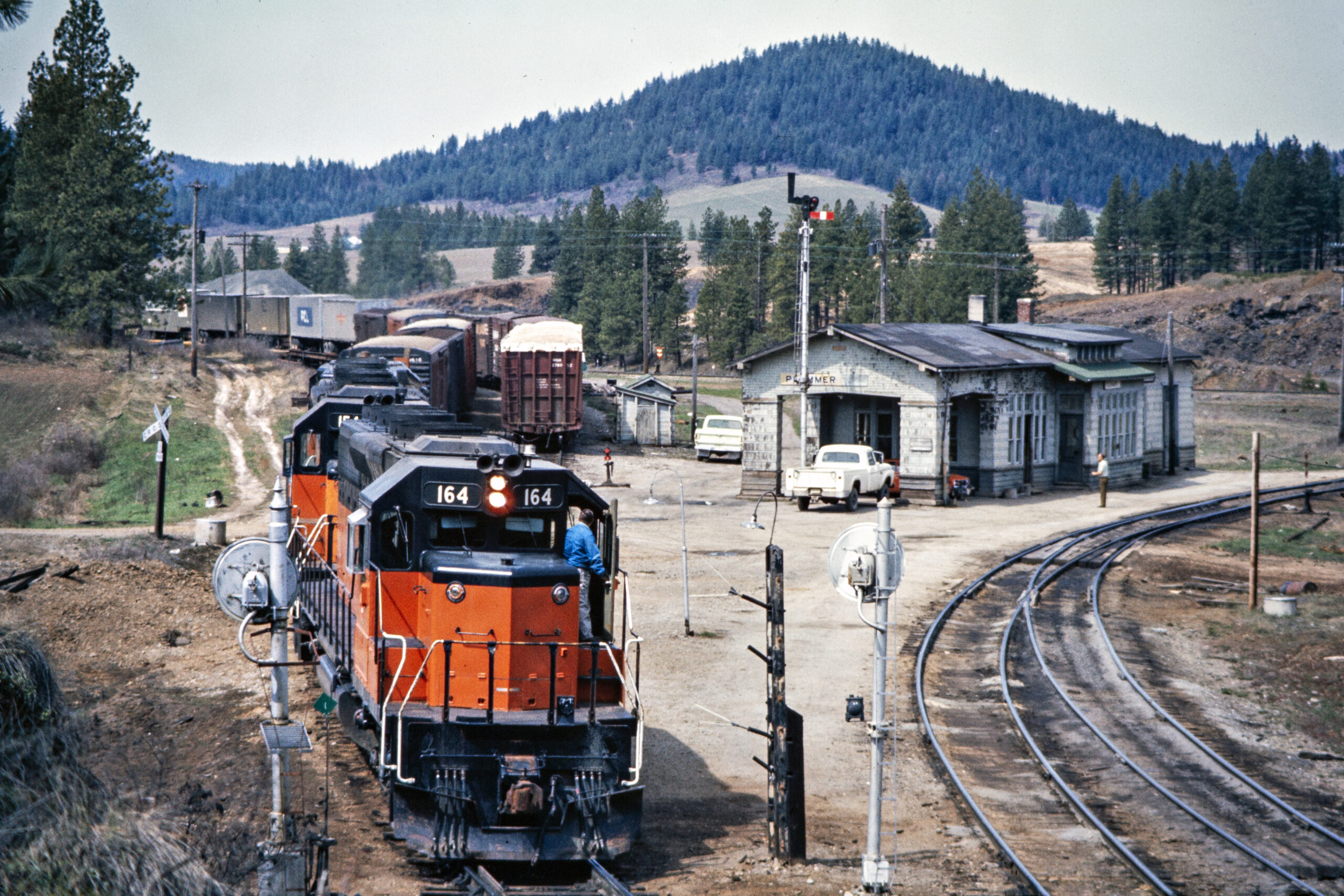
Above: An eastward Milwaukee Road freight train passes the train order office at Plummer Junction, Idaho, on April 30, 1975. The passenger main line to Spokane, Washington, curves off to the right. Photograph by John F. Bjorklund, Bjorklund-64-22-16
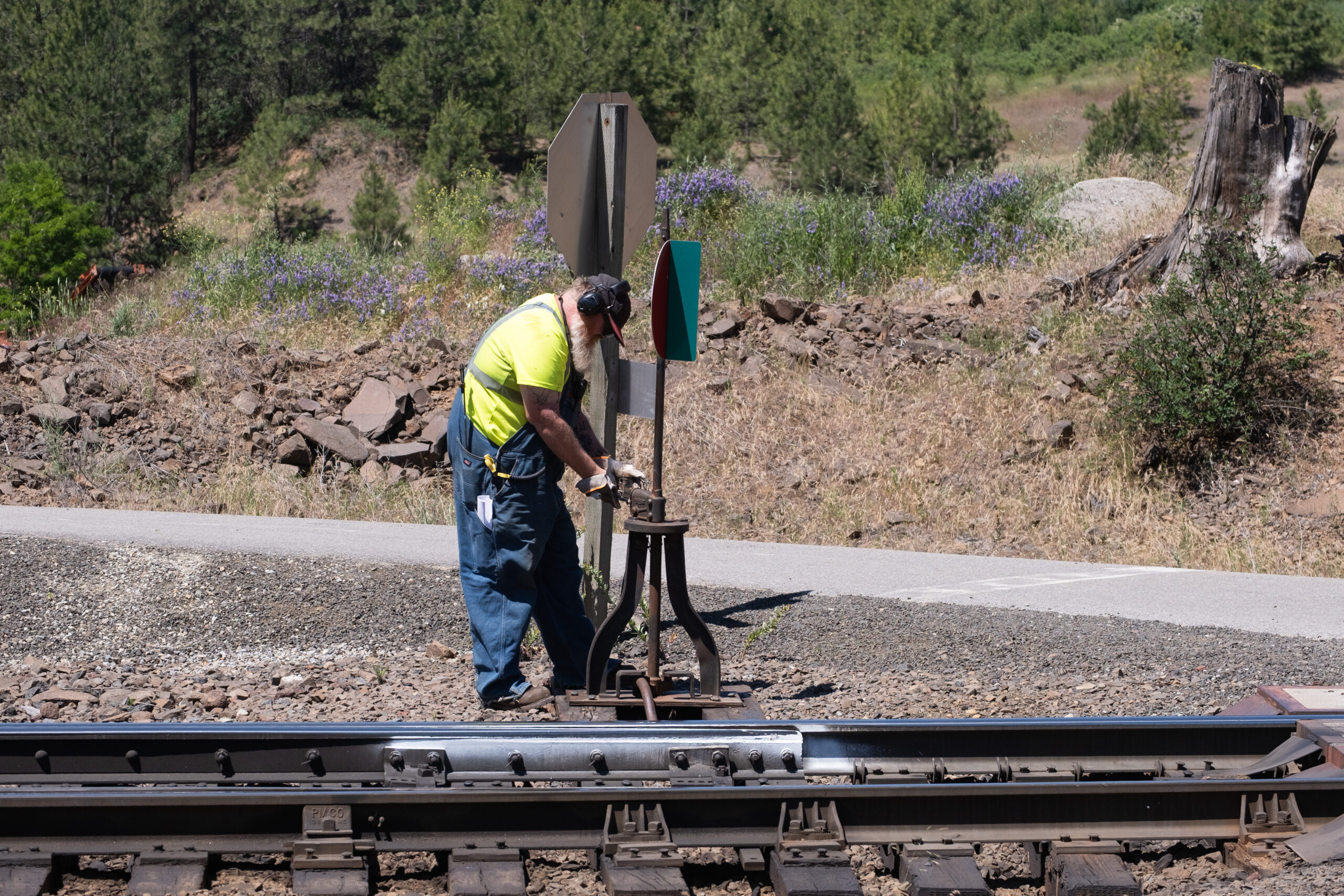
Below: Union Pacific’s Plummer Local freight train from Spokane, Washington, sets out empty lumber cars for the St. Maries River Railroad at Plummer Junction, Idaho, on October 15, 2008. Photograph by Scott Lothes
In years past, the St. Maries River Railroad also ran south of St. Maries on a former Milwaukee Road branch line. In the 1980s and 1990s, service extended to a Burlington Northern (BN) connection at Bovill, Idaho, fifty-two miles from St. Maries. Trains on both railroads typically met there to swap cars three days a week. After BN ended service on its line—the former Washington, Idaho & Montana Railway coming east out of Palouse, Washington—St. Maries trains ran only as far as Clarkia, Idaho, a major log reloading facility thirty-seven miles up the branch. That ended in 2009 when the mill in St. Maries stopped receiving logs by rail in favor of all-truck delivery direct from the forests.
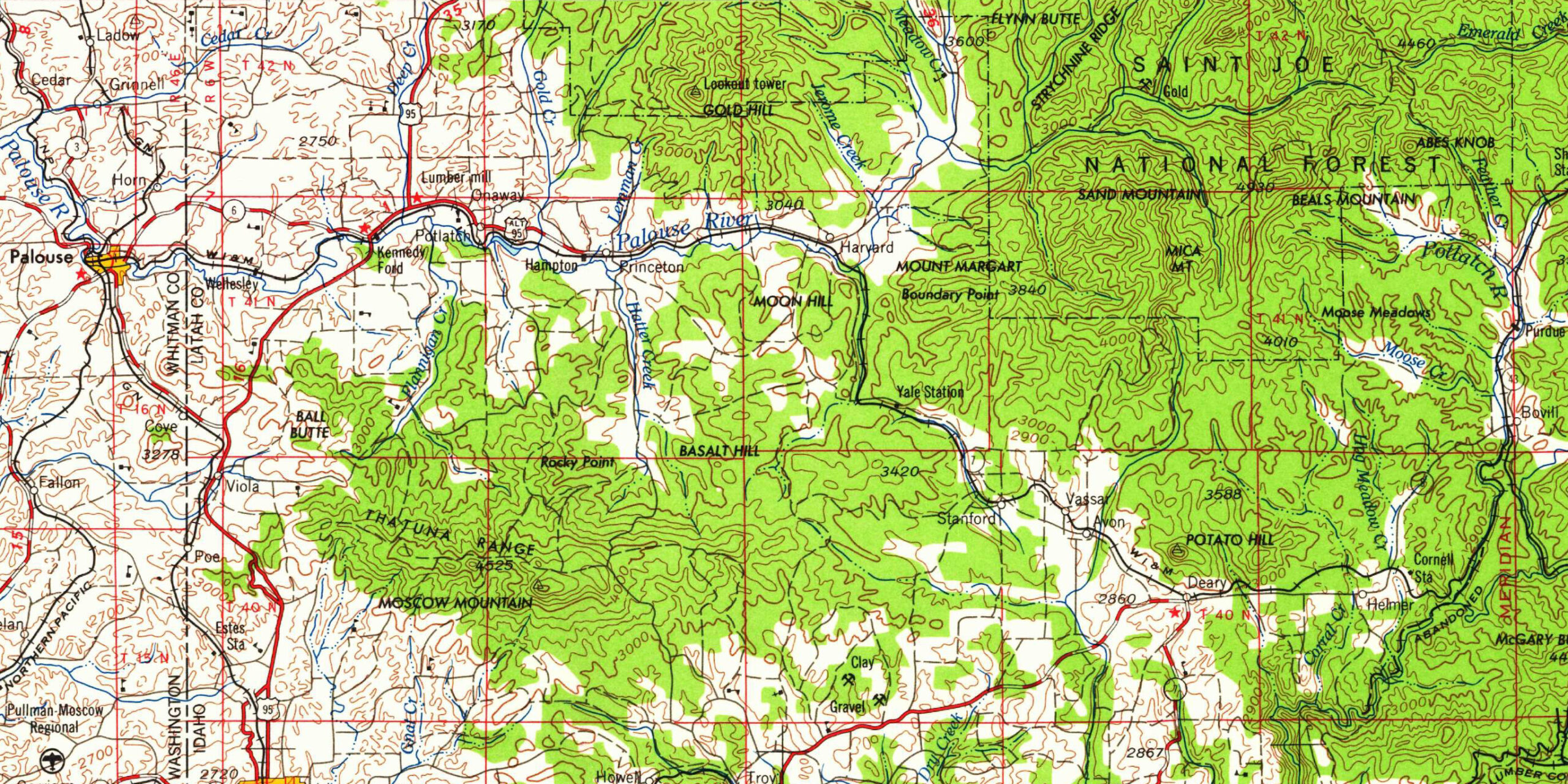
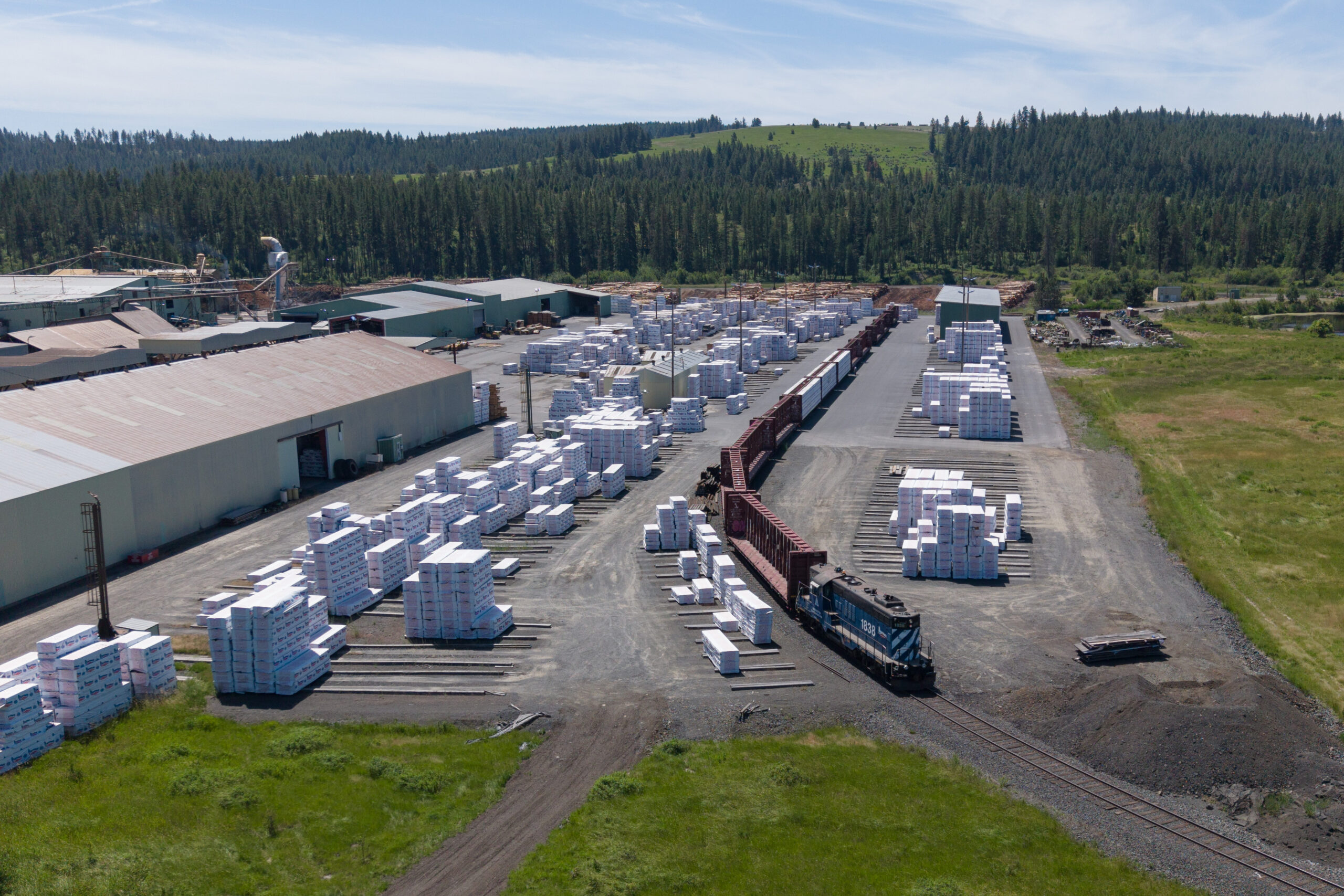
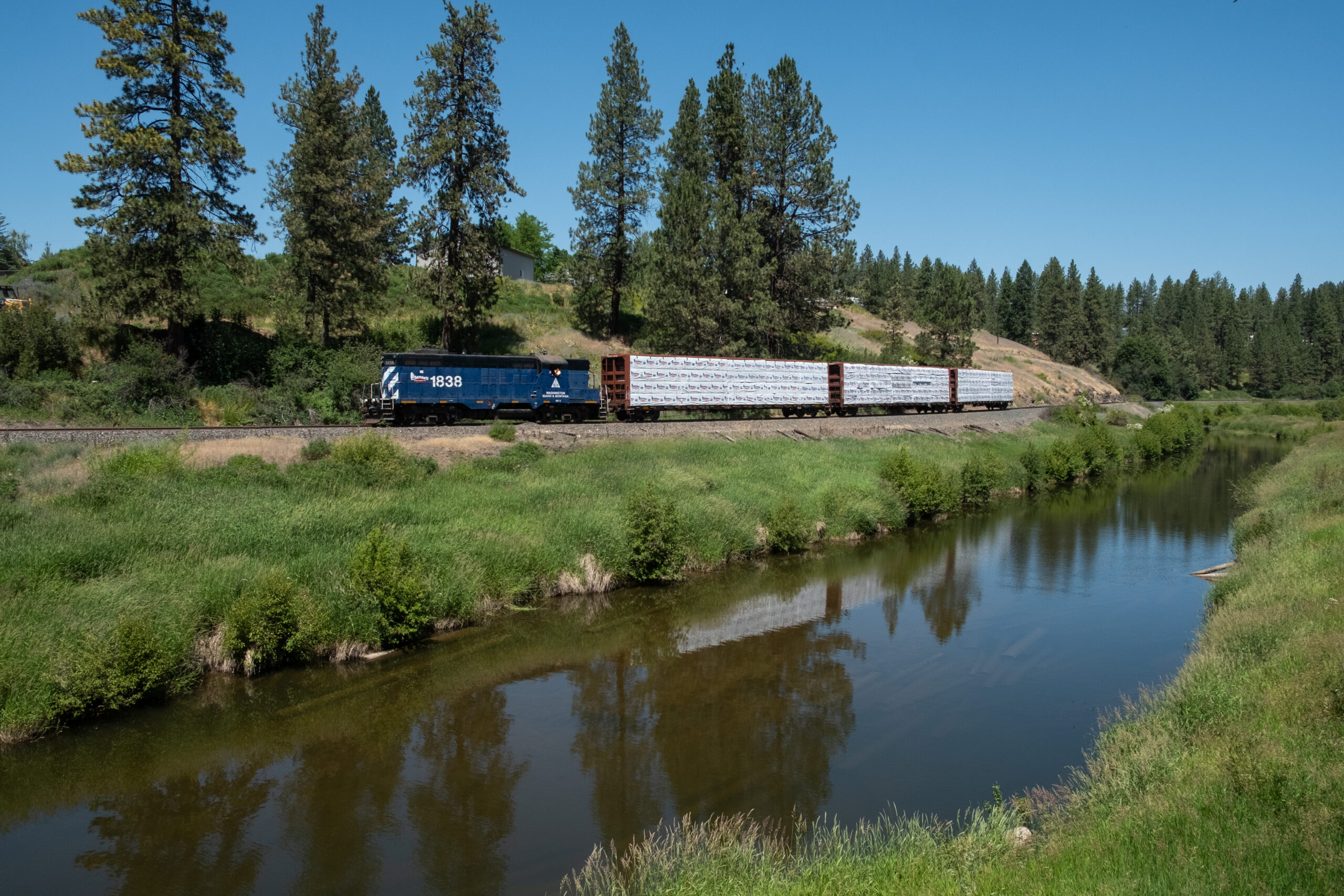
In the 21st century, the former Washington, Idaho & Montana line (WI&M) has seen sporadic rail service. Following an almost eight-year hiatus, trains began running again in February 2026. Bennett Lumber Products, the only shipper, purchased the line and leased it to a new operating company called the Washington, Idaho & Montana Railway LLC. The new WI&M typically makes one round-trip per week over eighteen miles of track between Bennett’s mill east of Princeton, Idaho, and a connection with the Spokane, Spangle & Palouse Railway in Palouse, Washington.
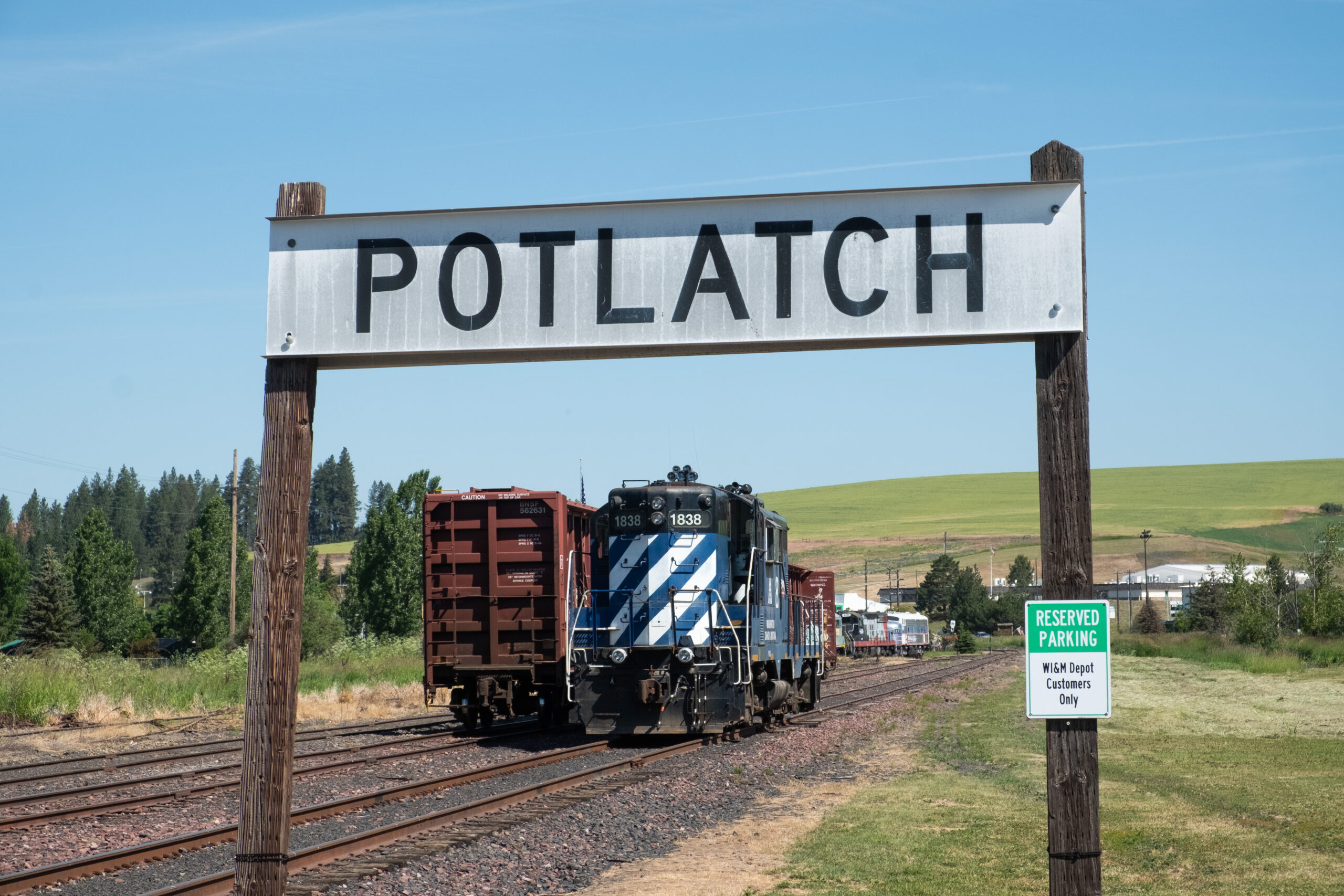
With the WI&M being far from mainline railways and Interstate highways, I wasn’t expecting to find any photographs of it in our collections, but John Illman surprised me. He visited the line on October 12, 1981, when he followed a Burlington Northern local freight running east out of Potlatch, Idaho, behind a single GP9 locomotive, a former Northern Pacific unit built in 1957. Remarkably, forty-five years later, Camron and I also chased a train on the WI&M with a GP9—a former Great Northern locomotive that’s actually a year older than the one Illman saw. The depot is still there, too, nicely restored and home to the WI&M offices on its second floor.
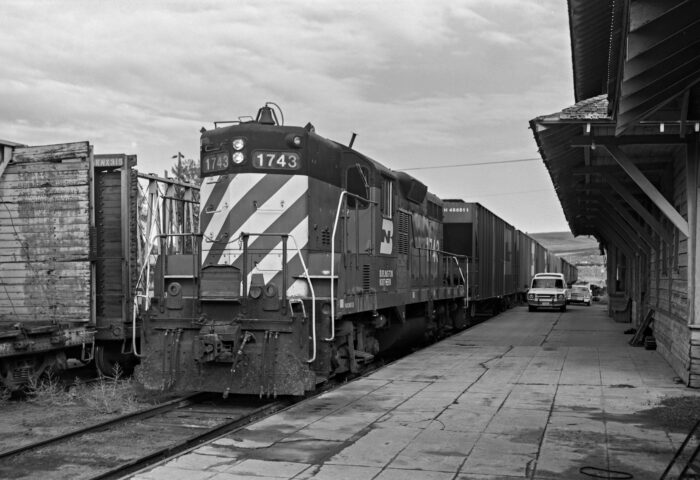
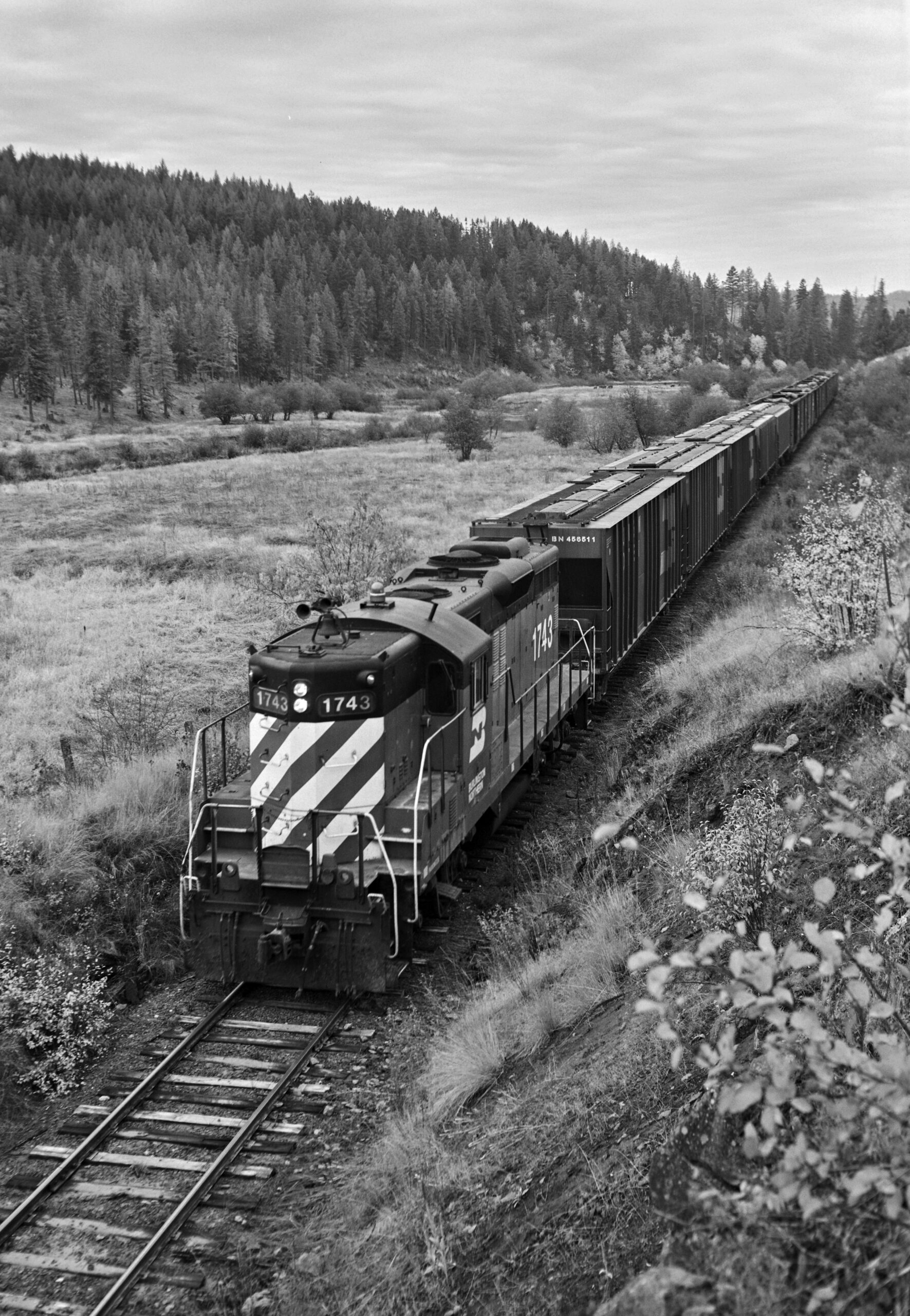
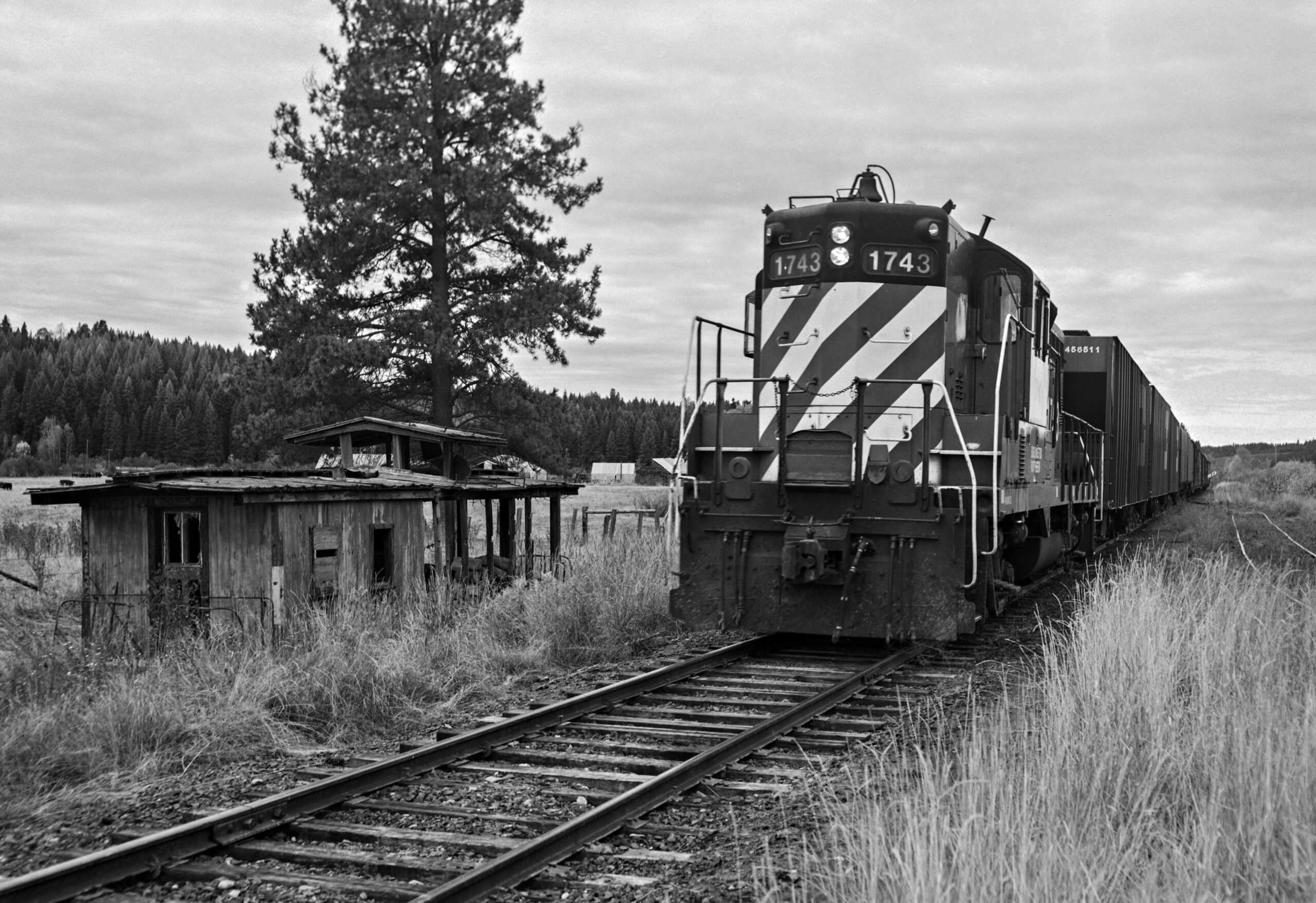
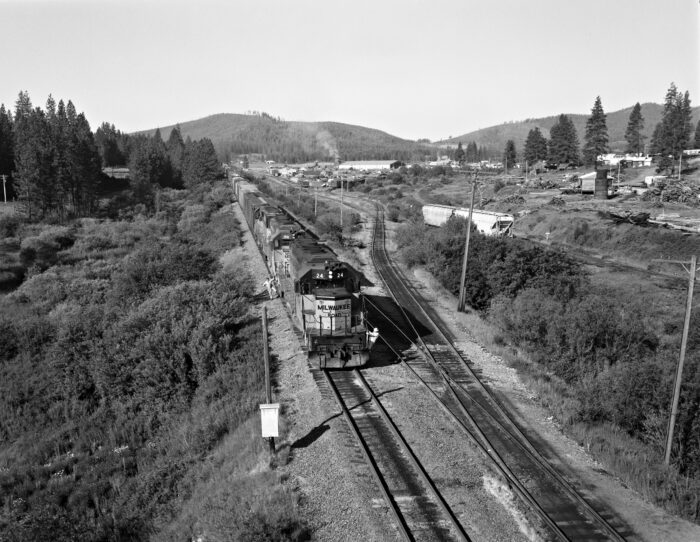
Black-and-white images: On October 12, 1981, Burlington Northern’s WI&M Local freight train ran east, starting from the depot at Potlatch, Idaho. It ran through the valley of the Palouse River east of Princeton and passed the remains of a wood caboose at Harvard, Idaho. Photographs by John C. Illman, Illman-05-242, 05-243, and 05-244.
Color images: On June 21, 2026, the Washington, Idaho & Montana Railway took three empty cars from Potlatch, Idaho, to the Bennett Lumber Products mill east of Princeton, Idaho, where the crew swapped them for three loaded cars. Returning to Potlatch, the train ran along the Palouse River, which still has logs in its bed. Photographs by Scott Lothes
While the once-vast rail empire of the Pacific Northwest is greatly diminished from its zenith, there’s still a lot of interesting railroad operations to see. The main lines that remain are busy, in some cases carrying more tonnage than they ever handled at any point in the 20th century. While branch line mileage is only a shadow of the past, there are still a lot of operations that offer local service…as well as photographic variety. New operators are working hard to build up more rail traffic and compete with the trucking industry. Archives like ours at the Center for Railroad Photography & Art hold glimpses of the past that can make for fascinating—and sometimes unexpected—comparisons with how these places appear today.