COLLECTION TRACKING:
John F. Bjorklund on the Texas Panhandle
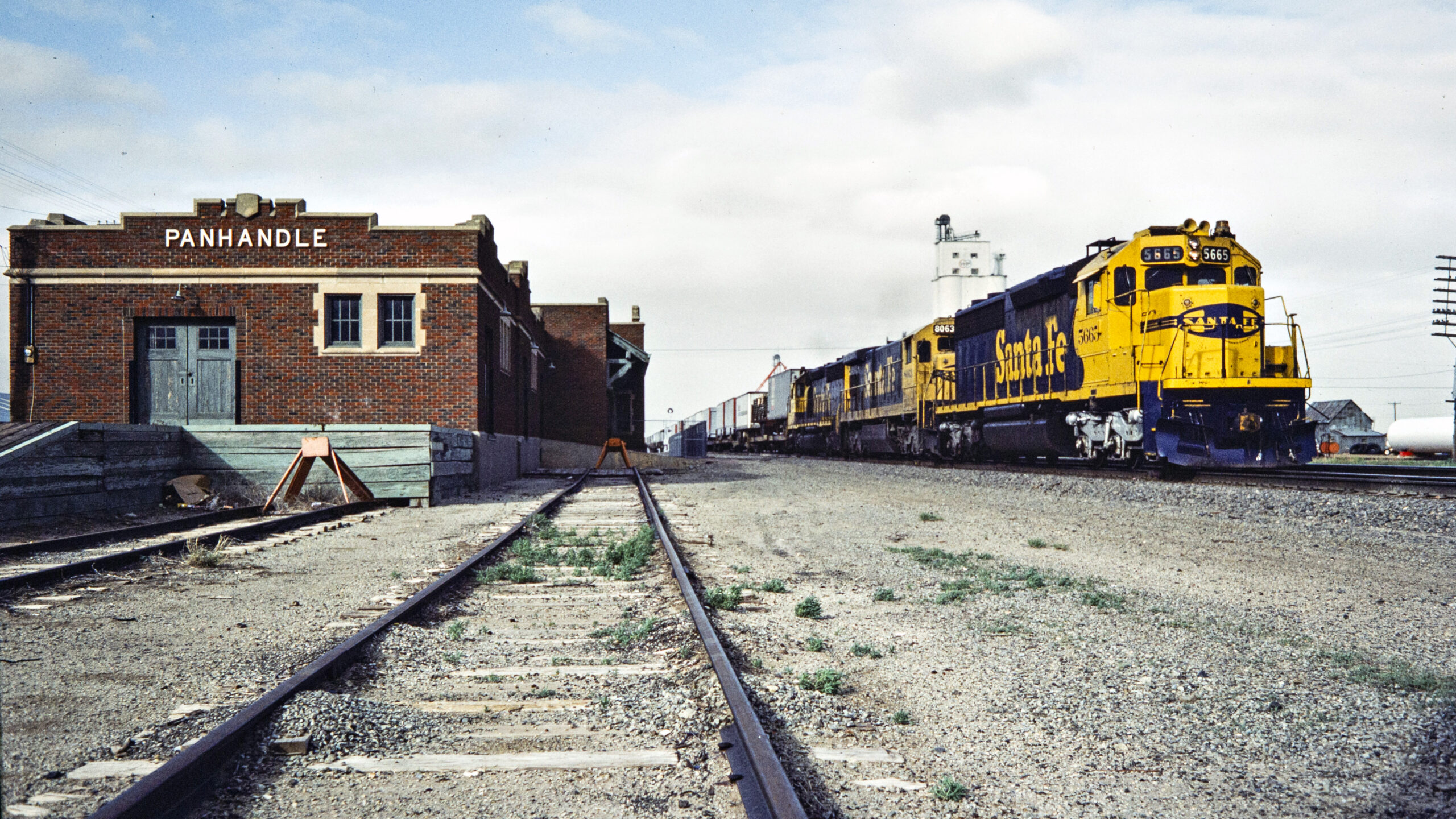
Left: A Santa Fe SD45-2 leads a trailer train past the station at Panhandle, Texas, on May 13, 1985. Photograph by John F. Bjorklund, Bjorklund-04-28-17.
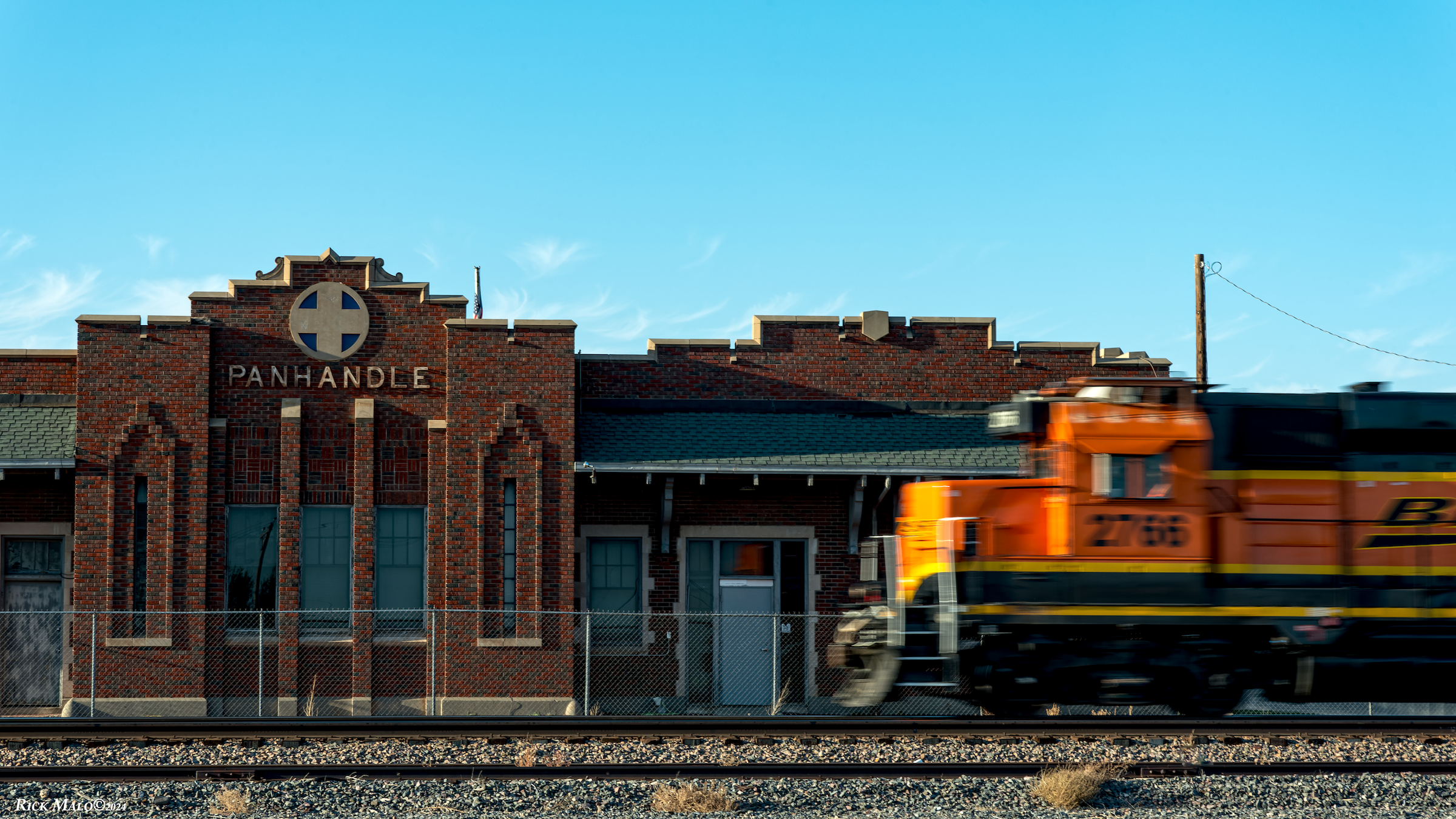
Right: BNSF GP39-3 2766—former Southern GP30 2623—rolls west past the Panhandle depot with the Pampa Local on Saturday, November 16th, 2024. Photograph by Rick Malo.
By Rick Malo
The High Plains of Texas is notoriously Pass-Through Country.
Nothing to see here.
Move along.
It is not a destination for the average railfan. It has no great scenery like Cajon, Tehachapi, or the Moffat Line. Most drive through on Interstate 40 or U.S. Highway 60 without stopping. And in the days of film, one wasn’t prone to waste that precious asset on something as bland as the wide-open Panhandle of Texas, unless you were Jack Delano on his 1943 FSA/OWI tour. More on that at another time.
If you search the Center’s available archives for images taken in the Panhandle of Texas, you’ll find they are mighty scarce. Fred Springer has three images, and J. Parker Lamb—A Texas icon—has one image taken north of Amarillo.
But it’s John Bjorklund’s image number 04-28-21, taken on Monday, May 13, 1985, that caught my attention.
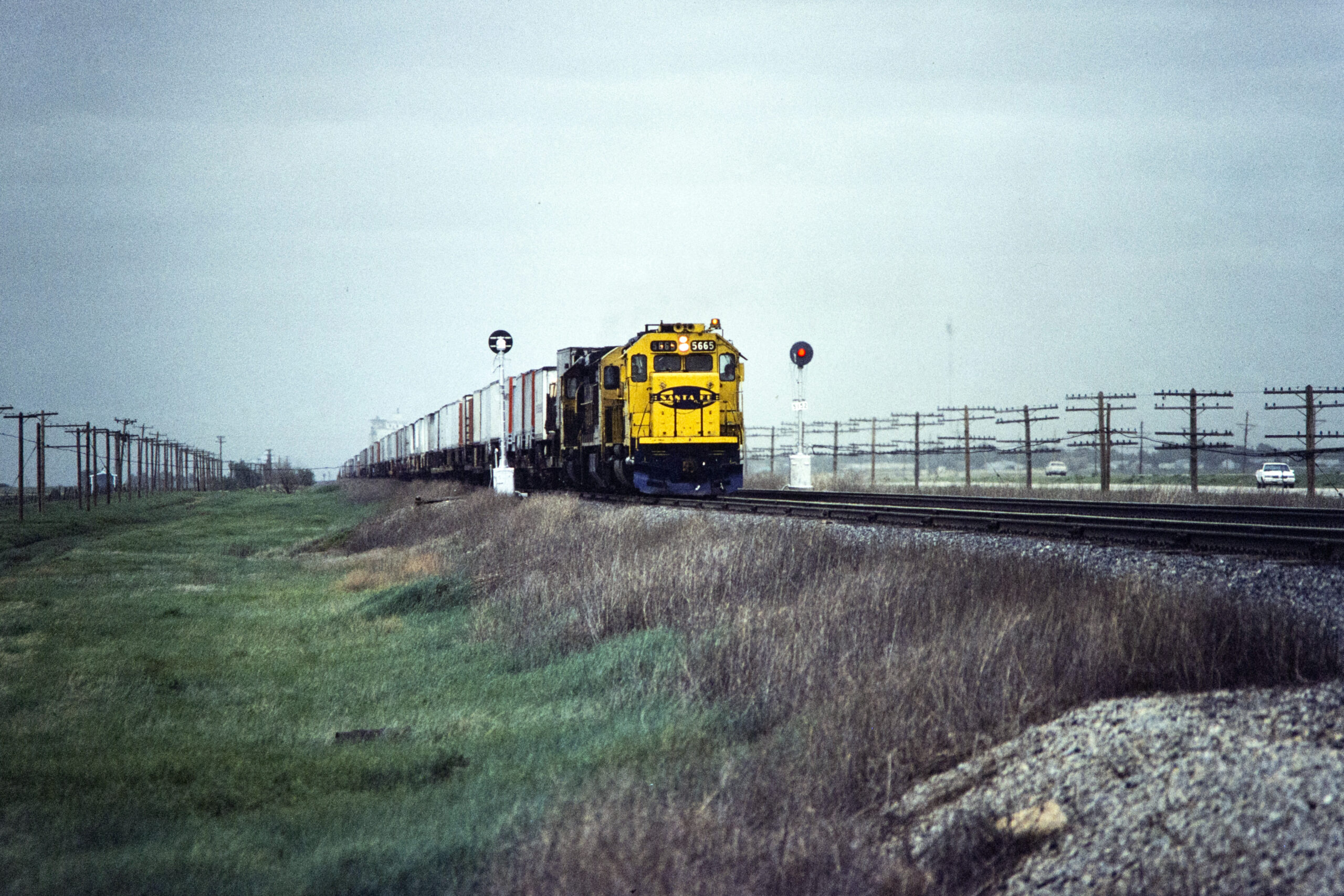
In the photo, Santa Fe SD45-2 5665 leads a GE and another EMD unit on a westbound TOFC train—perhaps train 199—splitting the signals at MP 515, which would put the location three miles west of White Deer, Texas, and 10.5 miles east of Panhandle on what is today’s BNSF Panhandle Subdivision between Amarillo and Wellington, Kansas.
The weed sprayers have done a good job on the trackside vegetation, but the grass in the ditches is plenty green, indicating a wet spring. The midday sky is cloudy; the light is flat, dull, and uninspiring.
Off to the right, U.S. Highway 60 parallels the tracks. For the most part, the Transcon angles northeast to southwest across the Texas Panhandle, and U.S. 60 is never far from it.
John’s vantage point is the County Road W crossing west of White Deer, across U.S. 60 from the Carson County Cotton Gin. He’s crossed the tracks to the north side and is looking back towards White Deer. This is a location I’ve shot at many times, in different seasons and different times of the day.
The main reason why I like this place:
One can see a long way from here—
In all directions.
As friend and photographer Joe McMillan would say, “There are no mountains to block the view.”
Scott Lothes mentioned to me doing something from Texas for the blog, and when I discovered Bjorklund’s image, I was thrilled, to say the least. This has been my homeplace since 2023. Working in Midland and living in Canadian, I’ve had ample time to explore the great mesa known as the Llano Estacado and its surrounding environments.
I’ve developed a genuine affection for the wide-open spaces and enjoy the challenge of photographing trains as they pass through.
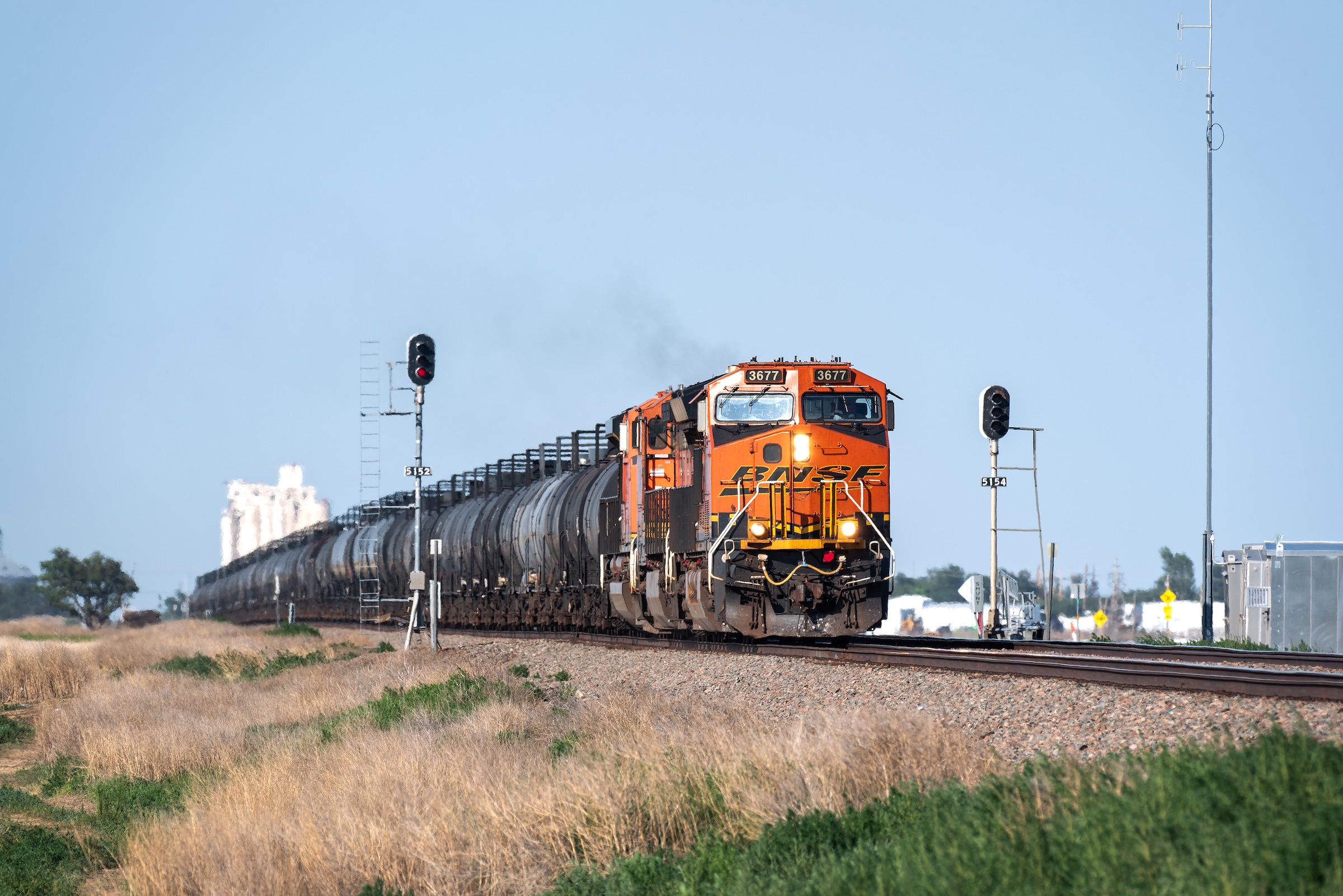
I made a special stop on July 9, 2026, to approximate John’s image.
It’s 6:23 p.m. and HOT! One hundred and two degrees worth of Texas heat with a 30mph south wind gusting to 40. It’s hard to hold still the Nikon D750 with a 200-500mm long-barreled lens attached.
GE ET44C4 3766 leads a unit tank train west as it splits the signals at Milepost 515.
Gone are the searchlight signals, the multi-armed code line poles, the jointed rail, and the blue-and-yellow diesels, but the grain elevator in White Deer still stands.
A Positive Train Control mast on the right stands as a sign of the times.
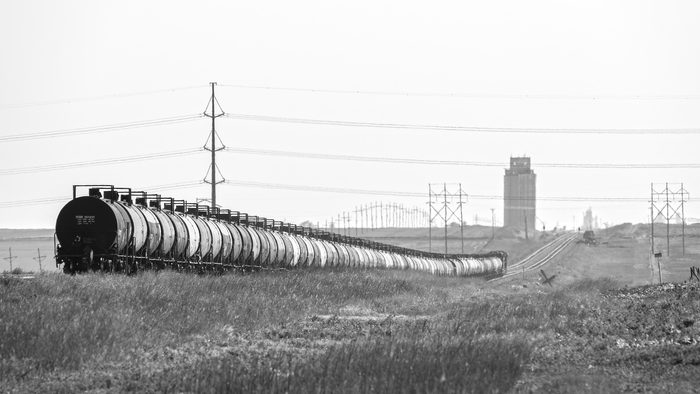
We’ll turn our camera and capture the going-away shot as the train drops into a sag in the landscape created by the playa at Cuyler; one of the hundreds of small, normally dry, naturally occurring lakes that dot the surface of the Llano Estacado. The grain elevator at Cuyler stands prominent on the far rise, and beyond that, in the far distance, one can see the elevators at Panhandle, 10.5 miles away through the shimmering heat waves.
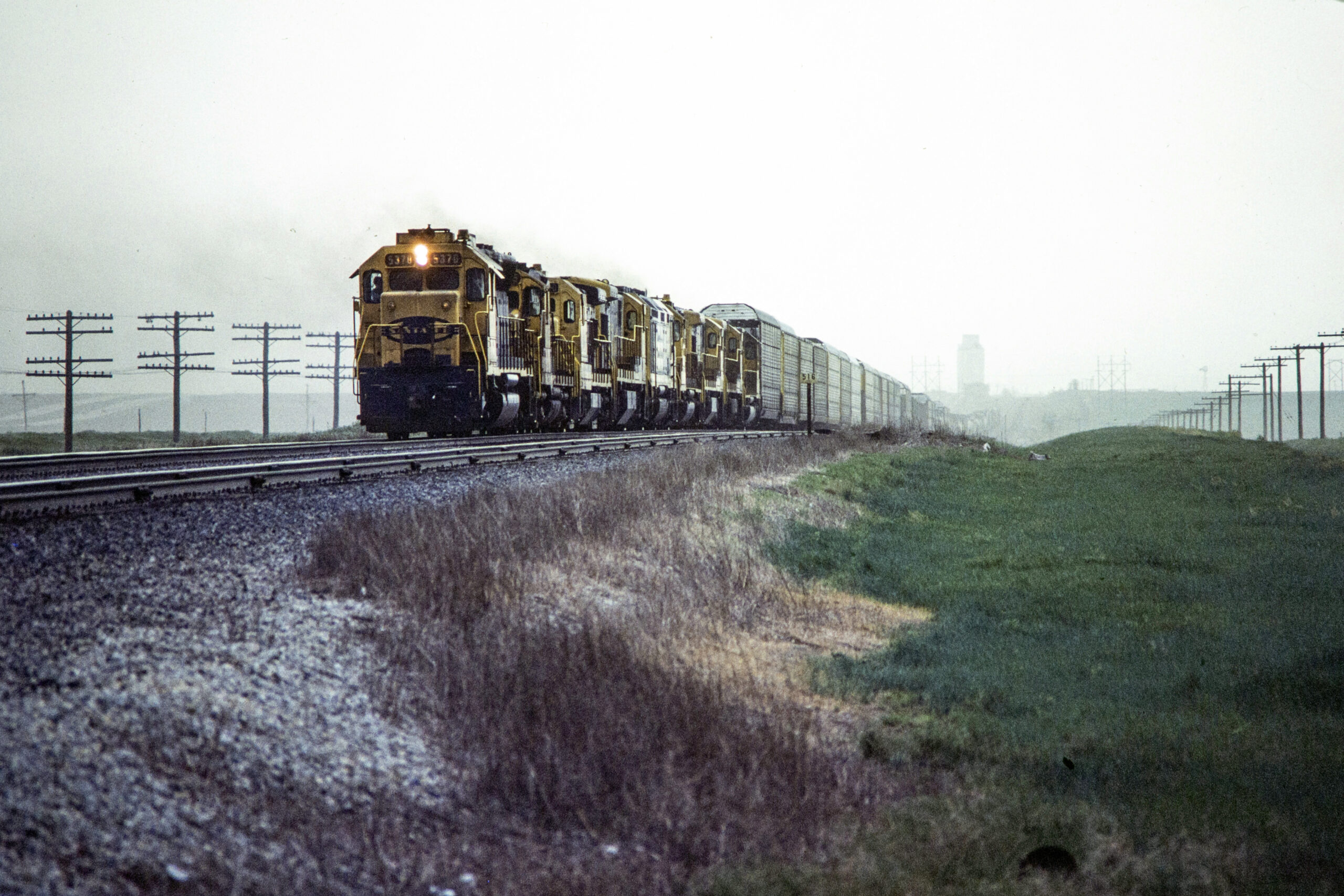
That’s pretty much where the story ended, but further investigation of the Center’s archives by editorial associate Justin Franz and archivist Gil Taylor tells a bigger story. Their diligence uncovered four more images John took that day, recording a meet with an eastbound manifest.
Image 04-27-01 shows nine units powering an eastbound freight up out of the playa at Cuyler, Texas; five EMDs—one of which is an F45—and four GEs, their heavy exhaust bending to a brisk north wind.
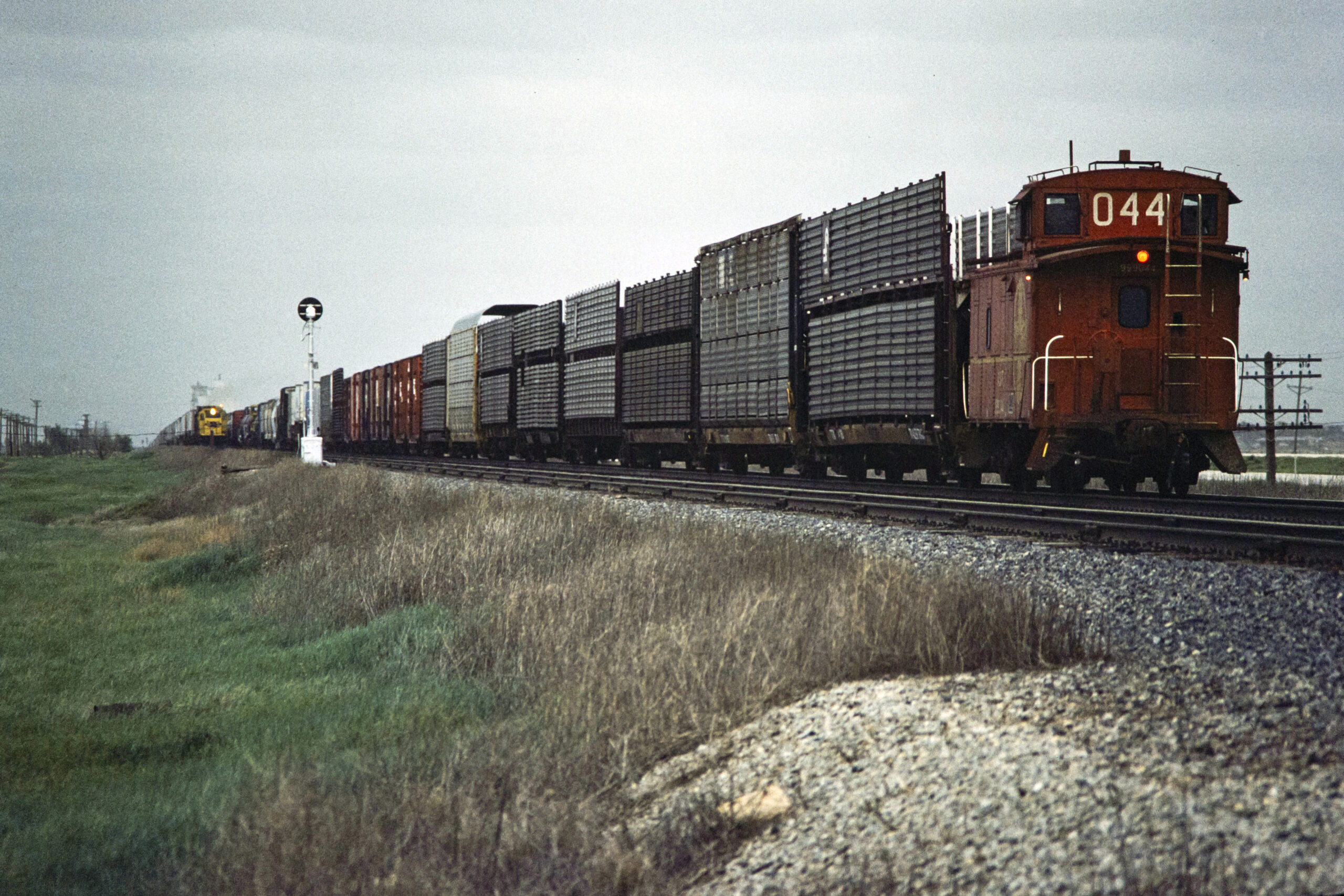
Photo 04-28-22 shows the caboose of the eastbound approaching the signals at MP515 with the westbound in the distance. Dig those crazy open-topped autoracks ahead of the caboose!
After the eastbound cleared, 5665 West got underway. John would then chase the train all the way to Panhandle, arriving just in time to capture it passing the handsome brick depot, seen in image 04-17-28 at the top of this post. The big 20-cylinder unit looks well-groomed and clean, with gleaming silver trucks in classic Santa Fe style.
OH. MY.
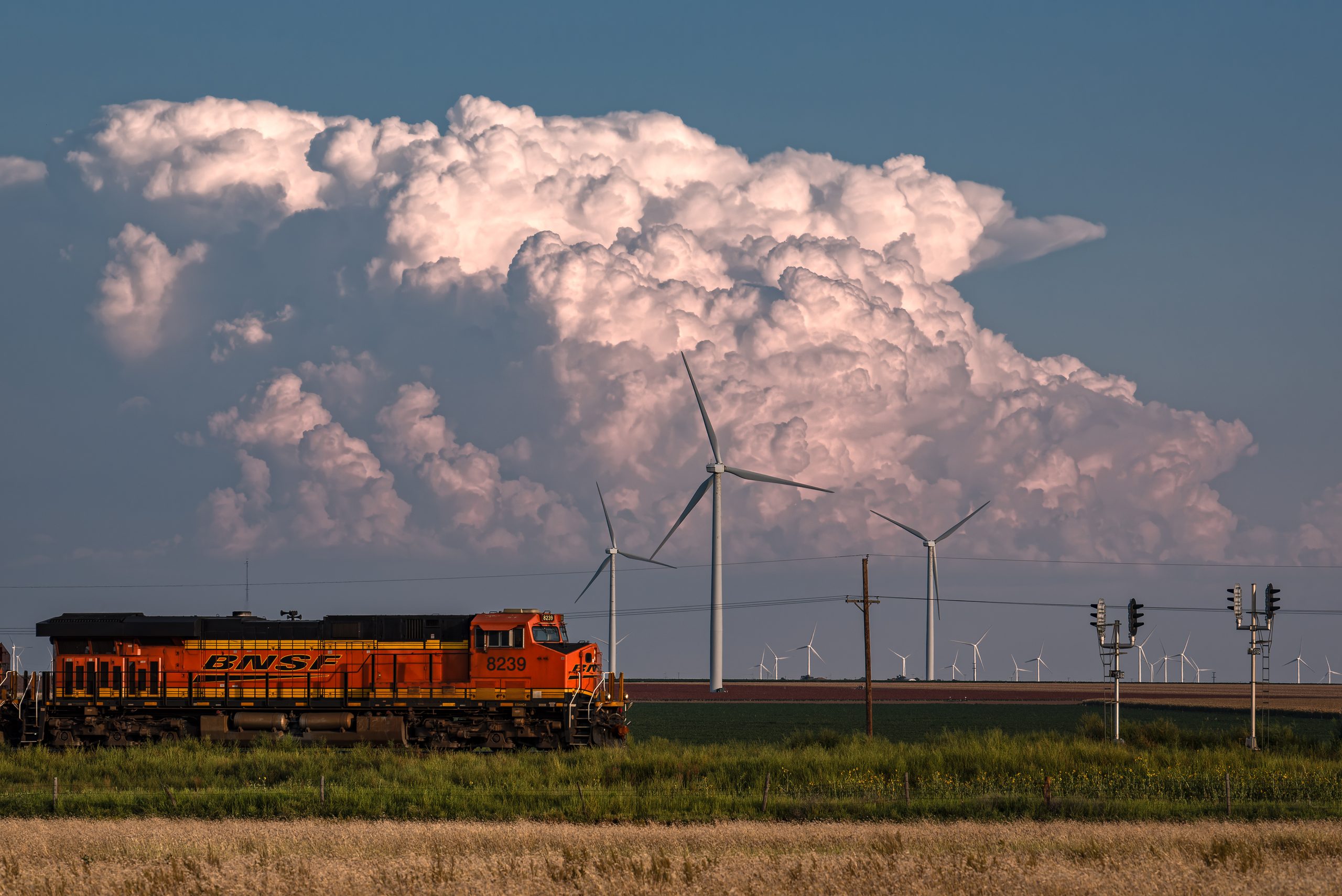
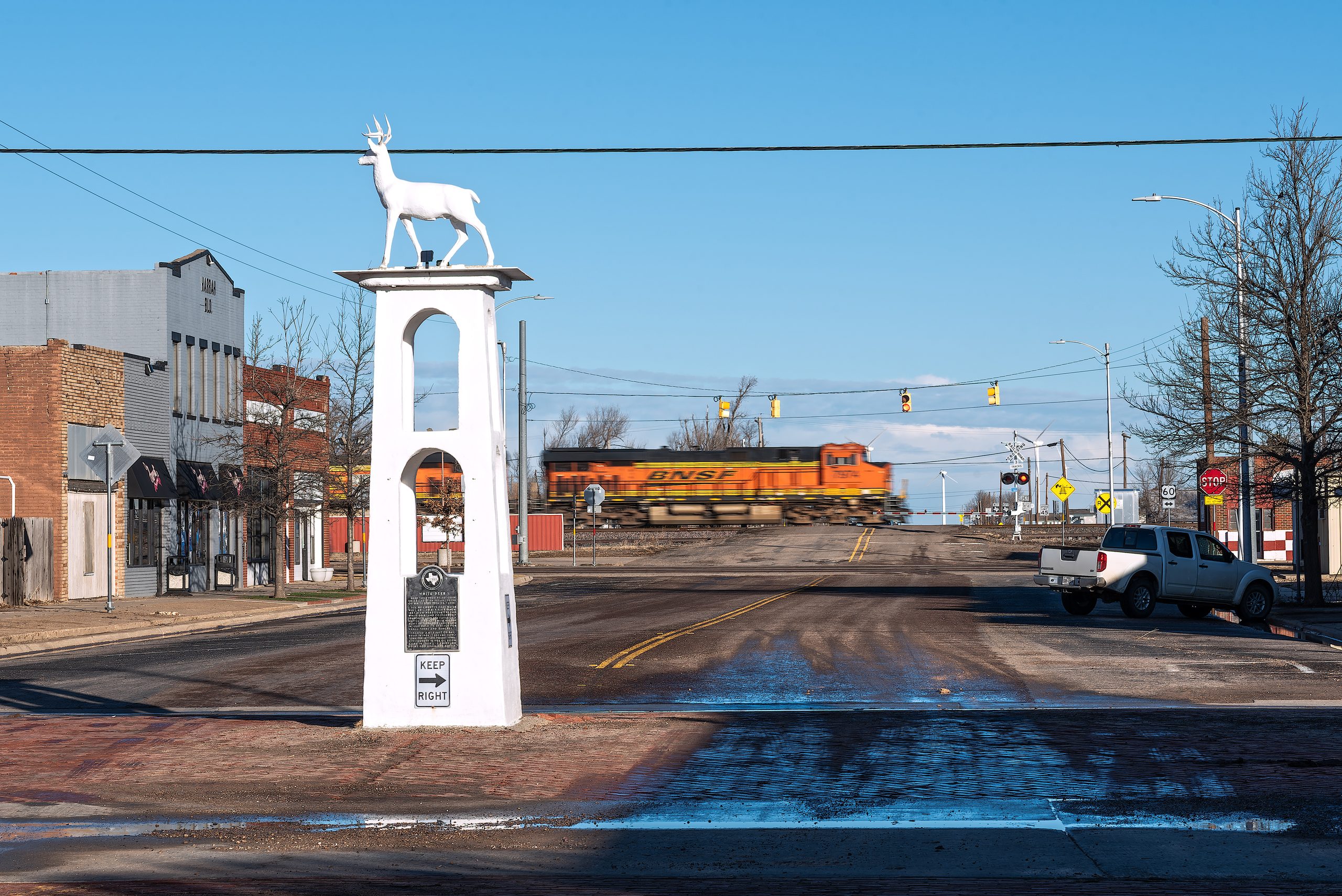
The Texas Panhandle is far from boring. One must look at it; study it; get to know it; take it all in. And when you think you know it, look at it again; differently. One must respect it, for it can be a harsh place for the unwary. The storms are legendary, and there are things that rattle in the grass and bite.
But most of all, it demands time from those wanting to capture it. There is beauty everywhere, and one must leave the ‘Cajon Mindset’ behind to see it here on the High Plains of Texas.
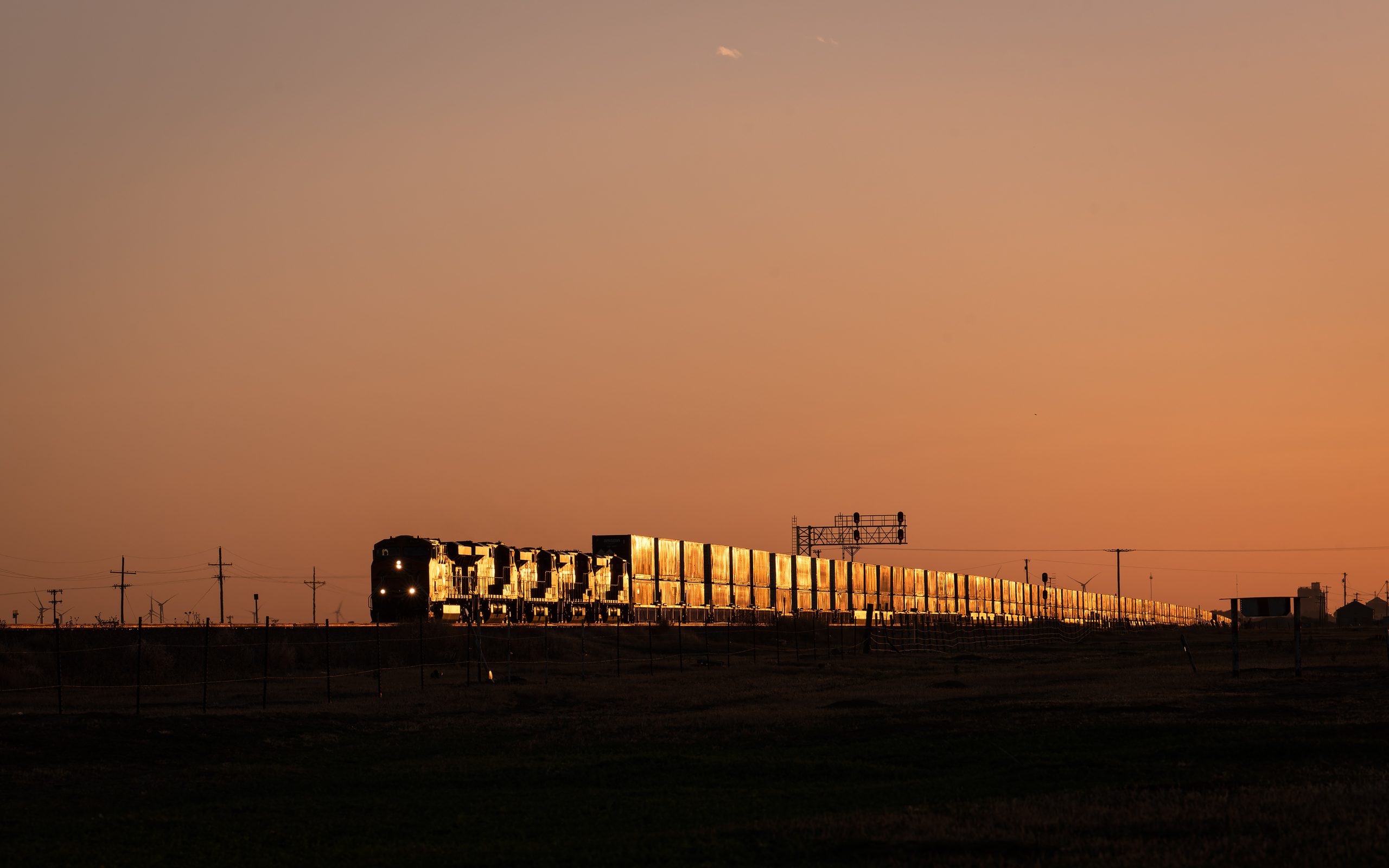
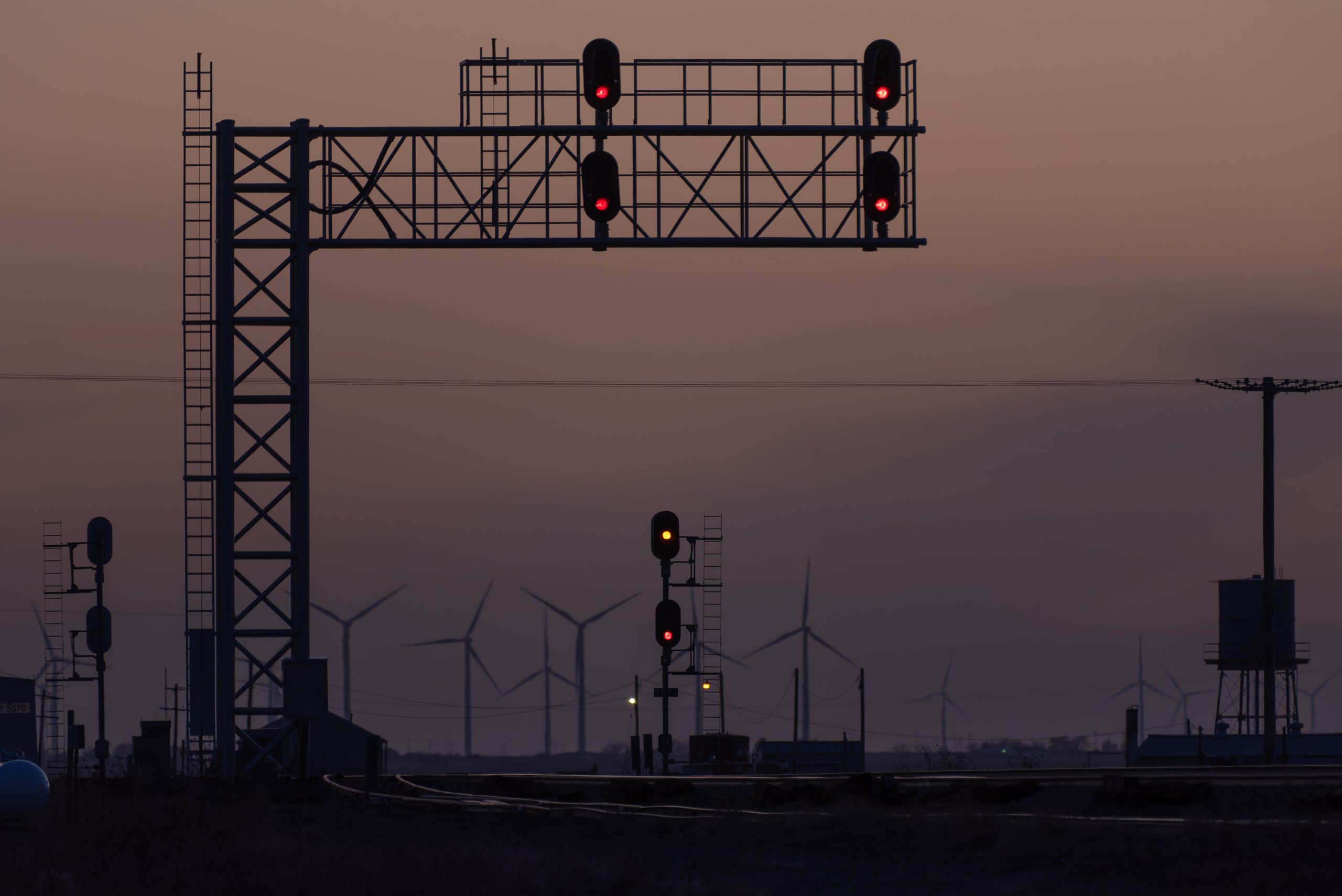
Stop and stay awhile; watch a couple of sunsets; get up early, stop at the Allsup’s in White Deer, grab a cup of coffee and go out and watch the sunrise.
The whole “f8 and be there” thing.
For more
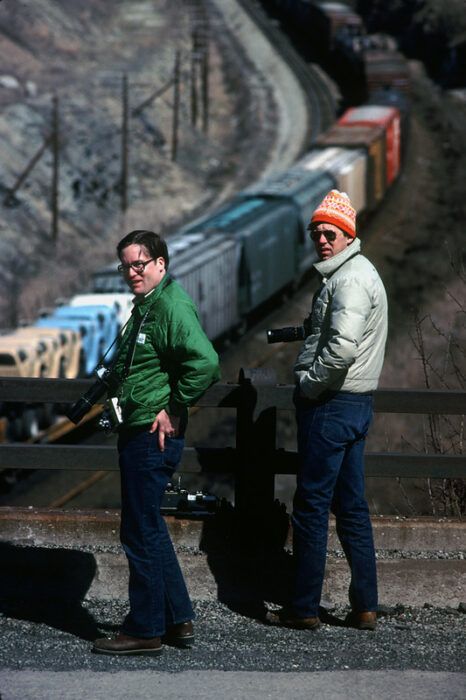
Railfan with John F. Bjorklund across the United States and Canada by exploring the nearly 3,500 images from his collection now posted in our digital collections.
Have an idea for a Collection Tracking blog? Email Editorial Associate Justin Franz at justin [at] railphoto-art.org.