Adapting train orders for
the Center’s Legacy Society
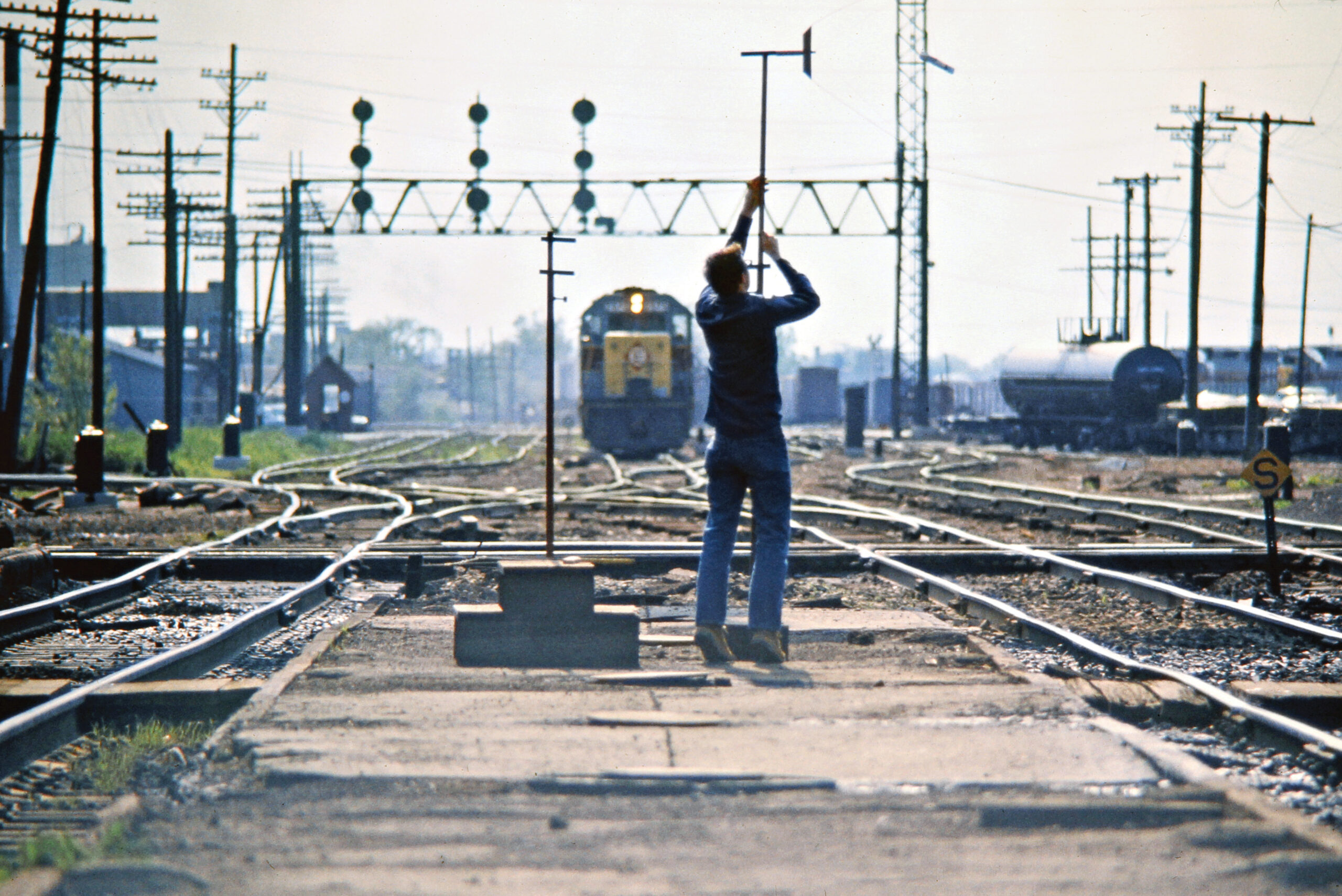
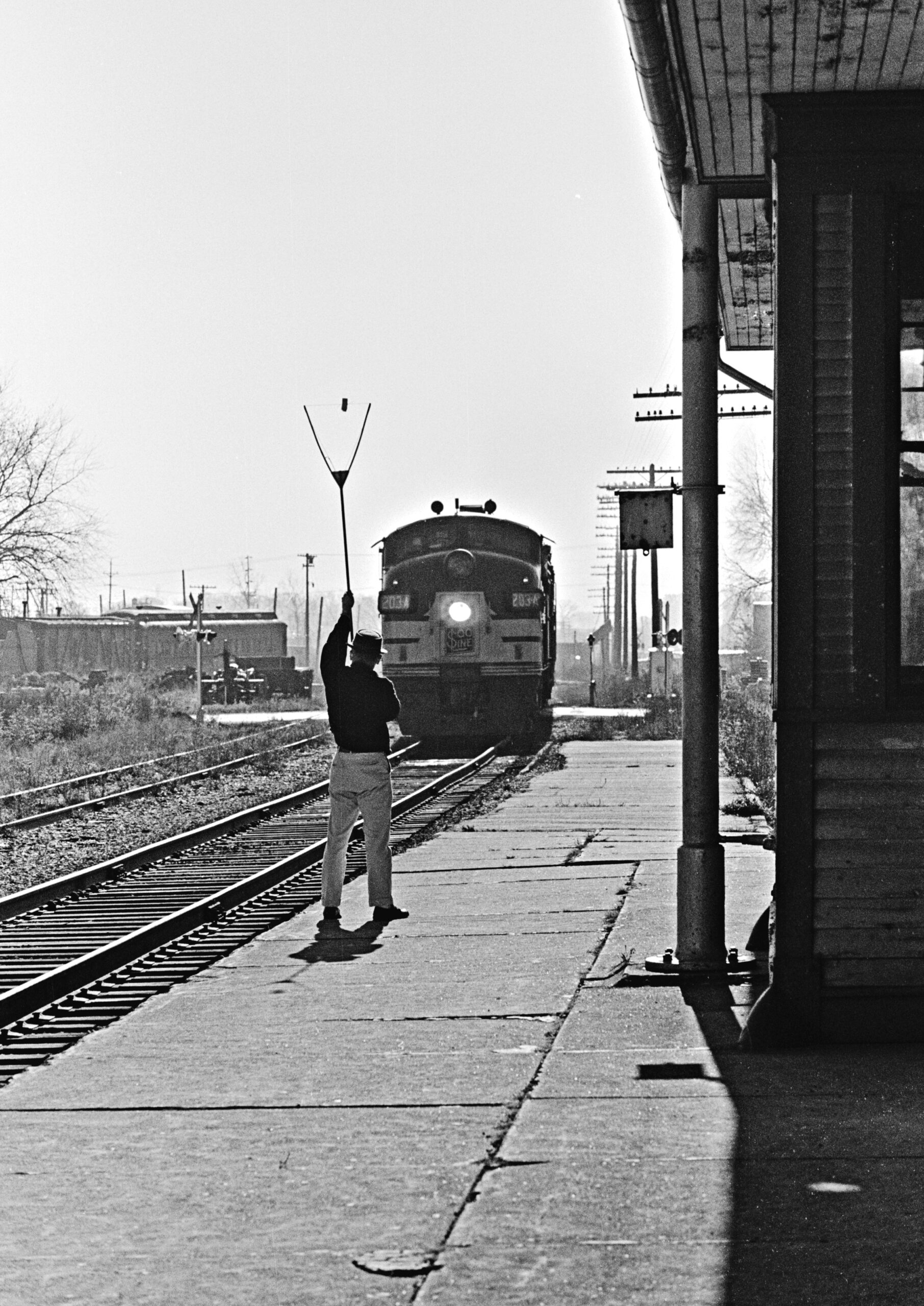
Soo Line relief operator Tony Kunst “hoops up” a train order to a freight train heading west at Mundelein, Illinois, on November 10, 1962. Photograph by Wallace W. Abbey, Abbey-05-079-11
The Center for Railroad Photography & Art is built upon the legacy of railroading. The year 2019 was truly monumental for railroading and for the Center. As we celebrated the successes of After Promontory and our many other projects and programs, we also reflected on our past and contemplated our future. We are humbled with gratitude for each of you, whose many contributions helped us come this far.
With your support, the tracks look bright ahead. And the importance of our mission is clear. The images we preserve are not just valuable, but increasingly vulnerable. We take seriously our charge to ensure that the legacies of these images, and the individuals who made them, live on in years to come—viably, visibly, and sustainably.
At Conversations 2019, we formally announced the creation of the Center for Railroad Photography & Art Legacy Society. We established this new recognition group to honor individuals who have chosen to support the long-term sustainability of the Center’s work and mission by including us in their estate plans. Seventeen individuals were founding members, and we celebrate their tremendous commitments to support our work beyond their lifetimes—and the commitments of everyone else who has joined since then. We held a brief program at the conference to honor and thank them for their enduring support and vote of confidence in the Center’s future.
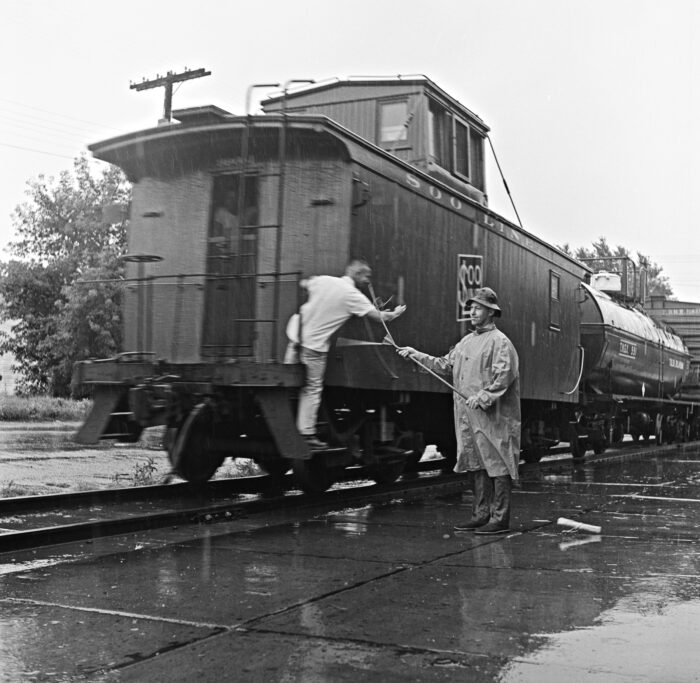
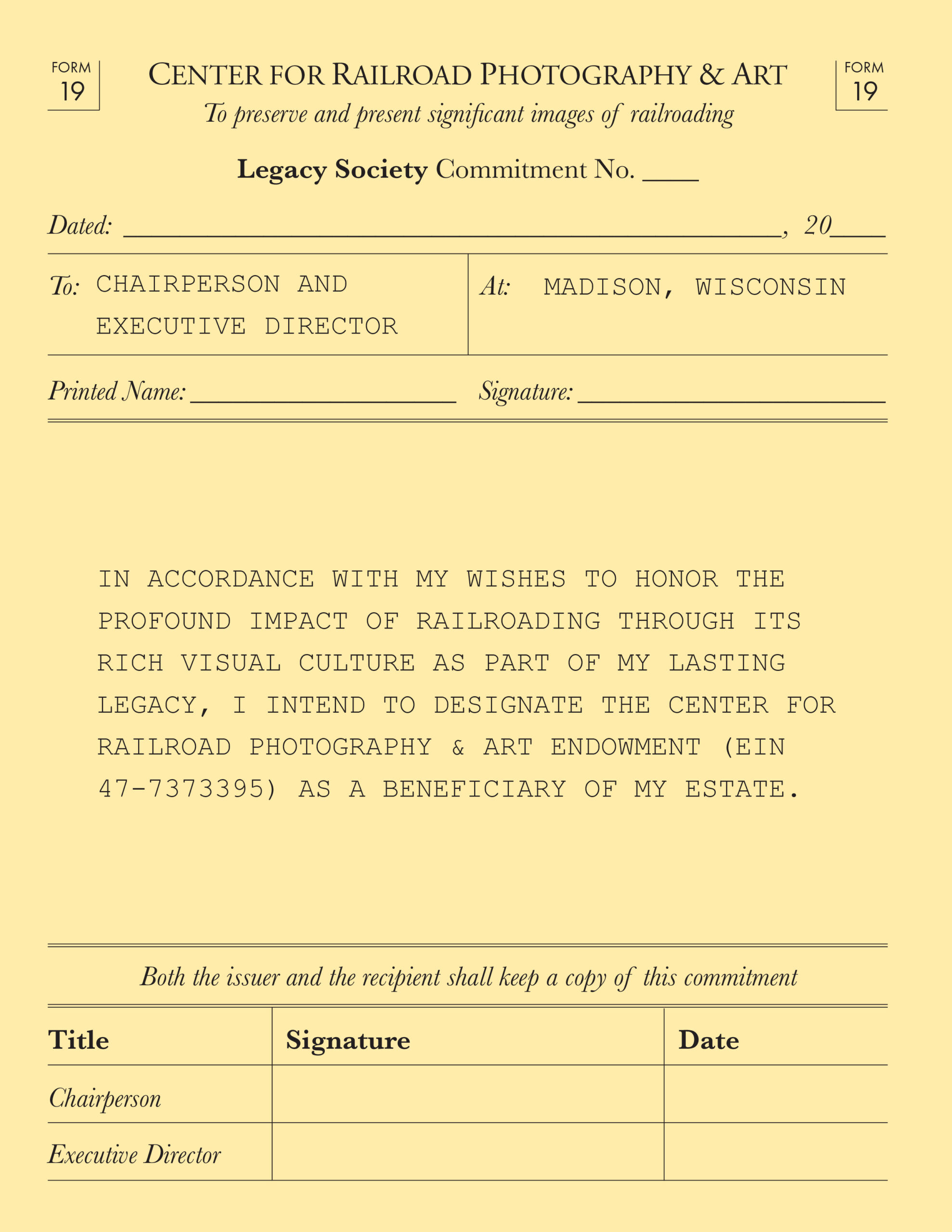
Legacy Society Commitment Form
In establishing a legacy society, we wanted to give special recognition to members while symbolically codifying their commitments. The vast paperwork that existed in the railroad industry prior to the digital age gave us many ideas as we designed the commitment form.
Among these documents was the Dispatcher’s Record of Movement of Trains. Every railroad dispatcher would fill out this large, ledger-style sheet for each shift worked. The dispatcher would record the movements of each train that operated over that section of the railroad. An adaptation of such a form would have allowed every legacy member to sign the same sheet, but we encountered several challenges. The form itself is complex, as is implementing a single sheet with a largely dispersed membership. More importantly, using the record of movement of trains would put the Center in the role of dispatcher, issuing orders to members. This relationship in the Legacy Society is actually the reverse, with orders flowing from each member to the Center.
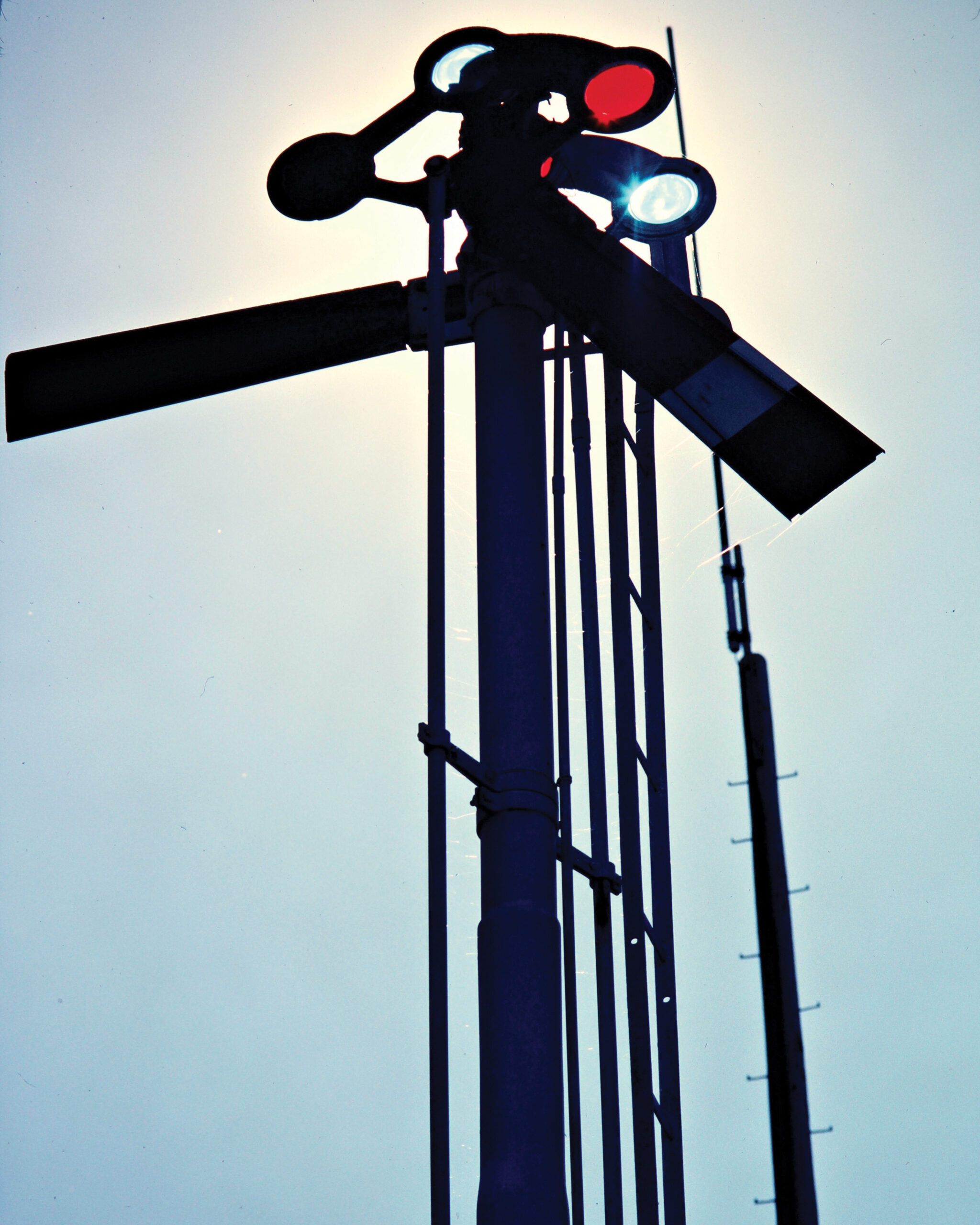
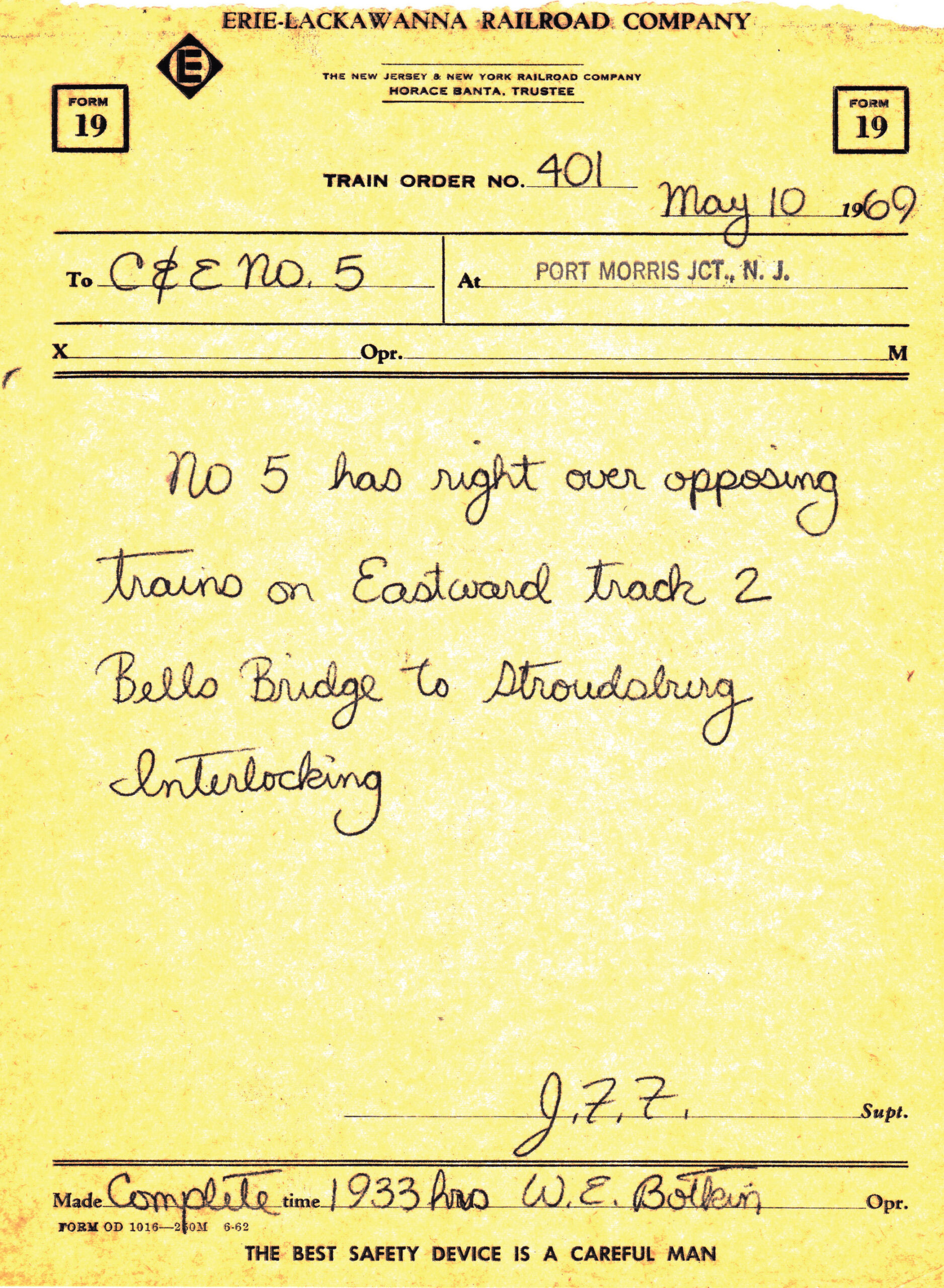
Having ruled out the dispatcher’s record, we next considered the Train Order. Prior to the advent of radios and computers, nearly every railroad in North America utilized a system called Timetable and Train Order operation to safely manage train traffic. While the timetable dictated the schedule of each train and set the meeting points for trains running in opposite directions, the timetable alone was too rigid. Trains frequently ran late; occasionally scheduled trains needed to be canceled; and often extra trains, not listed in the timetable, had to run. As a result, railroads used the train order as a way to amend the timetable. The dispatcher issued train orders, first by telegraph and later by telephone, to operators working in stations and signal towers along the line. The operators copied the orders and passed them to the crew members of each affected train.
The typical train order was the Form 19. The operator would either type the order or write it by hand, tie it up in a loop of string, place the string in an order hoop (often a y-shaped fork), stand as close to the tracks as possible, and hold the hoop up as the train approached. A crew member aboard the locomotive would lean out and stick his arm through the hoop as the train passed. The process would be repeated with the caboose so that both the engineer and conductor received copies of the order. If all went well, the crew could receive orders without stopping. If anyone missed catching the orders, the train had to stop.
Another kind of train order, the Form 31, was more restrictive. It required any trains affected to stop so that the crew could physically sign the order, much like registered mail.
As we thought more about train orders, we felt they would be a good fit as a symbolic means of codifying commitments to the Center’s Legacy Society.
The train order puts each Legacy Society member in the role of “dispatcher,” the person issuing the order, while placing the Center in the role of “train,” receiving the order. As the recipient of the order, the Center affirms our promise to thoughtfully purpose the donor’s gift as intended, thus honoring the legacy of the giver. Each Legacy Society member can fill out an individualized order form, which better allows for completion by mail when in-person signings are not practical. Each member can also write customized instructions, if he or she wishes, or utilize a “standard” order. The Center’s chairperson (the train’s conductor) and the executive director (the train’s engineer) will also sign the orders. And each form will be printed on high-quality paper and bound into a special, leather-bound book.
We have adapted aspects of both the form 19 and the form 31 to fit the needs of our legacy recognition program. We chose to retain the form 19 number because it is more readily recognized as a train order form. And, by a happy coincidence, the number 19 corresponds with the founding year of the legacy society—a perfect fit as we launch this special program.
Do you have orders for us? Please let us know
Legacy support helps assure a source of stable future funding to the Center while costing donors nothing during their lifetimes. Gifts from legacy society members will allow the Center for Railroad Photography & Art to continue to fund our growing collection, preservation, publishing, and exhibition activities for future generations to enjoy. For information, visit the Legacy Society page or get in touch with Inga Velten, development director, by sending an email to inga [at] railphoto-art.org or calling 608-251-5785, extension 2.
— Inga Velten and Scott Lothes, September 2019