Representations
of Railroad Work
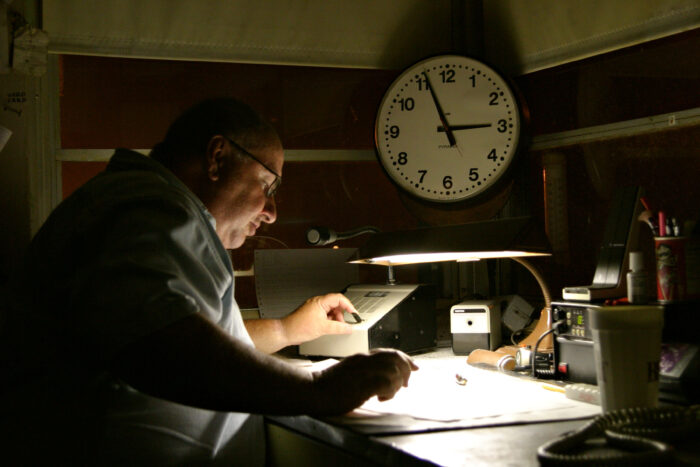
A series of photography exhibitions about railroaders
To explore the topic of railroad work, the Center produced a series of nine photography exhibitions over the three-year period 2003 to 2006. During their initial run, they visited 22 locations across the country. Two of the shows remained in circulation into the 2020s, continuing to build awareness of the profound human contributions to the business, technology, and artistry of railroading.
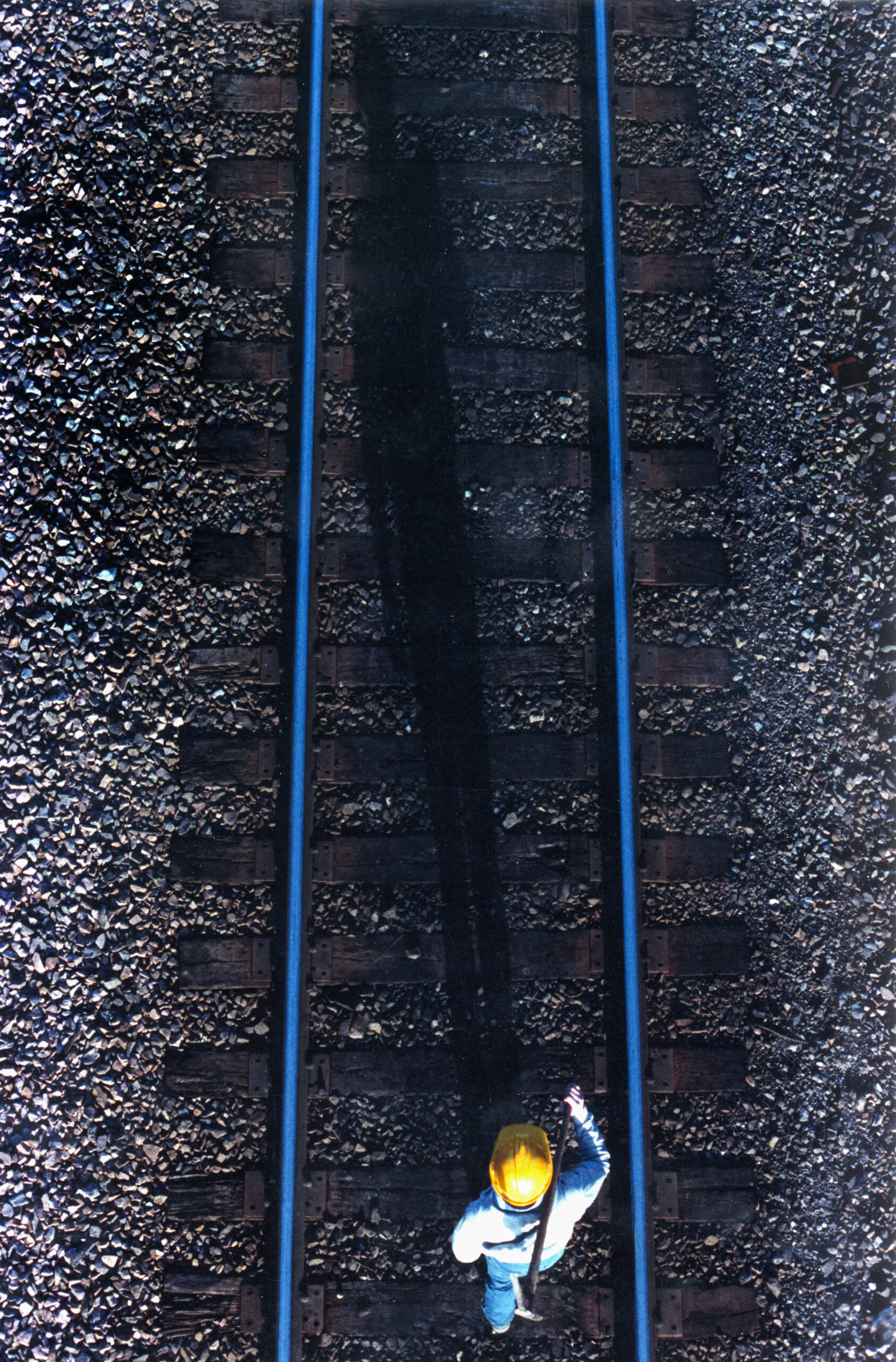
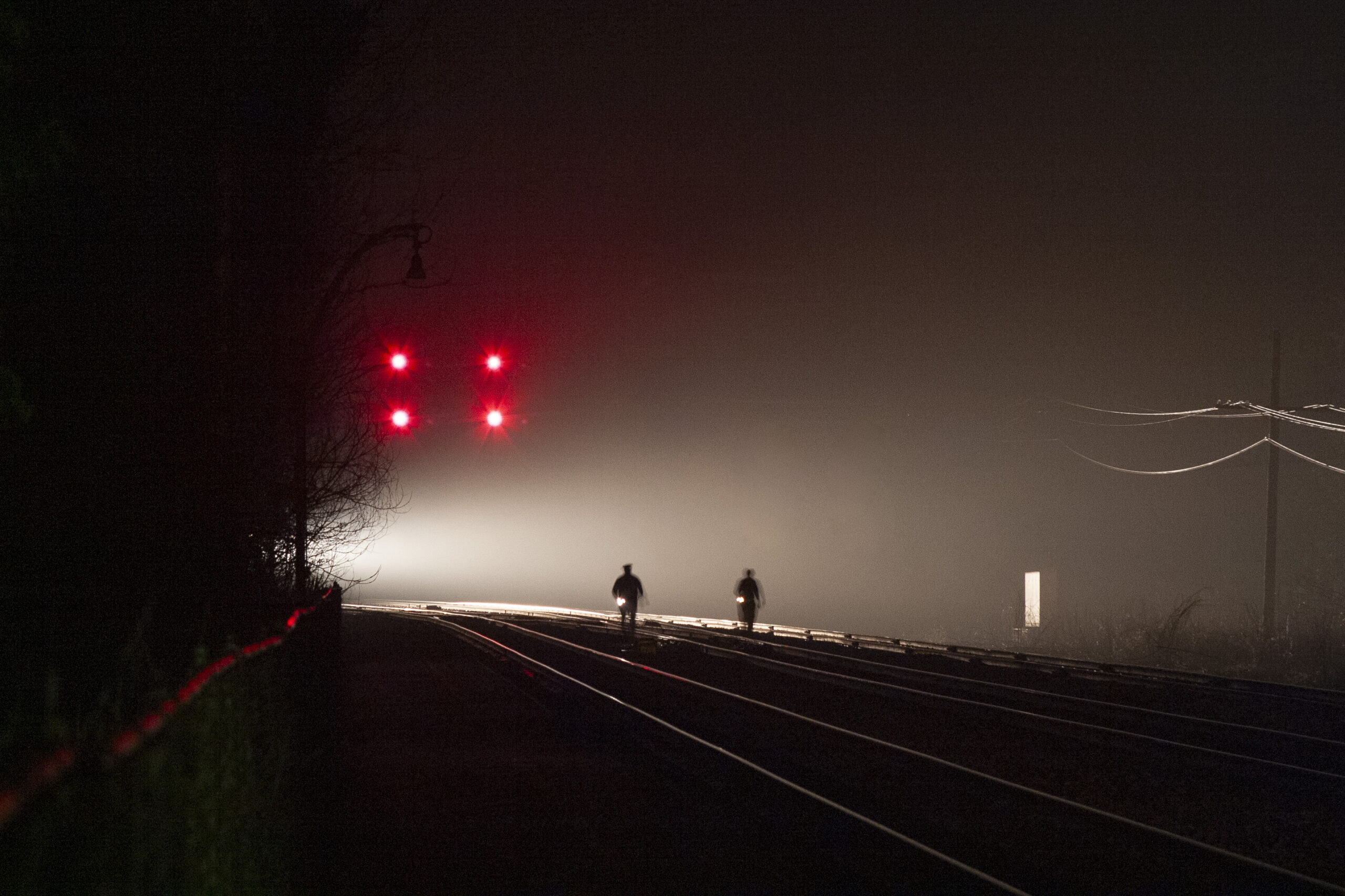
Right: A track inspector walks the Union Pacific main line through Ames, Iowa, in the early 1980s. Photograph by Joel Jensen
About the program
During Representations of Railroad Work, a three-year program funded by the North American Railway Foundation (NARF), the Center created nine impressive photography exhibits that have been displayed at twenty-two locations across the country, reaching thousands of viewers. With these exhibits and our publications, Internet galleries, and bibliography, we have achieved our goal of building awareness of the significance of the human element of railroading. Interest is growing in the stories of the people who built the railroads, rail by rail.
NARF, formed in 1996 as a private operating foundation “to explore, nurture and support railway safety, efficiency and technology and to educate about and preserve the history of railroads in the United States and Canada,” receives its financial support from organized rail labor. “We are very pleased with the work the Center has completed over the past three years and what they continue to accomplish today,” said Philip J. Sullivan II, executive director of NARF.
After the first exhibit, at the Railroad Museum of Pennsylvania, its curator, Bradley Smith, commented, “great,” “visually stunning,” “appreciated by many.” He estimated that thousands, probably tens of thousands, had seen it.
“Our visitors found the images evocative and engaging,” added Kurt Bell, museum archivist. “Since the gallery is situated directly behind my office, I could always hear their comments–my overall impression is that parents with kids in tow don’t have much time to stop and read long labels, and since this exhibit had a minimum of text, it won popular favor. It’s Work was also effective for our audience because it allowed them to learn chunks of railroad history by “reading” the images since they were very people-oriented and graphically pleasing and they didn’t get bogged down with too much information.”
Ryan Kunkle, visitor services supervisor, echoed Bell’s comments. “Its impact was through its simplicity, a factor which made the exhibit nice from the museum’s perspective as well, requiring little extra effort on our part for set up and interpretation. Many of our visitors have asked for more interpretation of the railroaders themselves and this was a wonderful dovetail with our other exhibits. Since the vast majority of our visitation also associates railroading with a family member, there was an instant personal connection to the exhibit as well. Since most learning starts through these personal associations, that made the exhibit a tremendous portal into the rest of the collection, he said.
At the Nevada State Railroad Museum, its executive director, Peter Barton, was pleased with an increased in attendance when the exhibit opened there. “Our visitation for the period from July 1 through August 10 has been about 6,900–and that is up a respectable 10 percent over the same period last year. As you know, many museums are suffering through a period of static or reduced visitation, particularly so with recent substantial increases in the cost of auto fuel. So we are quite delighted to see an increase of any sort, not to mention a double-digit one,” he said.
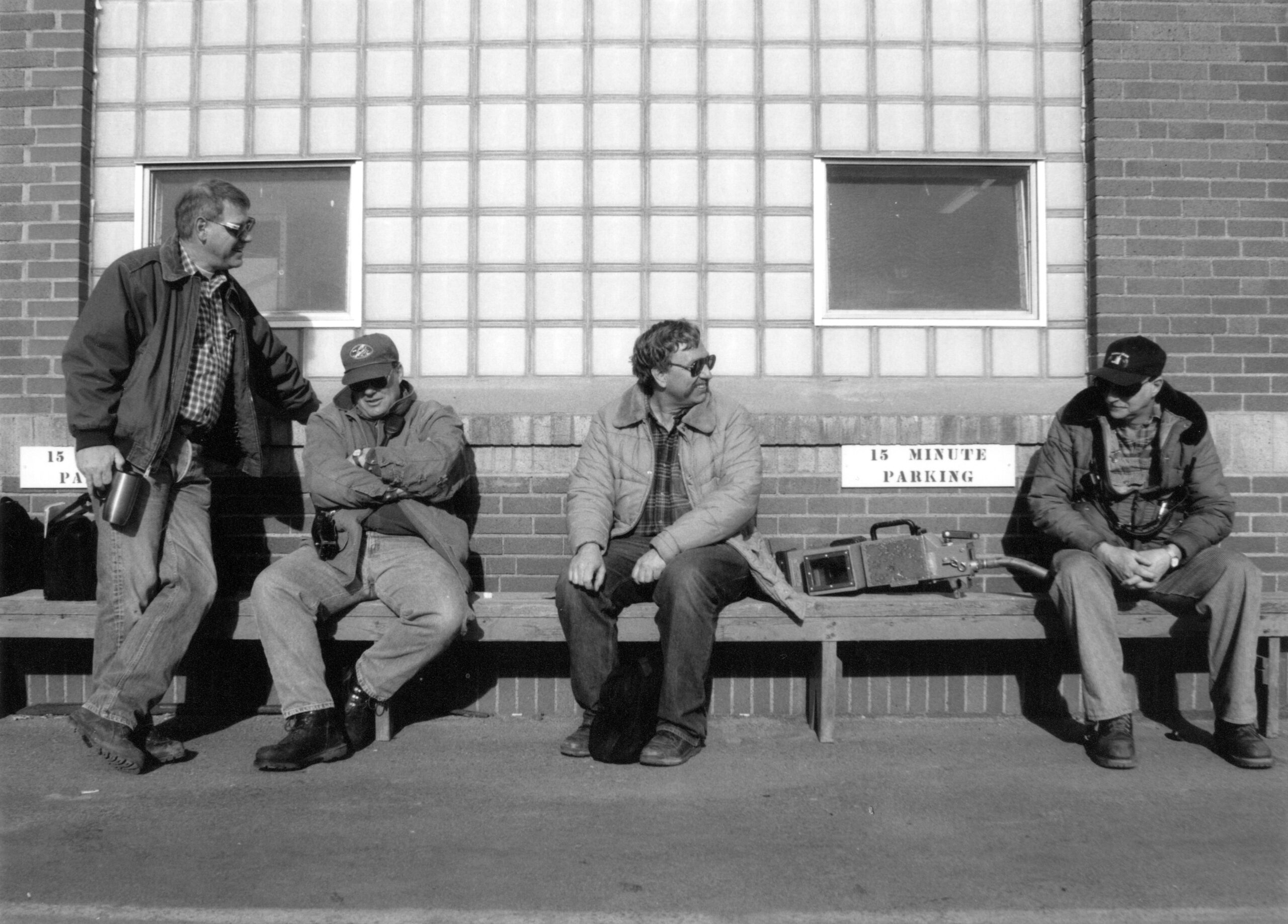
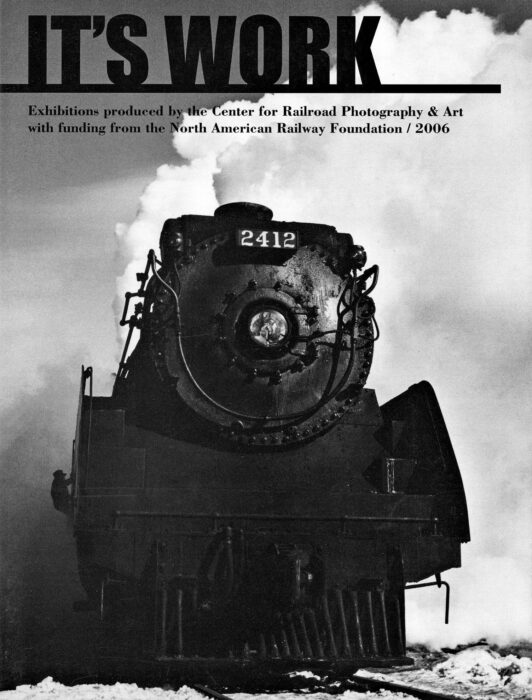
To mark the completion of the Representations project on September 30, 2006, the Center published It’s Work, a 32-page publication featuring 41 memorable photographs from the seven exhibits. Twenty-eight photographers are represented (four photographs are anonymous) in It’s Work. “While driven by different motivations–some to promote or persuade, some to depict, and some to offer commentary on both the emerging and post-industrial worlds–photographers have created a visual legacy of American work and life that we have not yet fully explored, even while they make new images daily,” the introduction says. Classic Trains (Summer 2007, page 90) and Railfan & Railroad (June 2007, page 12) featured It’s Work in product news and reviews.
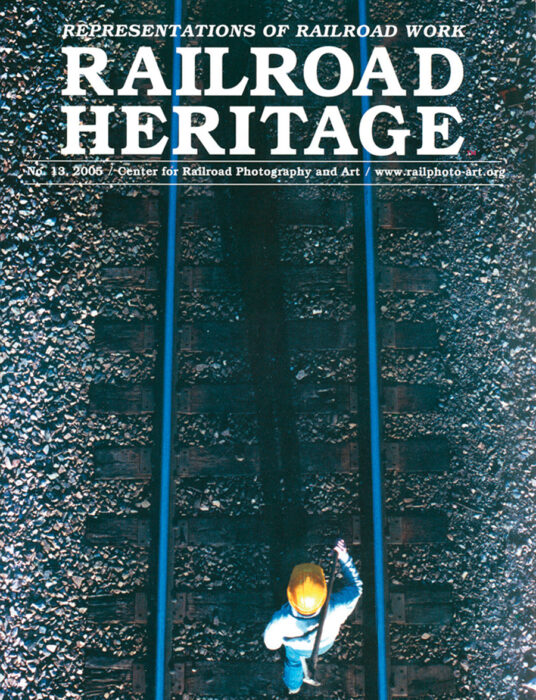
Another publication, Railroad Heritage No. 13, 2005, also contributed to the understanding of Representations. For this issue, special editor Mark W. Hemphill, former editor of Trains magazine and a former train dispatcher, with noted authors, photographers, and historians brought together a previously unseen sensitivity to railroad work. He described the issue in this manner: “Is railroading just another job? No. To the people who do it, railroading is a lifestyle, a brotherhood, a culture with its own language and identity. To the public, railroading is unknown territory. But through photography and art, the obscuring veil can be peeled back.” Railway History (Railway & Locomotive Historical Society) and the National Railway Bulletin vol. 69, no. 5 (National Railway Historical Society), among others, reviewed the issue. “Stressing this human aspect over the mechanical is what sets this issue apart,” the Bulletin reviewer wrote.
The exhibits, publications, and web site are a sample of the scope and reach of the Center’s railroad heritage efforts, and the beginnings of an answer to the question above, posed by Albro Martin in Railroads Triumphant (Oxford University Press, 1992, page 308): “Why work for a railroad, then, if it demanded so much of a man’s patience, strength, and eventually his health and maybe even his life?”
The project brought a revamping of the Center’s web site, with more emphasis on visual content, especially galleries. It’s Work and Faces of Railroading are directly related to exhibits of the same names. For researchers and students, the Center compiled a bibliography and posted it on the site. Prof. Coleen Dunlavy of the University of Wisconsin-Madison distributed our publications as an introduction to the Railroads in America seminar.
The completion of Representations does not mean the Center will abandon its commitment to telling the story of railroad work. It will continue to expand on the topic in all its programs. The Center is cooperating in producing books such as Working on the Railroad by Brian Solomon (MBI and Voyageur Press, 2006), which includes an introduction by John Gruber, president, and The Railroad Never Sleeps (in press).
The Center’s partnerships from this program will also serve it well in its next endeavor, an Internet archive dedicated to standout images of railroading. This site, at www.railroadheritage.org, will allow people to access and view railroad art and photography from both private and institutional collections. The railroad heritage.org site promises to become a preservation program, a digital library, and an art and photography resource for rail enthusiasts, scholars and artists, and the public.
All these efforts are part of a larger program to explore the visual culture of railroading and better understand our railroad heritage and its future.
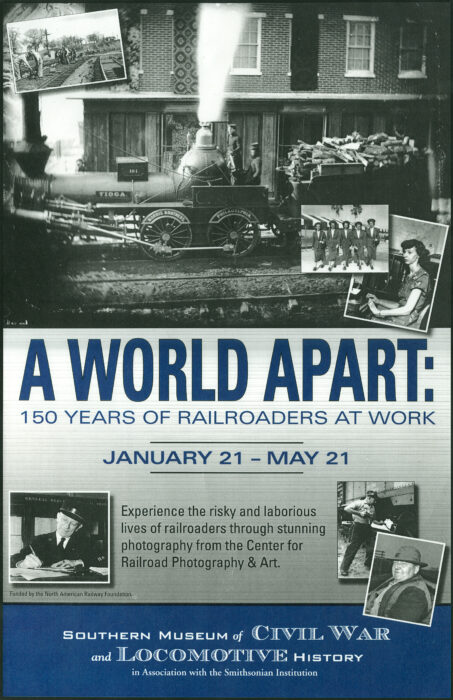
A World Apart: 150 Years of Railroaders at Work
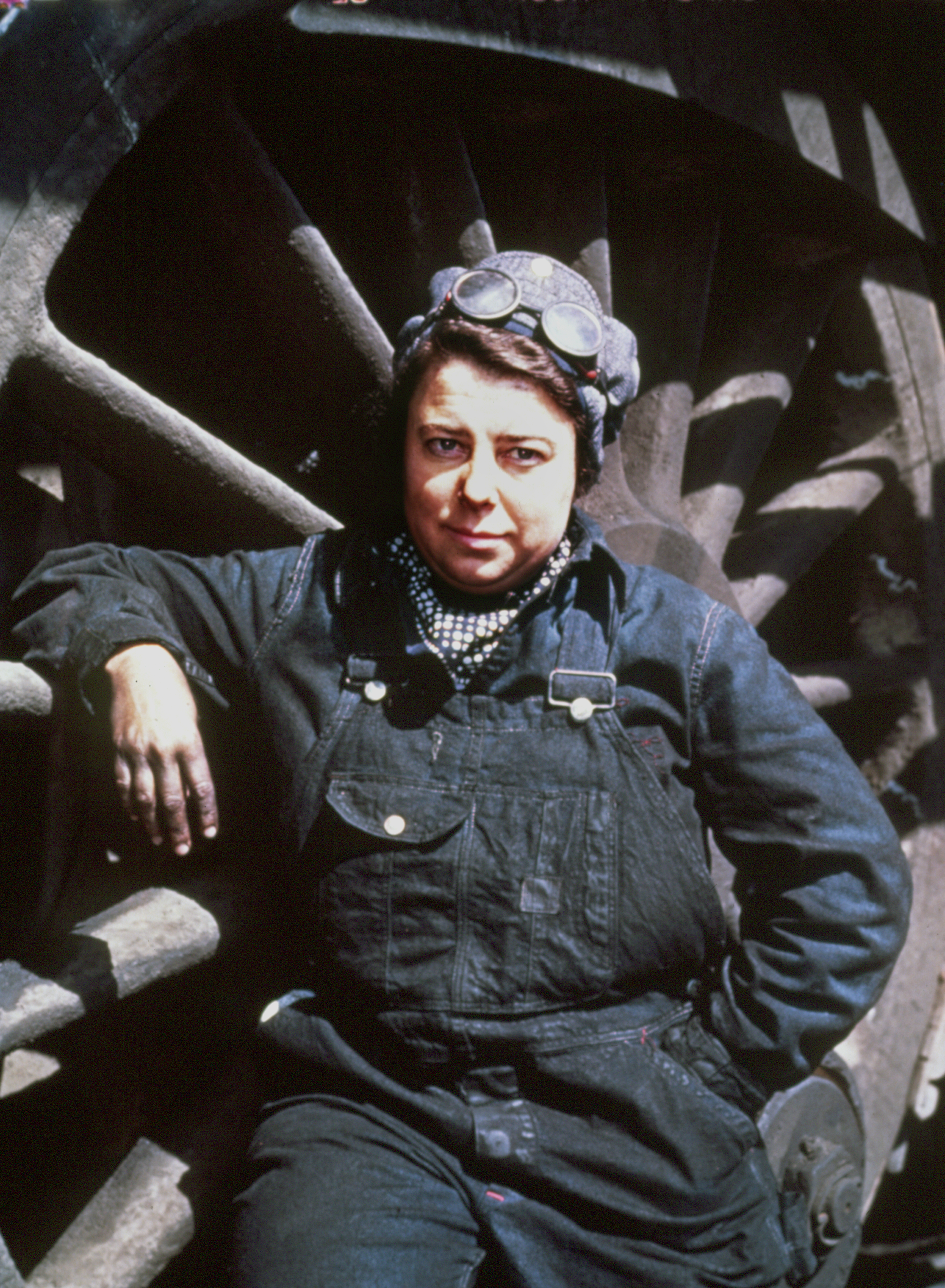
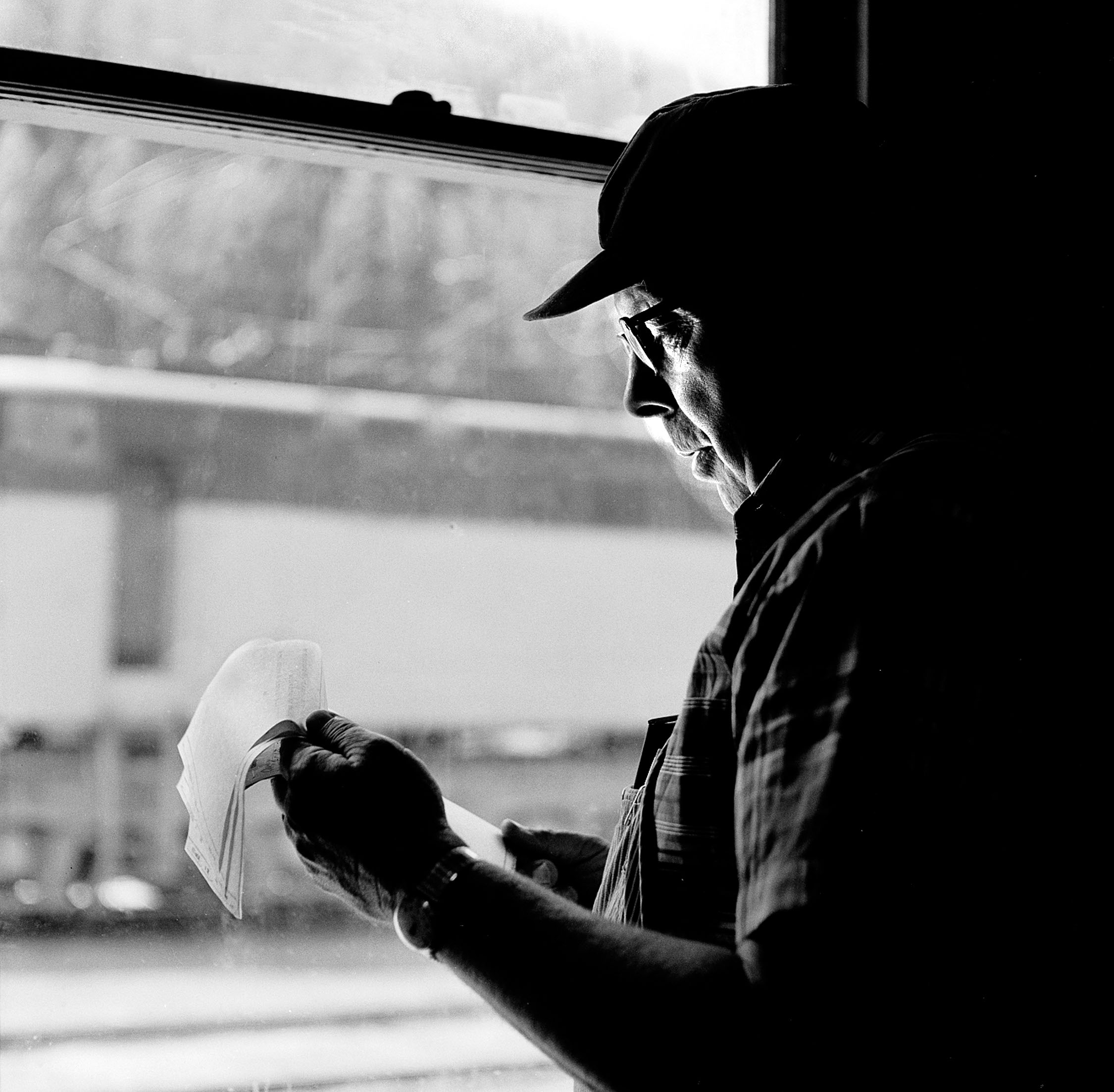
A World Apart: 150 Years of Railroad Workers at Work traces some of the changes in railroad work environment, from the age of steam to the age of microchips. Behind every image hides the reality of the hard life on the rails—the harsh conditions, physical risk, long hours, and irregular schedules which make the work so challenging. The exhibition highlights the human face of an industry dominated by machines and hardware. Technology has made the machines more powerful and the equipment more sophisticated, but behind the scenes people toil in environments that are still a world apart from most other industries.
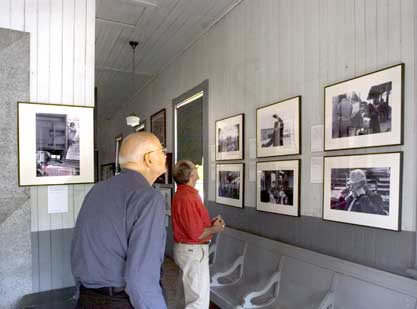
The Center’s exhibition about railroaders and railroad work last toured at Great Overland Station in Topeka, Kansas in 2009. The historic station, built in 1927, was an ideal location for A World Apart: 150 Years of Railroad Workers at Work. Union Pacific donated the station in 1998. After a redevelopment, the station reopened in 2004.
While the Center constructs exhibition with a national scope in mind, they can be tailored to fit local regions. At the Great Overland Station, for example, the exhibit showcases Topeka views. Jack Delano, a photographer for a federal government agency, the Farm Security Administration-Office of War Information, made three photos at the Topeka Shops in 1943. They show Robert Hill (1892-1963); Walter Mitchell (1897-1967); and Harry Tostado, who lives in California. Two are by a Lawrence photographer, Robert P. Olmstead, including a view at Lawrence in 1949.
Appropriately, the photographs were on display in a railroad center. Shawnee County had 1,081 railroad employees in 2006, according to the Railroad Retirement Board.
The Center presented about thirty-seven photographs from across North America, beginning with a copy of a daguerreotype of the crew and locomotive Tioga, built for the Philadelphia & Columbia railroad in 1848. The images trace some of the changes in the railroad work environment, from the age of steam to the age of microchips. This exhibit highlights the human face of an industry that is dominated by machines and hardware. Technology has made the machines more powerful and the equipment more sophisticated, but behind technology are people who toil in an environment that is a world apart from most other industries. The exhibit had its origins in a three-year program, Representations of Railroad Work, funded by the North American Railway Foundation.
This exhibition is no longer in circulation.
Past venues
- Tucumcari Railroad Museum, Tucumcari, New Mexico, June 1 through September 30, 2015
- Ford Center for the Fine Arts at Knox College, Galesburg, Illinois, June through August, 2013
- 150th anniversary of the Brotherhood of Locomotive Engineers and Trainmen, Detroit, Michigan, May 2013
- Great Overland Station, Topeka, Kansas, 2009
- B&O Heritage Center, Grafton (West Virginia), Summer 2008
- Carnegie Arts Center, Alliance, Nebraska, January 8 through March 8, 2008
- Southern Museum of Civil War and Locomotive History, Kennesaw, Georgia, January 21 through May 21, 2006
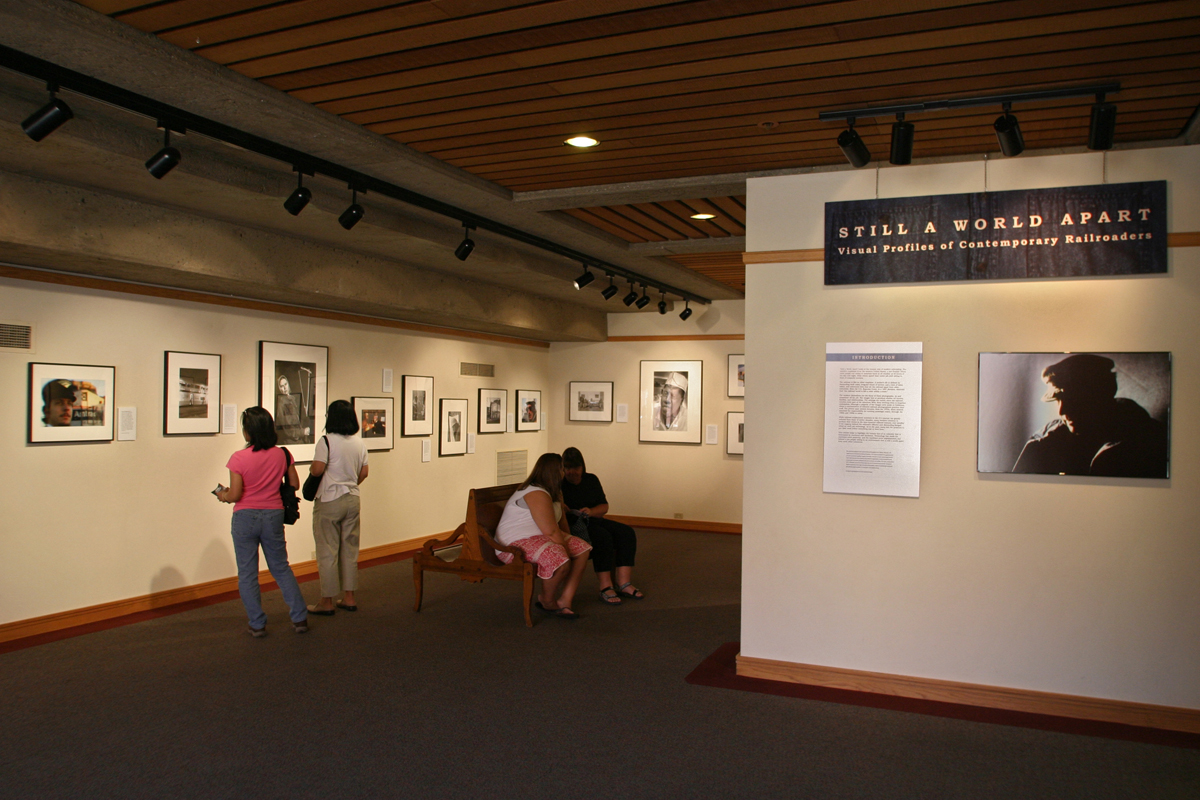
Still a World Apart: Visual Profiles of Contemporary Railroaders
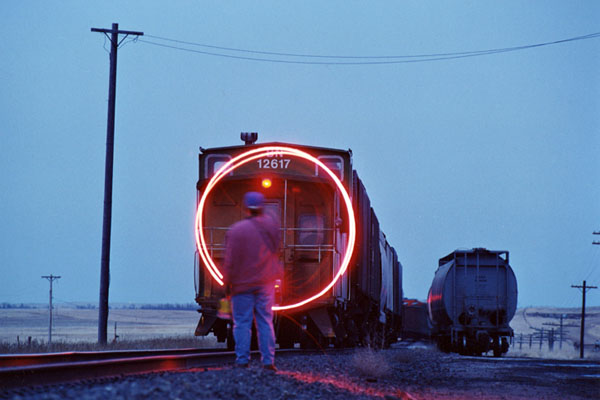
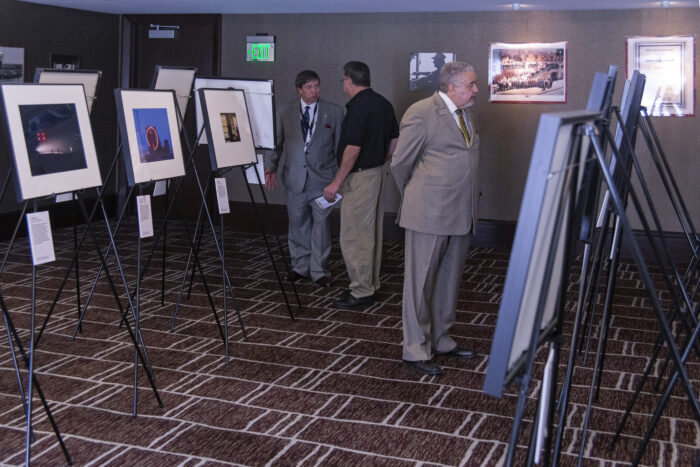
Still a World Apart: Visual Profiles of Contemporary Railroaders, a photographic exhibition by the Center for Railroad Photography & Art, looks at the human side of railroading. The exhibit last appeared at the Lake Superior Railroad Museum in the St. Louis County Heritage and Arts Center’s Historic Union Depot in Duluth. The historic station, built in 1892, was an ideal location for the exhibition, whose subtitle is Visual Profiles of Contemporary Railroaders. While the exhibit covers the nation, it includes Duluth-Superior area views: a Missabe ore dock worker in 1947, a Duluth & Northeastern crew cooking in the caboose in 1962, and John and Peter Lawson, a father-son Amtrak crew, with a passenger train in Superior in 1976.
In the exhibit, the Center recognizes Robert W. Downing (1913-2010), who as president (1971-73) and vice chairman and chief operating officer (1973-76) of the Burlington Northern had a major role in building and improving railroad access to the Powder River Basin coal mines. Downing was trainmaster at Kelly Lake, Minnesota, in 1951-54, when the Great Northern in 1953 moved record tonnage on the iron range. He revisited the ore docks in 2005.
The images emphasize the American Midwest and West, where some railroaders run trains or maintained tracks in all weather and at all hours of the day and night, while others spent their entire job shift in front of computer screens. The railroad is like no other employer. A worker’s life is defined by demanding work rules; irregular hours of service; and a host of labor, safety, and retirement laws that set the railroad apart from other industries. Even the U.S. Supreme Court, in a 1957 decision, observed that “the railroad world is like a state within a state.” The workers themselves are the focus of these photographs, on and sometimes off the job. The images hint at personal stories–of careers, families, and relationships. The settings are varied, since the railroad touches every part of the America, from thriving cities to forgotten settlements. While railroad employment numbers in the 21st century are greatly reduced from those of earlier decades, many workers continue to perform their duties in the time-honored railroad manner, ever mindful of the urgency behind the railroad’s efficient and demanding flanged wheel on steel rail technology. As in the past, many feel the pressure to put their work before everything else in their lives.
This exhibit highlights the human face of an industry that is dominated by machines and hardware. Technology has made the machines more powerful, and the hardware more sophisticated, but behind them people toil in an environment that is still a world apart from most other industries. The exhibit had its origins in a three-year program, Representations of Railroad Work, with funds provided by the North American Railway Foundation to the Center.
This exhibition is no longer in circulation.
Past venues
- Lake Superior Railroad Museum, St. Louis County Heritage and Arts Center, Duluth, Minnesota, 2008
- Nevada State Railroad Museum, Carson City, July 1-December 31, 2006
- California State Railroad Museum, Sacramento, July 9, 2005-June 13, 2006
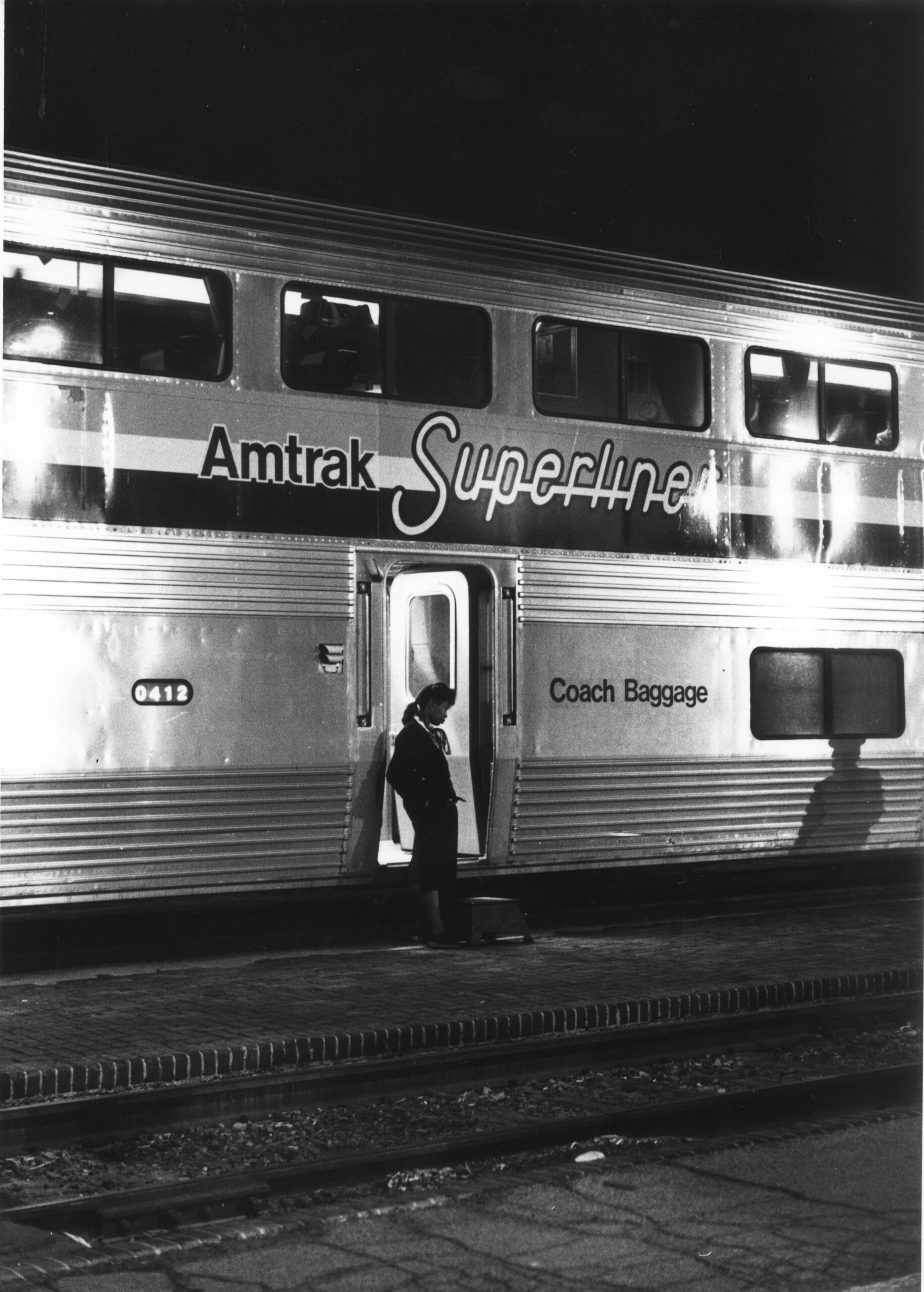
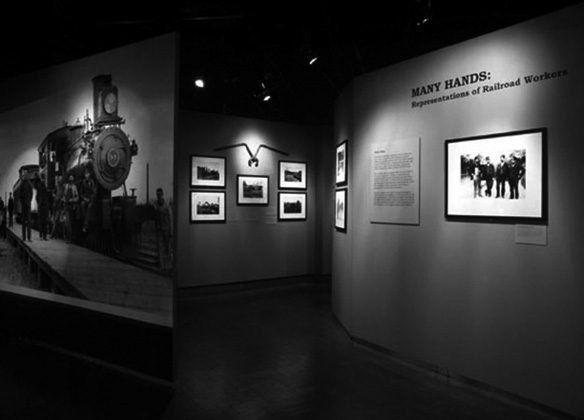
Many Hands: Representations of Railroad Workers, 1870-2005
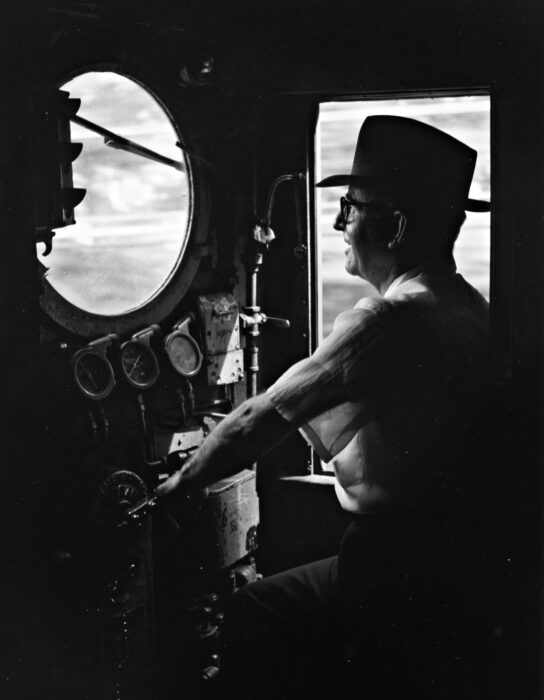
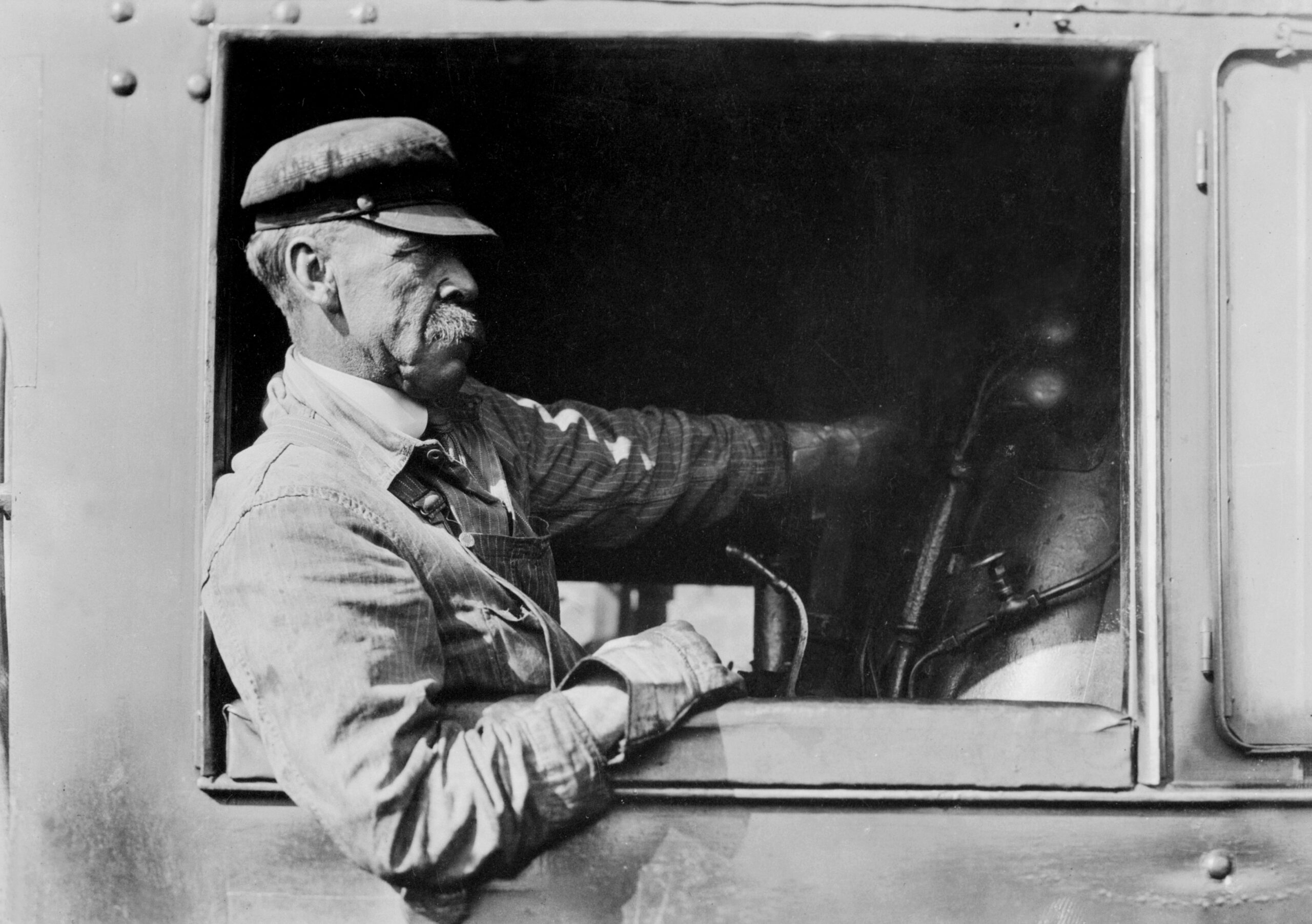
Developed by the New York Transit Museum and curators John Gruber and Michael Zega of the Center, the exhibition Many Hands: Representations of Railroad Workers, 1870-2005 was brought together with support from the North American Railway Foundation, the New York City Department of Cultural Affairs, and the New York State Council on the Arts, a state agency.
Focusing on the New York metropolitan region, Many Hands features Hal B. Fullerton, whose 19th century images along the Long Island Rail Road depict a long-forgotten landscape of American-type locomotives and stone arch viaducts; work portraits by social documentarian Lewis W. Hine, taken throughout the massive Penn Station improvements during the 1920s and 30s; Gordon Parks’s views of railroad workers from the 1940s; and recent work by Frank English, who has chronicled Metro-North Railroad for the last 22 years, as well as others whose work has rarely been seen. Contemporary photographers represented in the exhibition include Pat Cashin, Gene Collora, John Fasulo, Joe Greenstein, George Hiotis, William D. Middleton, and Jim Shaughnessy.
This exhibition is no longer in circulation.
Past venues
- Long Island Railroad Museum, Greenport, New York, Memorial Day weekend, 2007, and every weekend and Monday holiday through October 8, 2007
- New York Transit Museum, Grand Central Terminal Annex, February 15 through October 29, 2006
A Visible Past: Portraits of Work on the Baltimore & Ohio Railroad
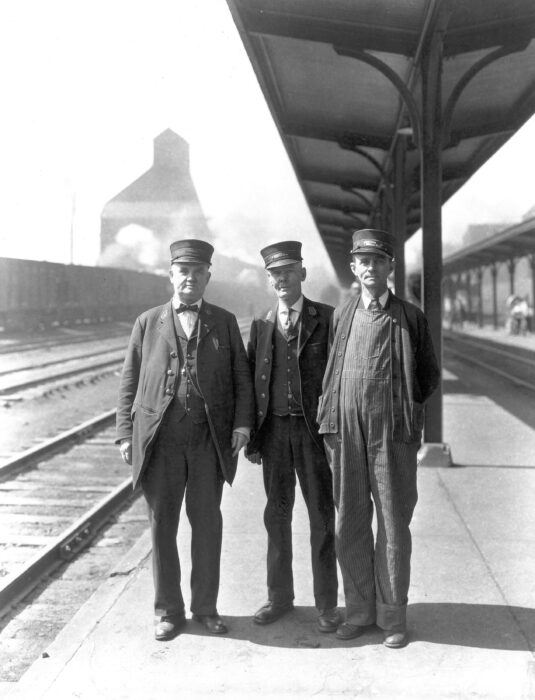
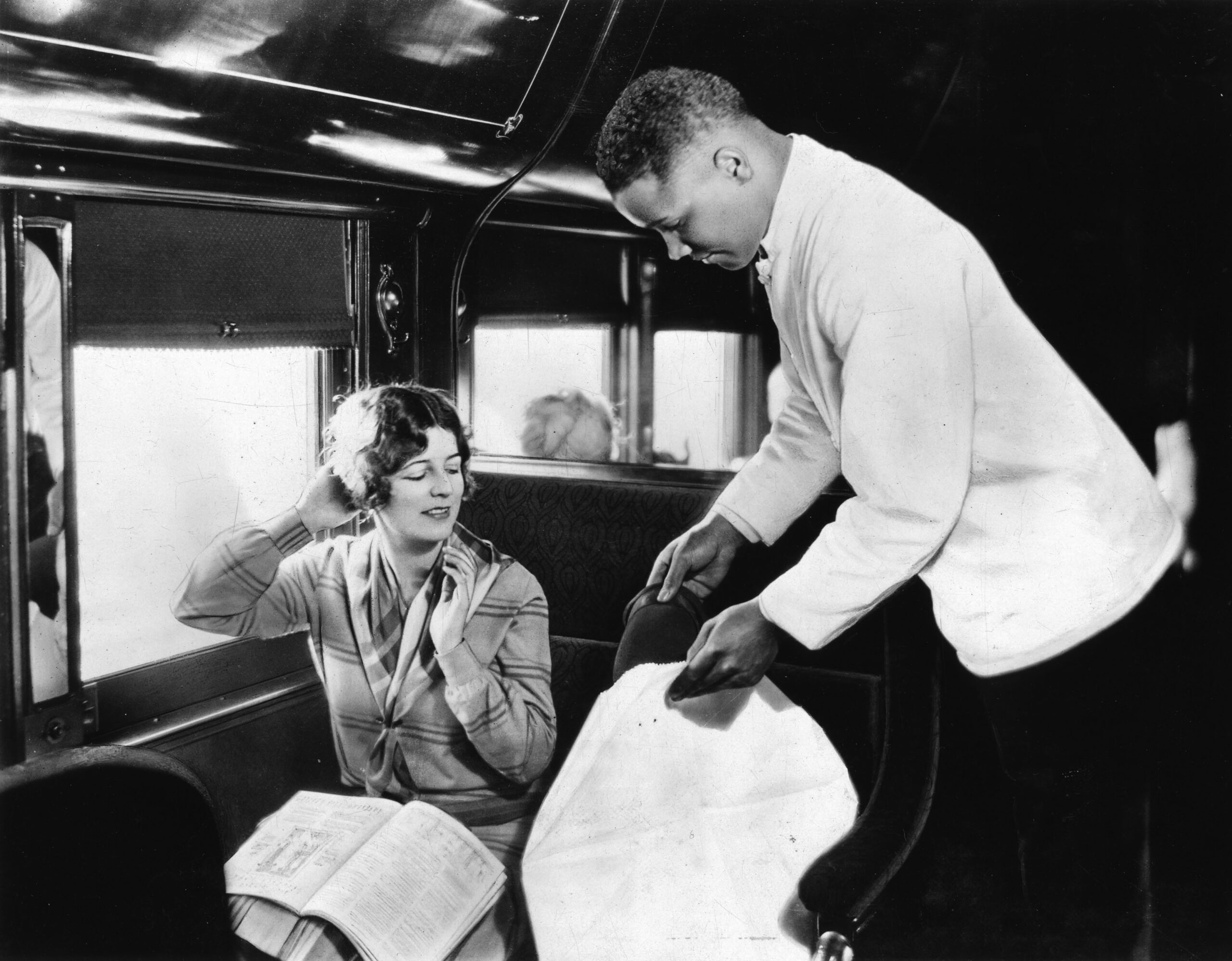
The Baltimore & Ohio was one of the country’s pioneering railroads and it survived (at least on paper) until 1987. Its remarkable 160 year existence offers the chance to trace the visual culture of railroad work directly back to the very founding of the industry in the 1820s. B&O men and women have been represented in woodcuts, daguerreotypes, paintings, lithographs, printed images, motion pictures, and every form of photography. We must look carefully to find these railroaders in visual media, for the most part they have remained elusive. But with care and diligence, we can begin to discover and understand how Americans visually captured the essence of railroad work, and how railroaders themselves created a record of their lives and crafts.
—John Hankey, exhibition curator
This exhibition is no longer in circulation.
Past venues
- Grafton B&O Heritage Center, Vandalia Heritage Foundation, West Virginia, March to May 2007
- Parkersburg Art Center, Parkersburg, West Virginia, October 8, 2006, to January 5, 2007
- Allen County Museum, Lima, Ohio, July 15 to September 30, 2006
- Annual meeting of the Lexington Group in Transportation History, Harrisburg, Pennsylvania, September 2005