Jim Shaughnessy Collection
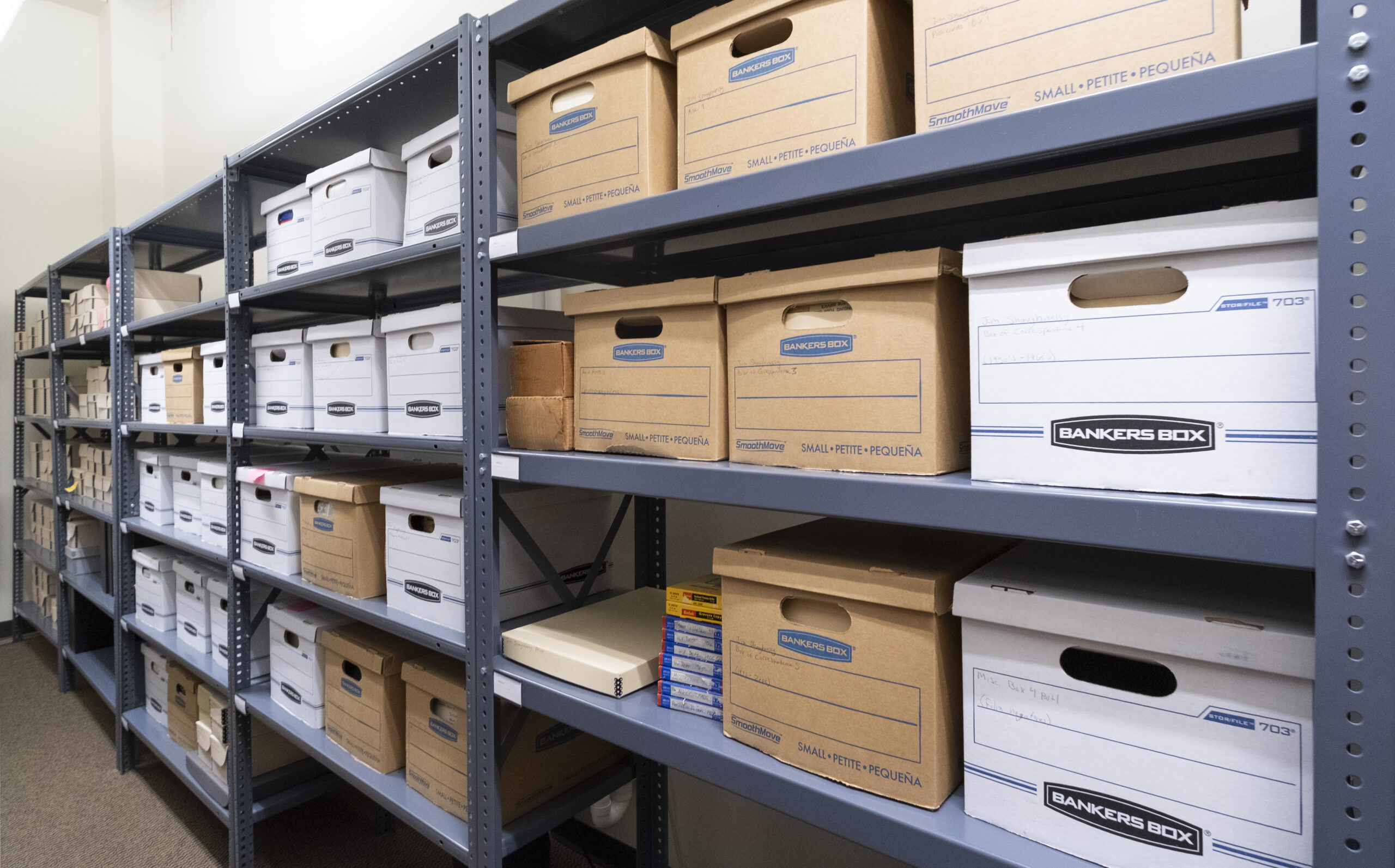
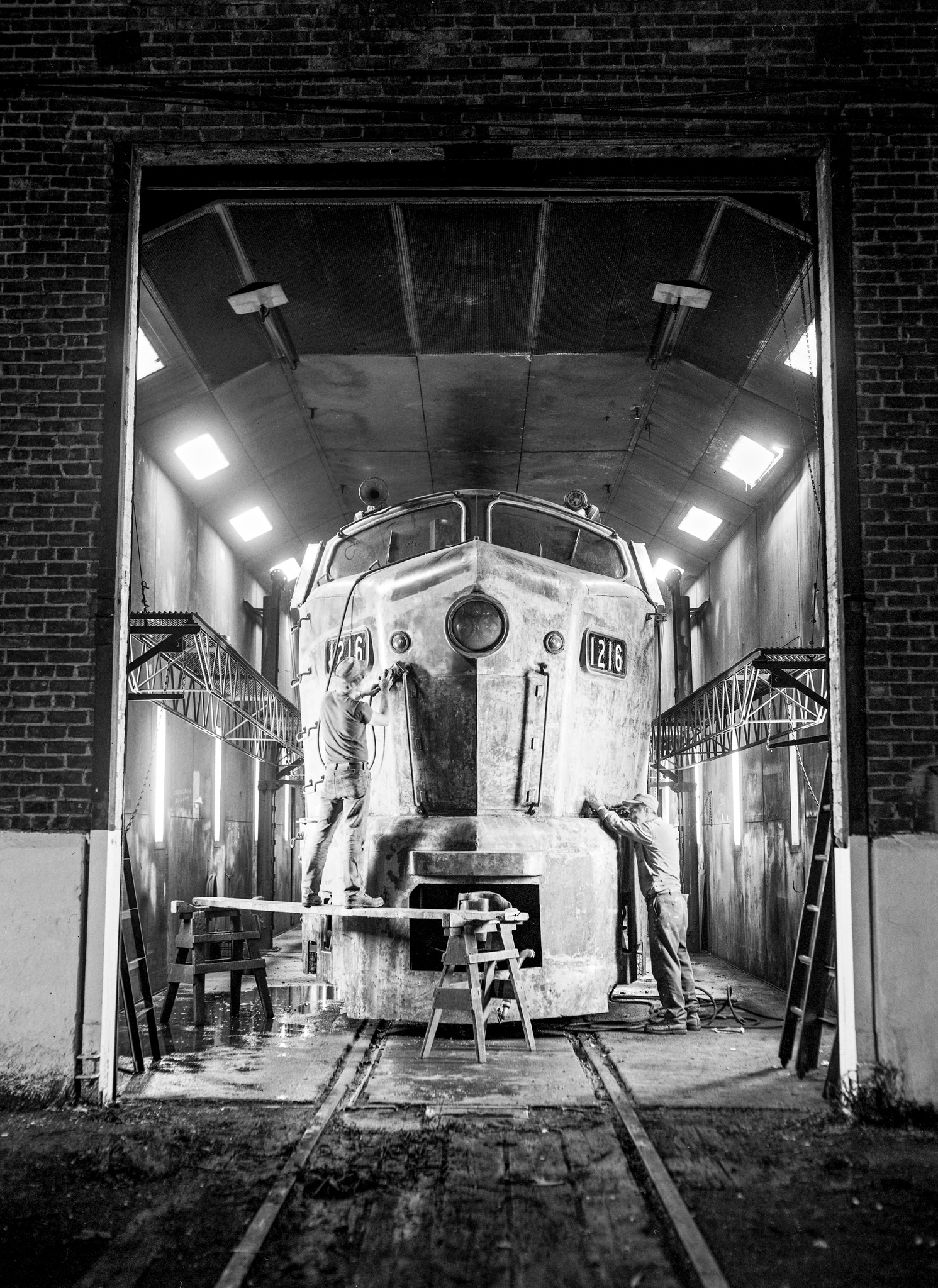
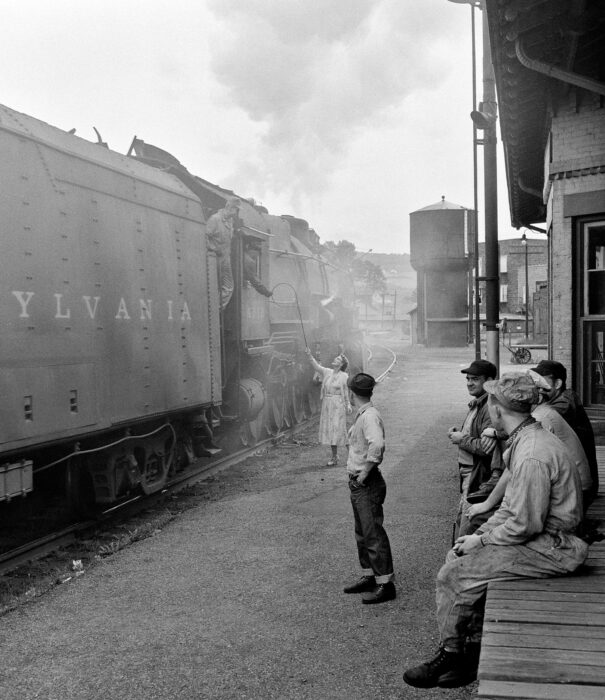
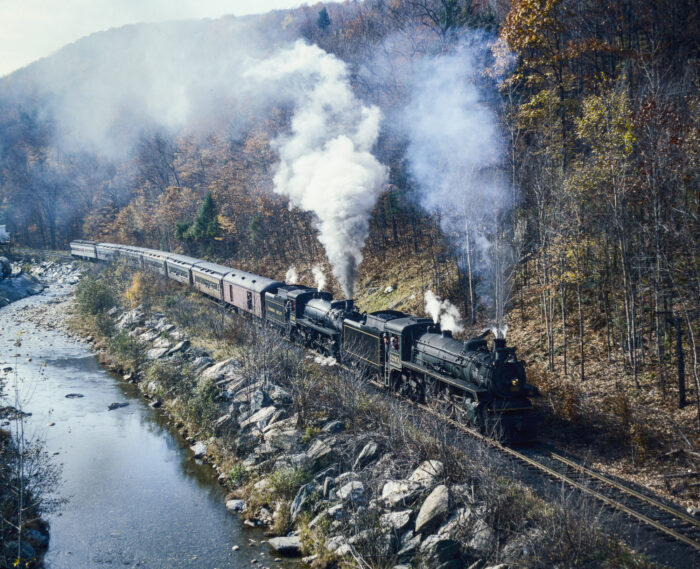
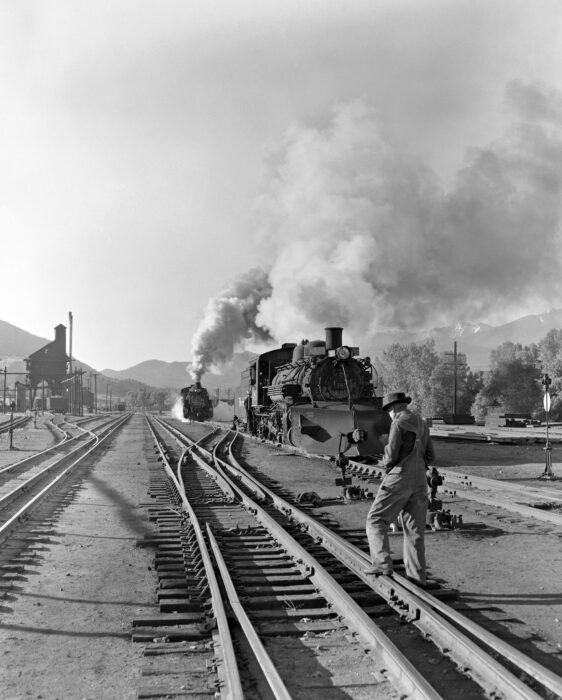
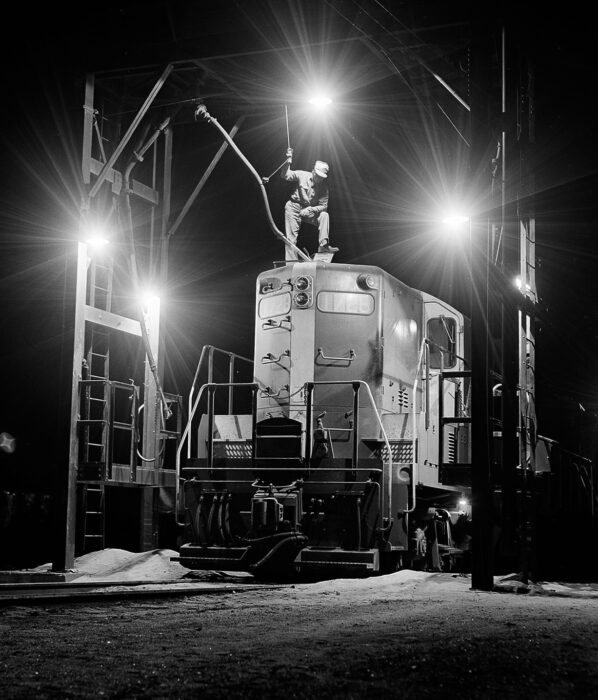
The collection includes more than 60,000 black-and-white negatives, 30,000 color slides, and 200 glass plate negatives that span the 1880s to 1990s. Images in the collection primarily depict rail environments in North America, especially the mid-Atlantic region of the United States with extensive coverage of the Delaware and Hudson and New York Central railroads.
SEARCH DIGITIZED SELECTIONS (EXTERNAL)
Biography
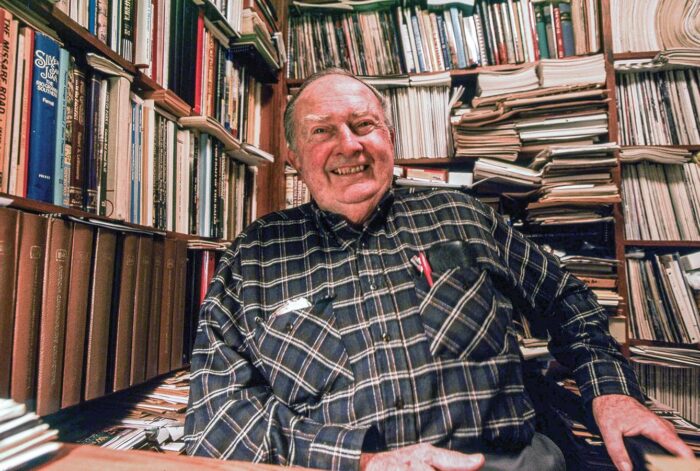
Jim Shaughnessy (1933 – 2018) was born on November 24, 1933, in Troy, New York, where he lived for most of his life and developed an early fascination with railroads. As a youth, he began photographing trains around Troy Union Station, a rich hub of rail activity serving the New York Central, Boston & Maine, and Delaware & Hudson railroads. Encouraged by a supportive family—including his uncle Cornelius “Con” Shaughnessy, a former steam locomotive worker who introduced him to the inner workings of railroading—he quickly developed both technical skill and artistic vision.
Shaughnessy went on to study engineering at Rensselaer Polytechnic Institute, where he joined the model railroad club and formed lasting connections with fellow enthusiasts. He became a licensed professional engineer, taught civil engineering courses, and ultimately retired in 1995 as director of environmental health for Rensselaer County. Alongside his engineering career, however, he built an extraordinary reputation as one of the most influential railroad photographers of the 20th century.
Generally considered part of railroad photography’s “big three,” alongside Philip R. Hastings and Richard Steinheimer, Shaughnessy helped redefine the field in the postwar decades. Moving beyond simple train portraits, he sought to capture the broader railroad environment—placing trains within the context of everyday life. His work during the steam-to-diesel transition of the 1950s and 1960s is especially celebrated for its power and historical significance. As author and photographer Jeff Brouws observed, Shaughnessy was “a pioneer, a door-opener,” whose work emphasized storytelling as much as machinery.
Shaughnessy was both prolific and meticulous. Over his lifetime, he produced an archive of roughly 100,000 images, with thousands published in books and magazines. His photographs appeared frequently in Trains magazine—where editor David P. Morgan strongly championed his work—and he ultimately earned more than a dozen cover appearances. Later, his column “The Shaughnessy Files” became a regular feature in Classic Trains, offering both images and personal reflections on his experiences.
His photographic journeys expanded far beyond Troy, taking him across the northeastern United States and into Canada, where he documented both major railroads—such as the Boston & Maine, Central Vermont, Canadian National, and Canadian Pacific—and smaller regional lines. He also traveled west to the Midwest and beyond, often alongside fellow photographer Philip Hastings. Whether shooting in harsh weather, at night, or in active rail yards, Shaughnessy became known for his technical precision and his ability to capture both motion and atmosphere.
In addition to photography, Shaughnessy was a respected author and historian. His books Delaware & Hudson and The Rutland Road are widely regarded as definitive railroad histories. His work has also been the subject of major retrospective volumes, including The Call of Trains: Railroad Photographs by Jim Shaughnessy (2008) by Jeff Brouws and Jim Shaughnessy: Essential Witness (2017) by Kevin P. Keefe, Brouws, and Wendy Burton. A traveling exhibition based on The Call of Trains brought his images to multiple venues, and he remained an active speaker and presenter well into his later years.
In recognition of his contributions, Shaughnessy received the Railway & Locomotive Historical Society’s lifetime photography award in 1987. His influence extended beyond publications into museum collections and exhibitions, helping to elevate railroad photography into the realm of fine art.
Shaughnessy died on August 7, 2018, at the age of 84, after a long illness. He is remembered as one of the deans of railroad photography—an artist whose work not only documented a transformative era in transportation history but also reshaped how that history is seen and understood. He is survived by his wife, Carol, his son James, and two grandchildren.
About the collection
Title
Jim Shaughnessy Collection
Dates
Span: 1880 – 1990 Bulk: 1950 – 1989
Creator
Shaughnessy, Jim, 1933 – 2018
Geographic coverage
Extensive coverage of the Mid-Atlantic region of North America
Railroad coverage
Railroads include the Boston & Maine, Canadian National, Canadian Pacific, Central Vermont, Delaware & Hudson, Denver & Rigo Grande Western, New York Central, Pennsylvania Railroad, Rutland Railway and others.
Provenance
This collection was acquired from Carol and Jim Shaughnessy Jr. in October of 2019.
Processing history & status
Jim Shaughnessy’s original black-and-white negatives and historic collection of glass plate negatives were largely processed by Natalie Krecek from June of 2020 to June of 2025. Three interns also worked on the collection: Angel Tang, Wesley Sonheim, and Charles Tonelli.
The processing of Jim Shaughnessy’s original slides commenced in 2025. The physical inventory currently only accounts for the negatives.
Copyright status
© Center for Railroad Photography & Art
Access & restrictions
We provide images free-of-charge for small press and self-published works, personal use, as well as educational and non-profit efforts. All other users, please see our usage fee schedule for rates.
Gratitude
The collection was transported to the Center by board member Jeff Brows.
A $5000 grant from the National Railway Historical Society facilitated the processing of the Shaughnessy Collection.
Jim Shaughnessy collection index
Extent
Approximately 60,000 negatives; 243 Glass plate negatives
Arrangement
The Center has preserved the photographer’s original order with materials arranged first by railroad reporting marks.
Availability
The Shaughnessy collection has been selectively digitized and a portion is available online in the Center’s digital collections.