David Kahler, 1937-2026
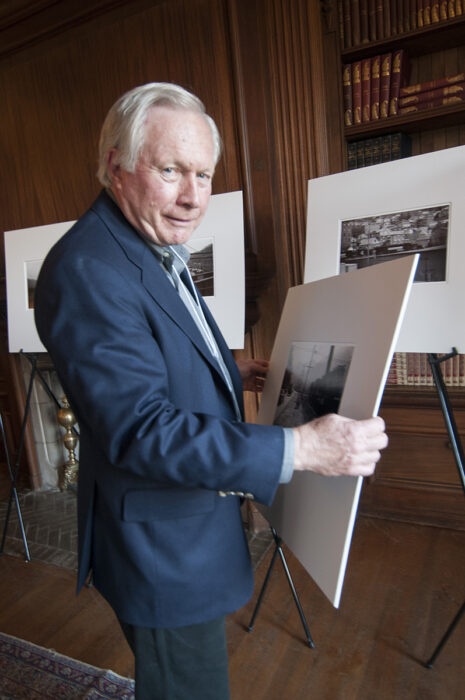
All of us at the Center for Railroad Photography & Art mourn the passing of David Kahler, who died on April 14, 2026 at the age of 89. He was our longest-serving board member and a visionary photographer who reminded us to pay attention to the inherent art of everyday places.
David practiced architecture for more than thirty years and was recognized by his peers as a Fellow of the American Institute of Architects. He served as the president of Kahler Slater Architects, Milwaukee, Wisconsin, from 1974 to 2002. He was the design principal on many award-winning projects, including the Milwaukee Art Museum, Wisconsin State Capitol Restoration, the Haggerty Museum of Art at Marquette University, and the Pettit National Ice Center. His Milwaukee Landmark Lighting project received a national urban design award from the American Institute of Architects.
Growing up with steam locomotives on the East Coast fostered David’s lifelong love of railroads. He was born in Harrisburg, Pennsylvania, in 1937, and lived in Baltimore, Maryland, and Chadds Ford, Pennsylvania, where double-headed camelback locomotives of the Reading Railroad stormed past his schoolyard every day. At the age of 14, he borrowed his aunt’s box camera to photograph Reading’s Rutherford Yard east of Harrisburg, where his grandfather had worked for fifty years as a brakeman on the hump. David’s closest childhood friend was the grandson of N.C. Wyeth and nephew of Andrew Wyeth, both outstanding painters. N.C. Wyeth’s oil paintings decorated the walls of a playroom filled with Lionel trains and helped awaken David’s interest in art.
In 1955, David enrolled in the five-year architecture program at New York’s Syracuse University. In 1957, he worked as an architectural apprentice in Elmira, New York, where he used his father’s Kodak Brownie Special camera to photograph the Southport Yards of the Pennsylvania Railroad’s Elmira Branch. After graduating with a Bachelor of Architecture degree in 1960, he received a Master of Fine Arts degree from Princeton, and he then taught in the School of Architecture at the University of Illinois.
Fitzhugh Scott, a prominent Milwaukee architect and one of the ten original founders of Vail, Colorado, hired David in 1965. After spending four months in Vail to develop its master plan, David moved to Milwaukee. He passed the architectural exam in 1969 and became registered in Wisconsin, and the following year he became president of the Office of Fitzhugh Scott. After Scott moved to Vail in 1974, David changed the name of his firm to Kahler Slater Torphy and Engberg, later Kahler Slater.
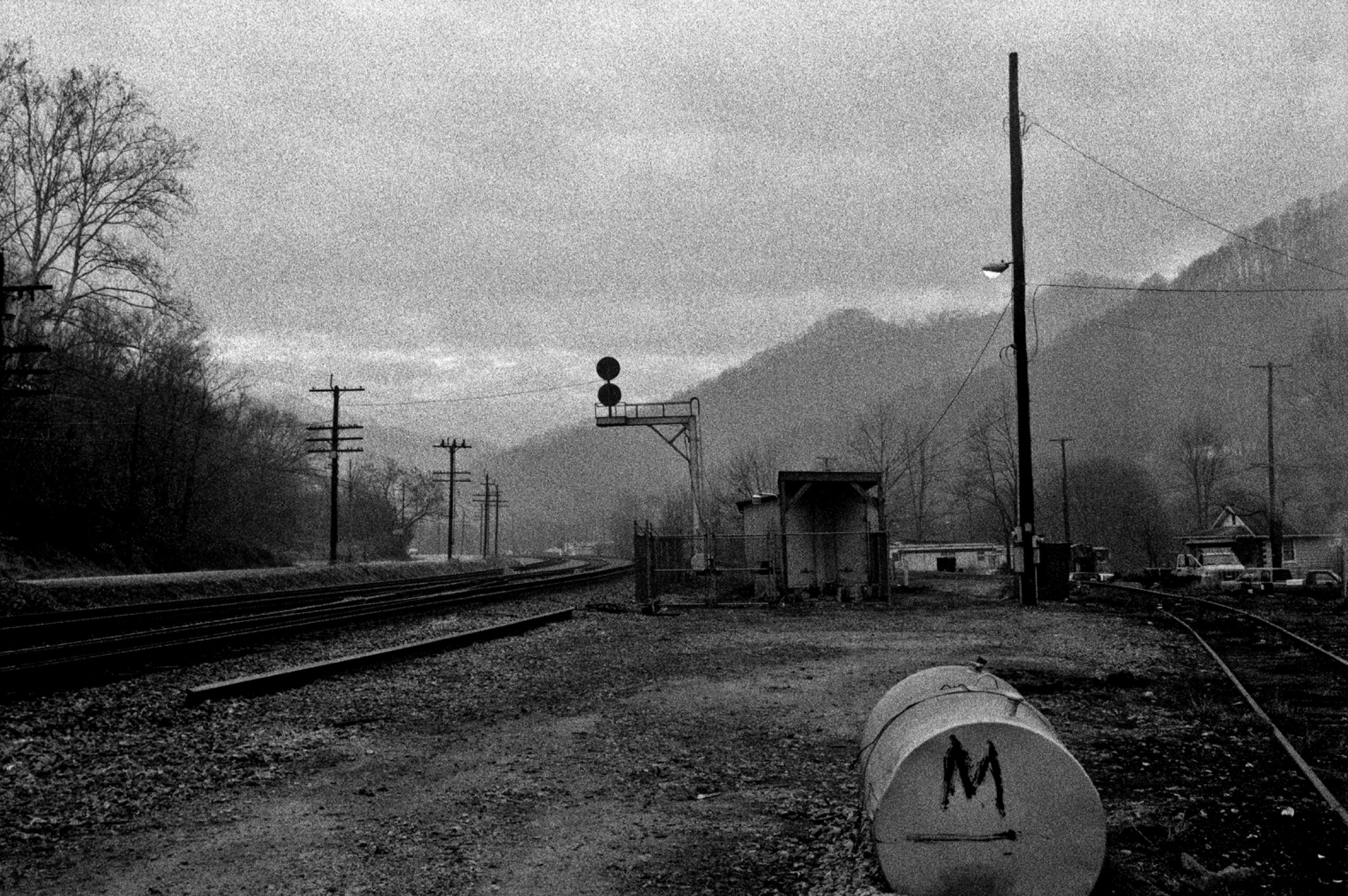
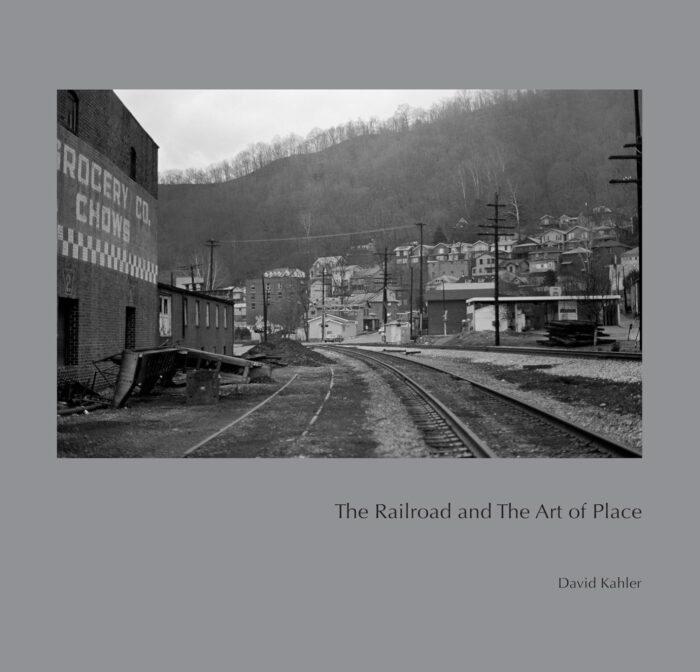
Though busy leading the firm through major projects in Milwaukee and Madison, David maintained his interests in railroads and photography. He was particularly struck by O. Winston Link’s work after seeing an article about it in the New York Times in 1990. Every February from 1992 through 1997, David made a week-long trip with his wife, Cynthia, to photograph Norfolk Southern’s Pocahontas Division in West Virginia, using black-and-white film in his Leica M6 camera. The work formed the basis for his book, The Railroad and the Art of Place, which the CRP&A published in 2016.
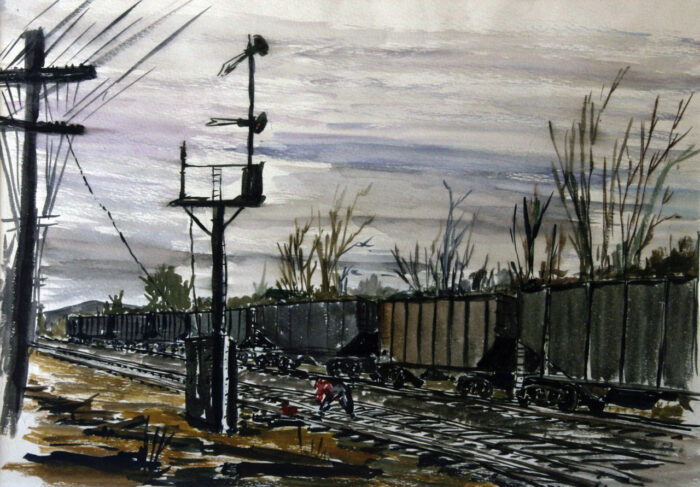
David joined our board in 1998 at the invitation of John Gruber, and he later served as vice-president and then vice-chair, holding the latter office until his passing. He was instrumental in building up the Center in its early years, helping lead a fundraising effort for our exhibition and publication about Ted Rose’s watercolors and photography. David also helped arrange for Marquette University to host an exhibition of Ted’s work there in 2006 as well as our Conversations about Photography conference that year. He later assisted in the fundraising for our monumental project Railroaders: Jack Delano’s Homefront Photography in conjunction with the Chicago History Museum.
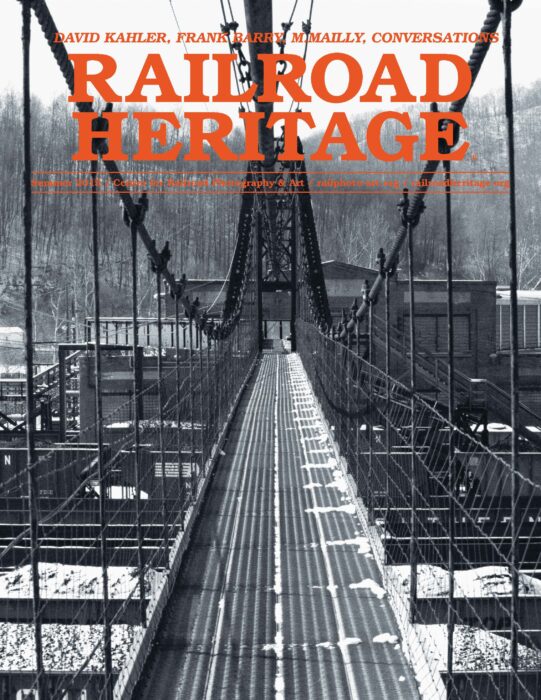
As a photographer (and as an amateur watercolor artist), David championed the concept of “The Railroad and the Art of Place,” helping so many of us to think differently and more expansively about railroads, their interactions with the places and spaces they occupy, and how we can approach them through photography and other forms of art. In addition to his 2016 monograph, he inspired our 2021 book, The Railroad and the Art of Place: An Anthology. The Kahler Family Fund fully financed production of both publications, allowing all proceeds from their sales to benefit the Center. David’s work also appeared in the Summer 2015 issue of Railroad Heritage, and our long-running series “Railroads and the Art of Place” is part of his legacy.
In conjunction with our 2016 book, we prepared a traveling exhibition of David’s photography, which visited The Milwaukee Art Museum, the O. Winston Link Museum in Virginia, and the Grohmann Museum in Milwaukee. He spoke at each venue, as well as at our Conversations 2015 conference and in a 2020 webinar.
David was always quick to credit the many influences and inspirations in his life, from artists and teachers to family and friends. He held strong values and beliefs about art and never backed down from his convictions, but he also maintained a sense of humor, embracing the sobriquet “UrbanDK” for his initials and fascination with the built environment and its inevitable deterioration.
Fellow board members at the Center shared many fond memories and reflections following the news of David’s passing.
Todd Halamka wrote, “He was never shy about where he stood on issues, but always deeply committed to the Center and passionate about all of our members’ love of railroad photography and storytelling.”
Michael Schmidt said, “David was such a great artist and intellect on the board. I always looked forward to his contributions.”
Bon French, who has chaired our board since 2013, wrote, “David was instrumental in the establishment of the Center as an organization given his early start on the board and his closeness to John Gruber. I really appreciate his early leadership of the organization, his ongoing guidance and insight for the board, and his innovative/artistic flair to his photography. To me, the words ‘David Kahler’ and ‘Art of Place’ are inseparable. He really opened my eyes to see the world more comprehensively, which has changed my own photographic composition and lensmanship. He made a significant contribution to our hobby and community.”
In my own Afterword to David’s 2016 book, which prominently features my home state of West Virginia, I wrote, “His photographs peer—unblinkingly and unapologetically—into the many-layered story of a complicated place and the technology that has transformed it.”
In David’s own words: “In the middle of February there the days are short, the skies are heavy, and the trains are black. The art of place is there if you look for it.”
—Scott Lothes

A Celebration of Life for David Kahler is planned for May 29, 2026, at 2 p.m. at Christ Church Episcopal, 5655 North Lake Drive, Whitefish Bay, Wisconsin 53217. In lieu of flowers, donations may be made to the Center for Railroad Photography & Art or to Princeton University’s School of Architecture.
Video content featuring David Kahler
See David’s introduction to his photography exhibition at the Grohmann Museum.
View David’s 2020 webinar about his book, The Railroad and the Art of Place.
Get a preview of the pages in David’s book, the Railroad and Art of Place.